

Most UX problems don’t announce themselves as UX problems. They show up as low activation, abandoned workflows, weak conversion, rising support tickets, or users who simply never come back.
UX consulting connects those symptoms to their causes. It combines product metrics, user behavior, and research to find where the experience breaks down and what’s worth fixing.
That’s how we approach UX at Eleken. We start with the business outcome, trace it back to user behavior, and design around the changes most likely to move the right metrics.
This guide covers what UX consultants do, the signs you need one, what UX consulting costs, and how to choose a partner who can do more than offer expensive opinions. We'll use real numbers from real projects throughout, including our work at Eleken.
What is UX consulting?
UX consulting is professional evaluation, strategy, and guidance for a digital product such as a website, a mobile app, or a SaaS platform.
A consultant studies how people use your product. Then they tell you what's broken, why it's broken, and what to fix first.
Now, what UX consulting is not.
It's not UI design. A UI designer makes screens look right. A consultant tells you whether those screens should exist at all, and in that order. If you're fuzzy on the boundary, our breakdown of what UX design is covers it properly.
It's not web design either. Web design ends at launch. UX consulting is usually most valuable after launch, when you finally have real users doing unexpected things.
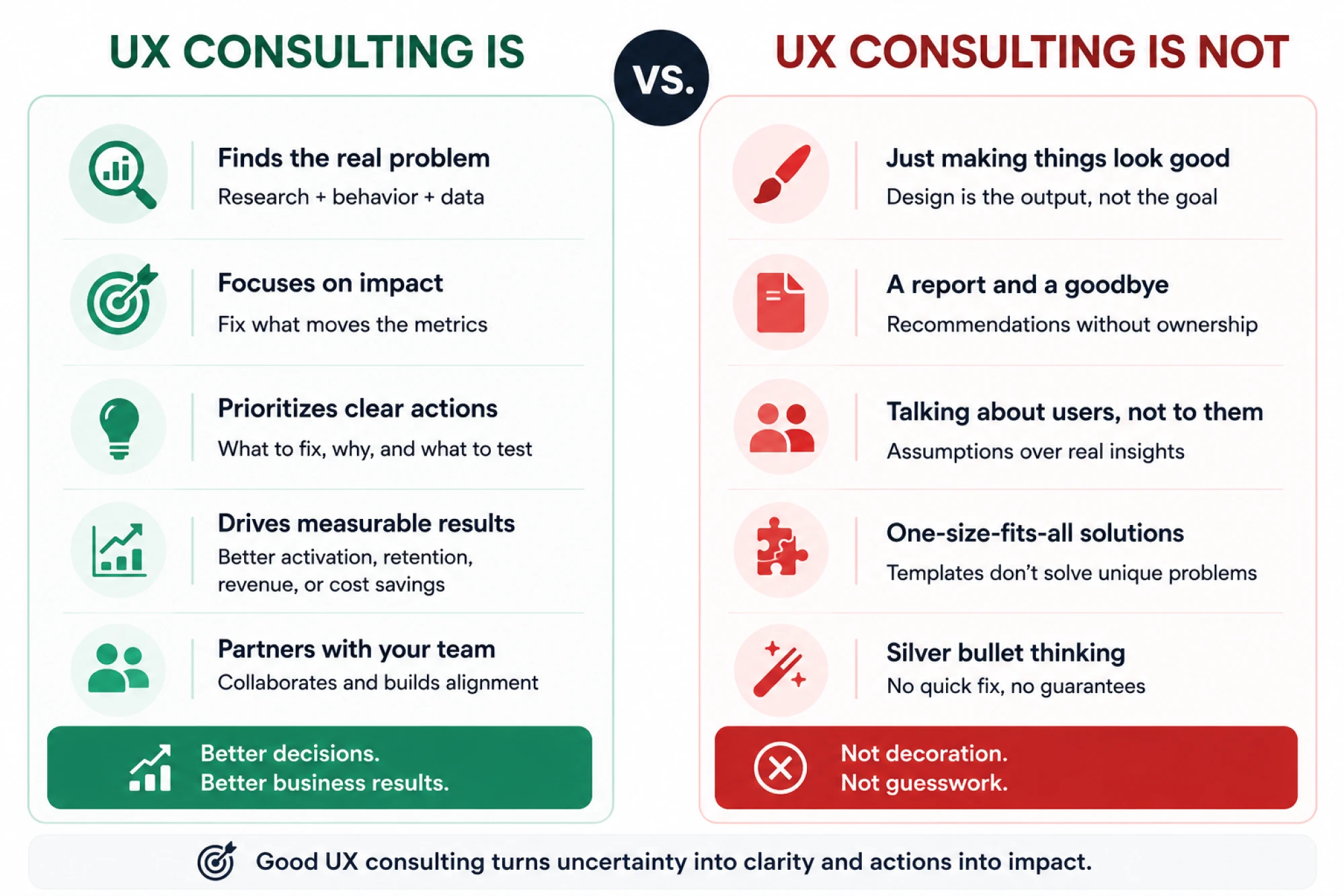
And it's not general business consulting. A management consultant looks at your org chart and your margins. A UX consultant looks at the seventeen seconds a user spends staring at your empty dashboard before closing the tab.
One founder described the problem to us like this: "I get a designer who puts nice colors on stuff… but not someone who really thinks about what users need."
That's the distinction in a single sentence. The consultant's lens is user behavior, namely:
- Where people hesitate.
- What they misunderstand.
- Which flows they abandon.
- Who gets locked out entirely because nobody thought about accessibility.
Those observations then feed a plan, which is where UX strategy picks up. The whole job is closing the gap between how your product works and how users need it to work.
And if you want to learn more about Eleken’s framework for effective UX strategy, watch the video below:
What does a UX consultant do?
Day-to-day, the work looks like this: product review, user interviews, journey mapping, session analysis, and a prioritized list of what to change.
The prioritized list is the real deliverable. Anyone can generate sixty usability complaints about a product. Sixty complaints is not a plan; it's a demoralizing spreadsheet. The skill is knowing which three cost you money, and which fifty-seven can wait until next year or forever.
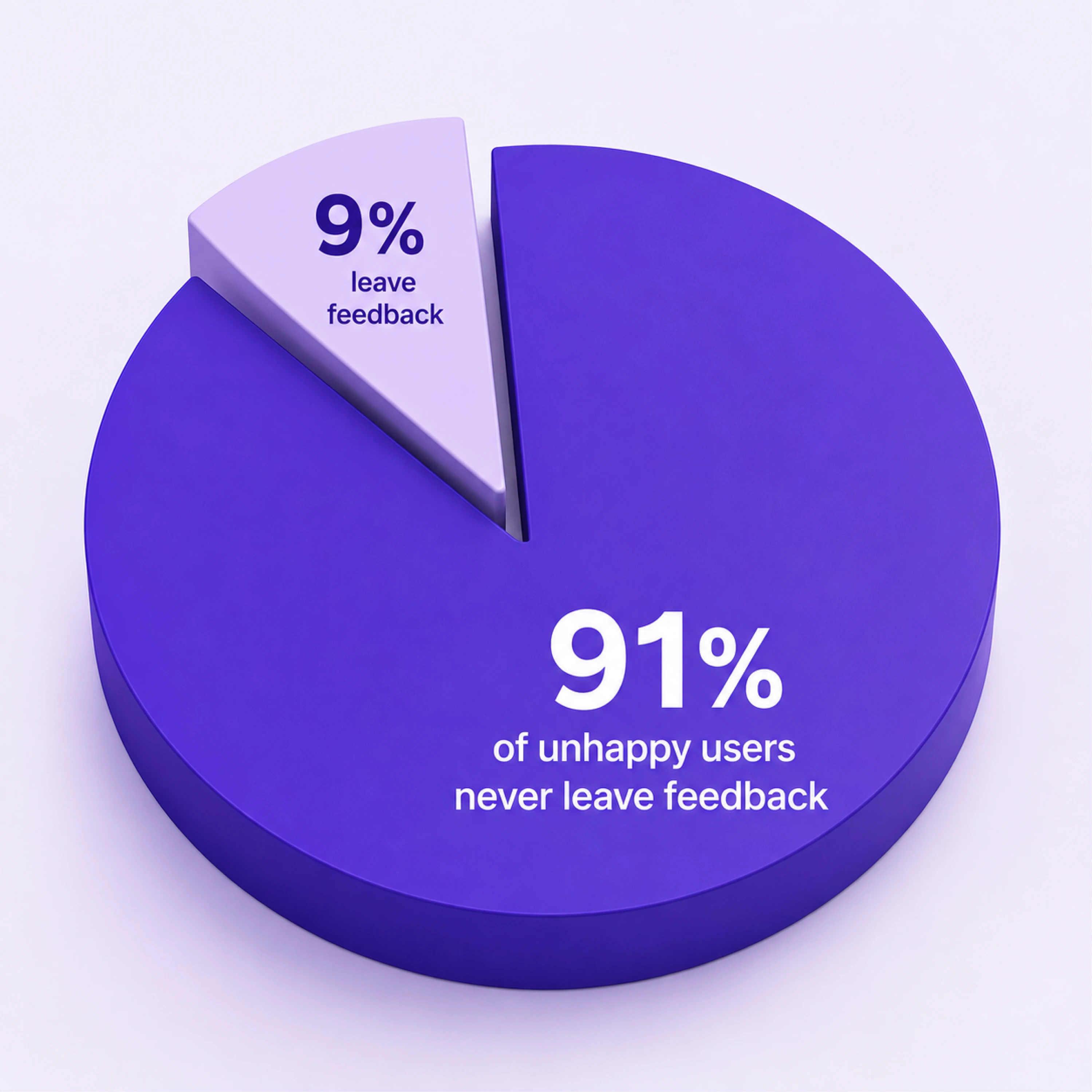
Here's why that matters more than it sounds. Roughly 91% of unhappy users never leave feedback. They churn silently, and your analytics show you a number without a reason. A consultant's job is to surface what users never say out loud.
The other thing worth stating: consulting is diagnosis; design is treatment.
This is the single most common source of scope confusion. One of our clients asked us directly: "Could you do an end-to-end evaluation of our web app and give suggestions on both UX and UI?"
Clear question and clear scope. Compare that to "we need better UX," which could mean anything from a button color to a rebuild.
There's a related trap that UX practitioners talk about constantly. On Reddit, one designer contrasted agency work focused on delivering attractive screens with product work where “our measurements for success is based on outcomes.”

What I enjoyed more was working on a product team. It's our product and we're really focused on UX. Our measurements for success is based on outcomes. We made revisions based on feedback and data. We explored total redesigns based on what leadership's new or evolving goals were. It's much more satisfying to me.

That's the difference a consultant needs to keep in mind. Finding usability problems isn't enough; recommendations need to connect those problems to outcomes the business cares about. Great research and thoughtful recommendations without that connection can easily end up in a backlog nobody prioritizes.
Worth setting expectations on audits, too. A UX audit is a step toward understanding the relationship between your product and its users. It's the map that tells you where to dig.
Do you need UX consulting?
Not every product problem is a UX problem. Let's figure out which one you have. The soft signals first, like:
- Users sign up but never stick.
- Flows get abandoned halfway.
- Engagement on your MVP is flat despite decent traffic.
- You've redesigned twice, and neither one moved anything.
- Support tickets keep climbing, and they're all variations of "how do I…"
Then there's the big one: your team makes product decisions by arguing rather than by evidence. Whoever is most senior or most persistent wins. If that describes your last three roadmap meetings, you have a research problem before you have a design problem.
Now the thresholds where I'd stop wondering and start acting:
- Activation below 35%. Most people who sign up never reach the point where your product becomes useful.
- A visible Day 30 retention cliff. People try it, then quietly stop.
- Conversion drop-off concentrated on specific pages. Your funnel leaks, and you can point at it.
- Support ticket volume trending up while user count stays flat.
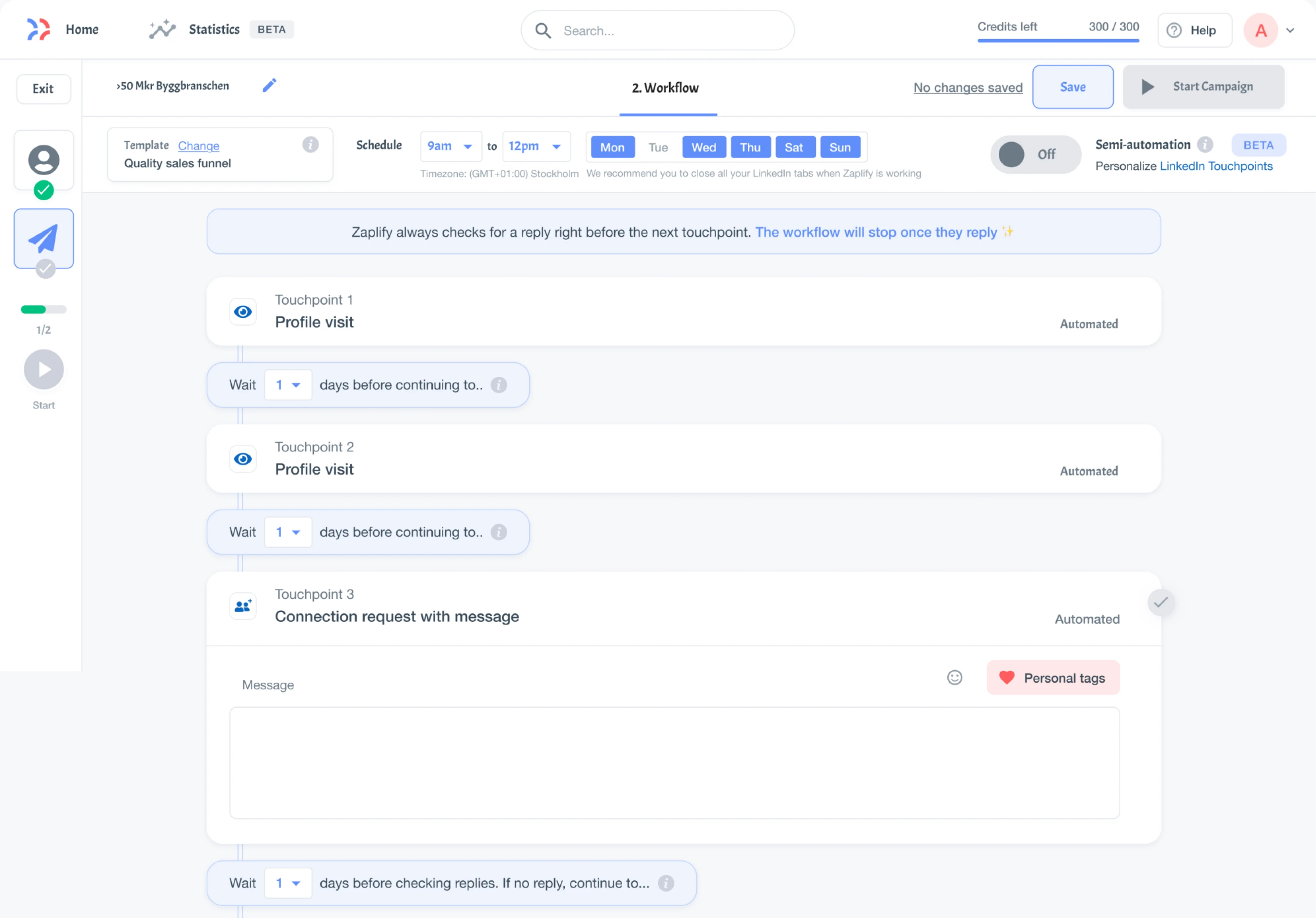
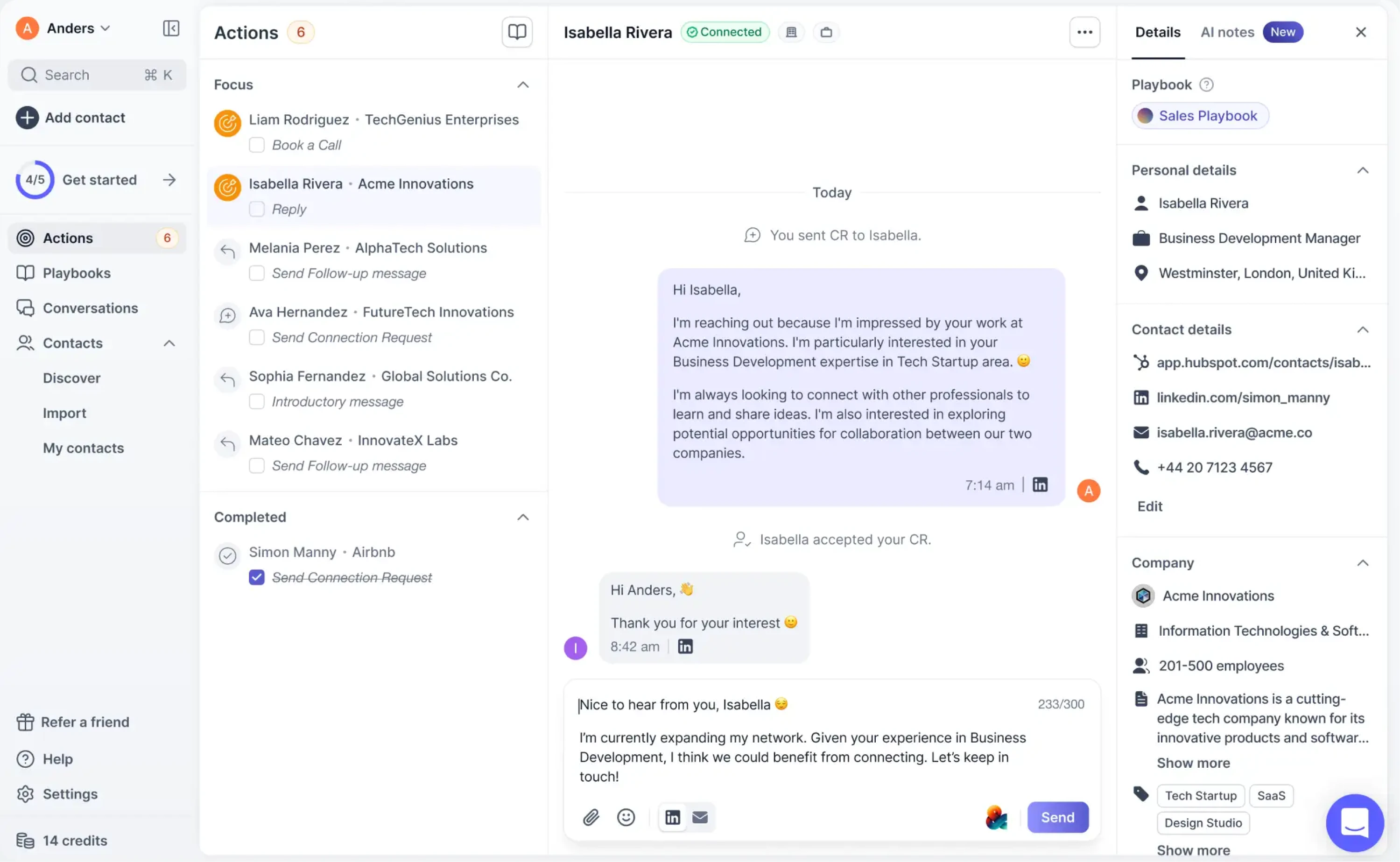
Zaplify hit exactly this. Activation was sitting at 20–25%, meaning three out of four signups never got anywhere. After we redesigned onboarding and navigation, activation nearly doubled to around 40%.
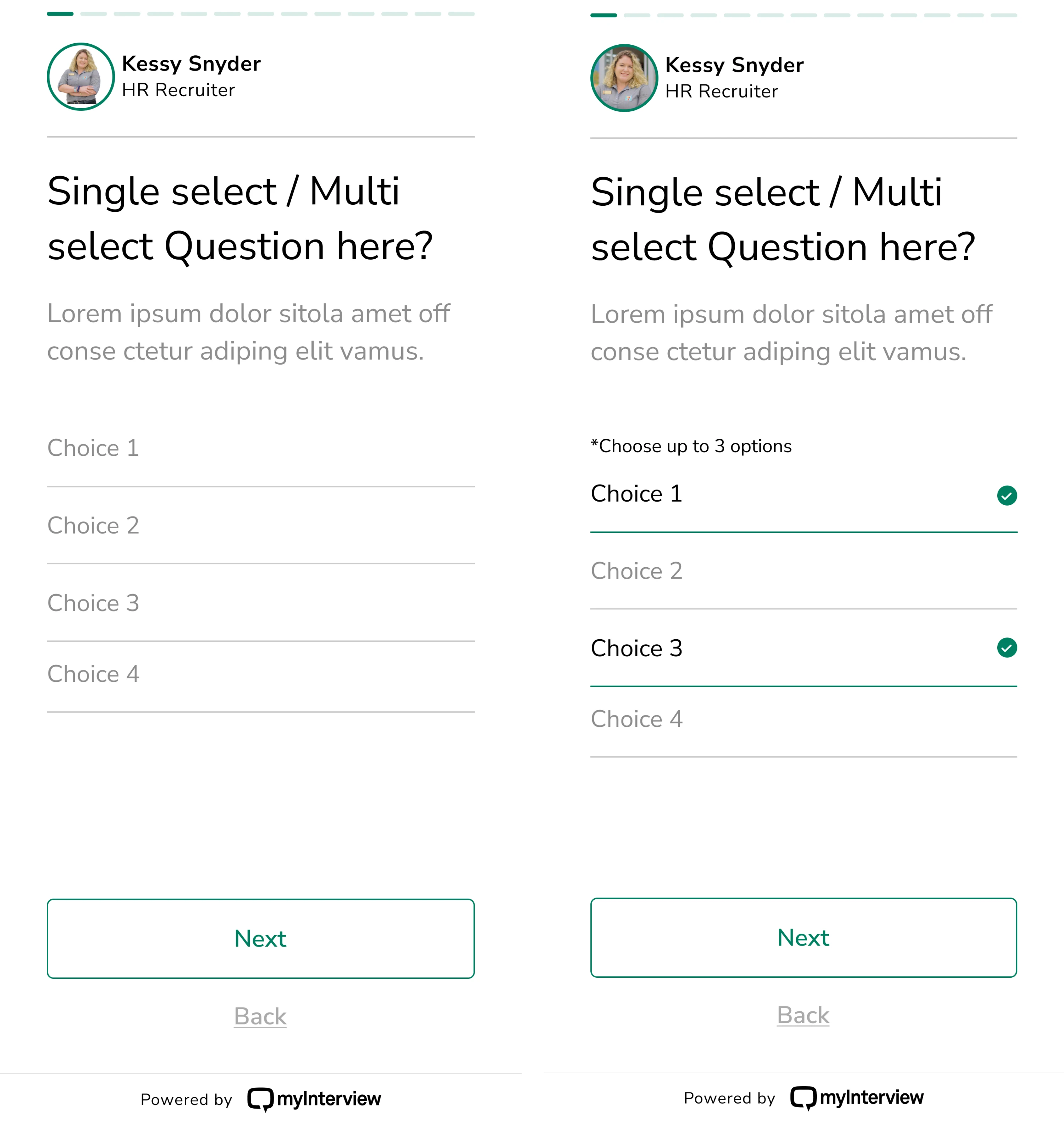
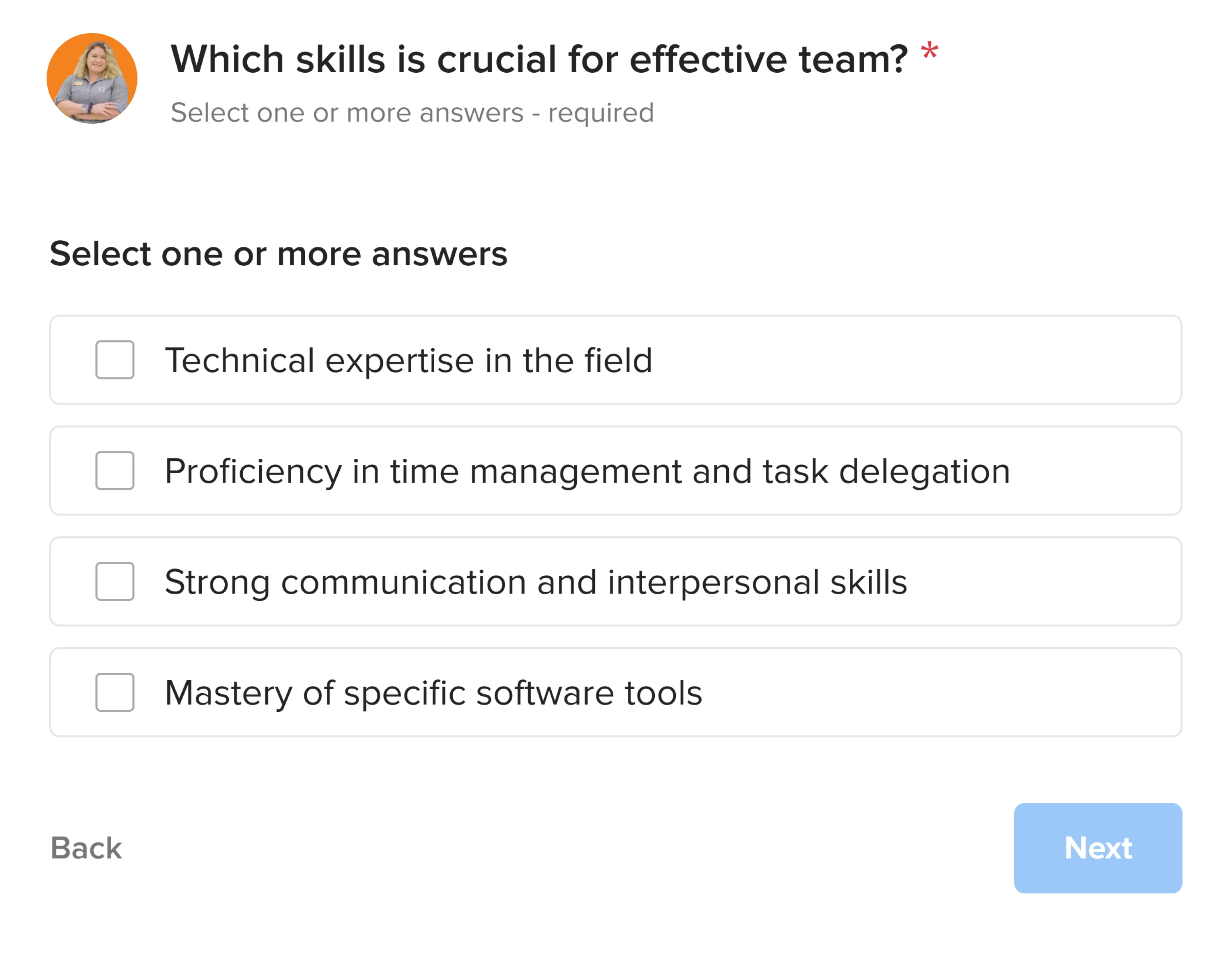
Another example is MyInterview. The company had a stranger version of the problem: 90% of users were dropping off mid-interview. That pattern is basically invisible in a dashboard. You need session recordings and structured diagnosis to even see it happening.
The pattern I'd flag hardest, though, is the one that looks like success from a distance. An app with 40,000 registered users and under 10% engagement doesn't have a growth problem. Marketing did its job. Something breaks after people arrive.
Early-stage teams end up here constantly, usually for a defensible reason. As one founder told us: "It was about getting the platform up, not making it user-friendly."
Fair enough at the MVP stage. It stops being fair around the time you start paying for traffic. We wrote more about that tradeoff in our guide to UX design for startups.
However, if you already know precisely what's broken, you've done the research, the team agrees, the fixes are scoped, you don't need a diagnosis. You need hands. Hire designers and start building. Paying for consulting to confirm what you already know is an expensive way to feel validated.
Knowing which of these you're in is worth more than any deliverable.
What the UX consulting process looks like
UX consulting should move from diagnosis to action. At Eleken, that usually happens in six steps:
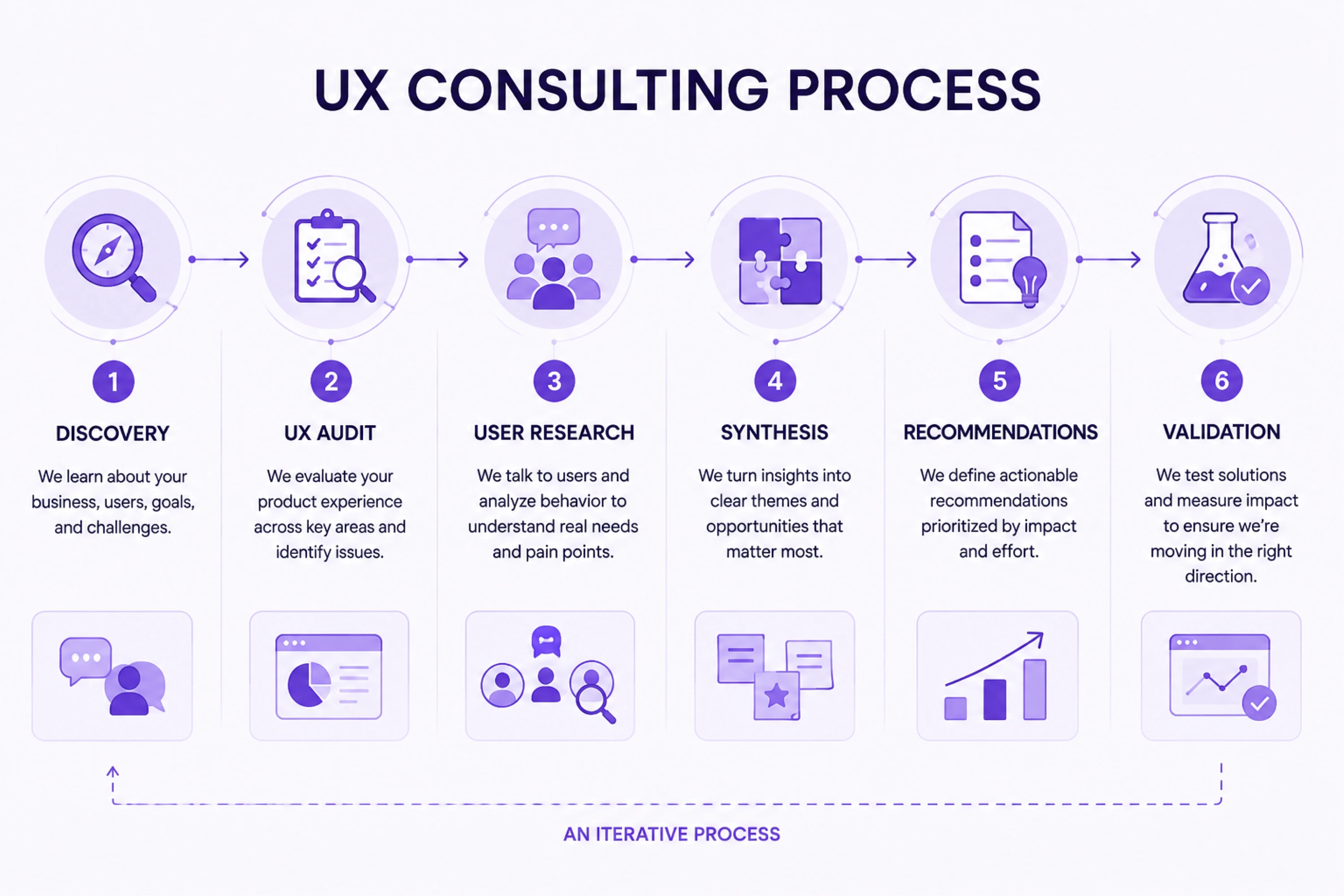
- Step 1: Discovery.
Stakeholder interviews, analytics review, support ticket analysis. The goal is to understand what the business needs before touching what users need. Support tickets are underrated here. They're free, unfiltered, and already sorted by frequency.
- Step 2: UX audit.
A heuristic evaluation against Nielsen's ten usability principles, scored for severity: 1 for cosmetic, 2 for real friction, 3 for a genuine catastrophe. Add a WCAG 2.2 accessibility check and an information architecture review. This combination surfaces roughly 80% of UX problems before you talk to a single user, which is why it comes first; it's fast and cheap.
- Step 3: User research.
In-depth interviews, typically 30 minutes to two hours, with a sample of 10 to 40 users depending on how many distinct roles your product serves. Then surveys, session recordings, and moderated usability sessions with 5 to 7 participants per user type. Five is not a typo. Past that, you mostly hear the same problems again. Our UX research breakdown goes deeper on methods.
- Step 4: Synthesis.
Every issue gets scored on severity, effort, and impact, usually with RICE, ICE, or a value-versus-effort canvas. Unglamorous, and it's where UX UI consulting services earn their fee. This is the step that turns sixty complaints into a sequence.
Step 5: Recommendations.
Wireframes, revised copy, reorganized navigation, journey maps, task flows. Specific enough that a designer can build from them.
Step 6: Validation.
A/B tests, usability tests, feedback loops. If nobody measures the outcome, the whole engagement was a very confident guess. Our full UX design process covers how this loops back into ongoing work.
Advan Research is a decent example of the timeline. Their audit surfaced more than 30 flaws. From audit to final screens and a finished UI kit took just three months.
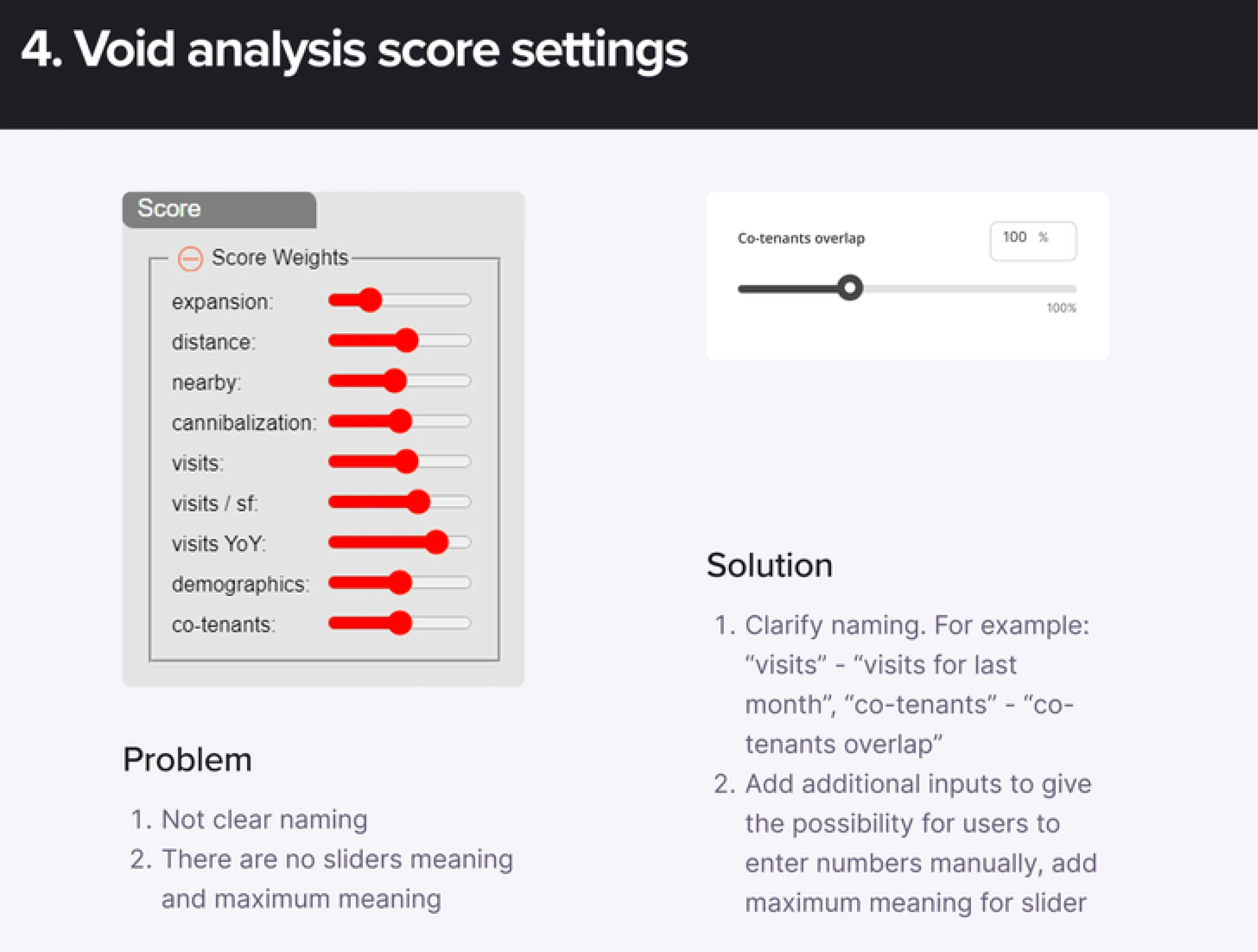
A word on tools. Figma, Maze, Hotjar, Crazy Egg, Lookback, GA4, Mixpanel, Microsoft Clarity, Miro, FigJam. Useful, all of them.
This Reddit user shares: “Microsoft Clarity has been a decent free workaround I've been using. You get info on rage clicks, dead clicks, heat maps, script errors, how far users scroll down as well as session recordings…”
Microsoft Clarity has been a decent free workaround I've been using. You get info on rage clicks, dead clicks, heat maps, script errors, how far users scroll down as well as session recordings. Pretty decent for being free.
However, heatmaps and session recordings help you spot friction, while the most valuable findings usually come from a manual review using heuristics, user journeys, and task-based evaluation. I'd go further. Tools tell you where people struggle. Only a person can tell you why. Anyone selling you an automated UX audit is selling you a heatmap with a nicer logo.
What business impact does it drive?
Good UX consulting services move a specific short list: activation rate, churn, conversion drop-off, retention, support ticket volume, and usage frequency. If a proposal can't name which of those it targets, that's a problem worth raising before you sign.
Some examples with actual numbers attached:
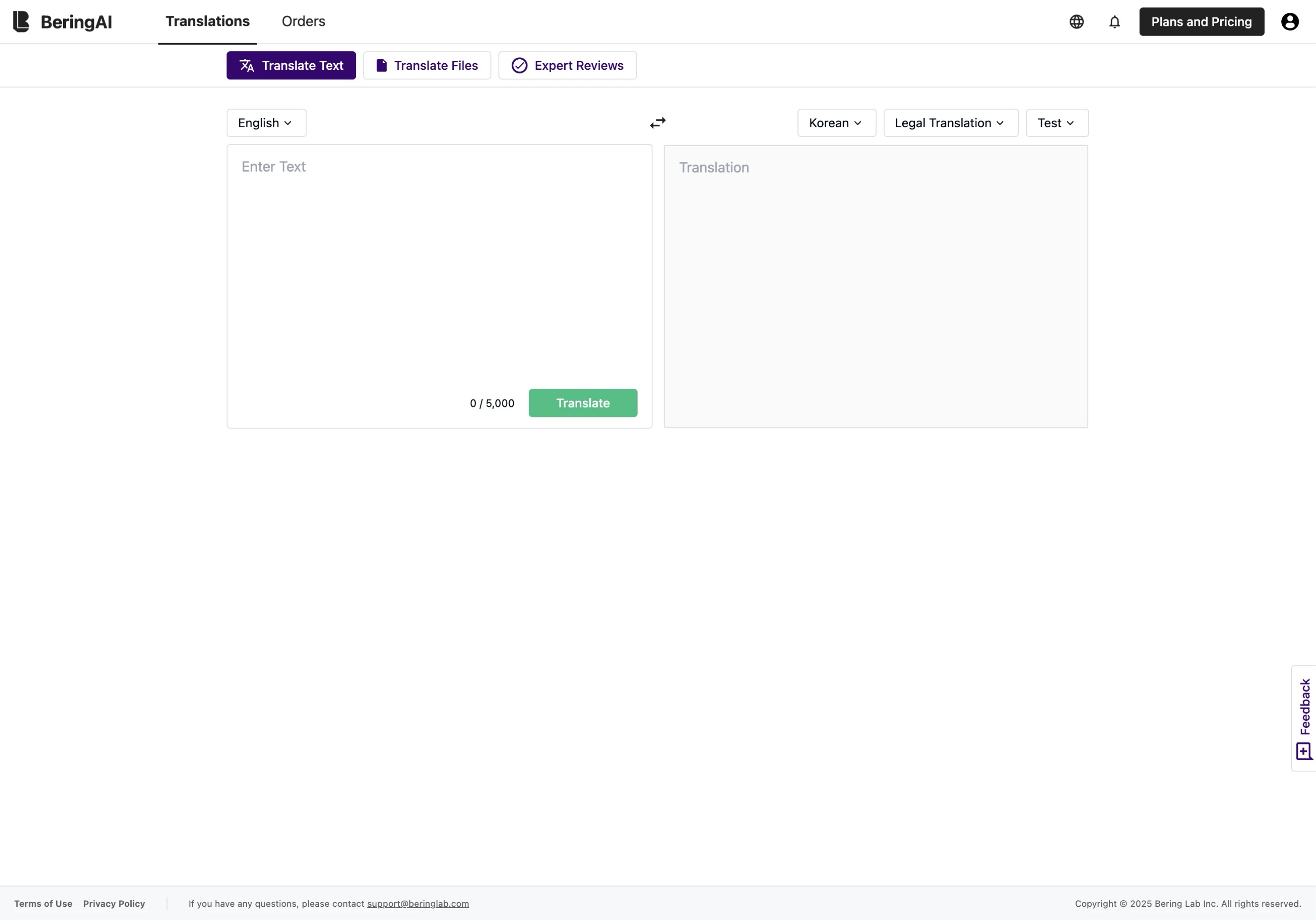
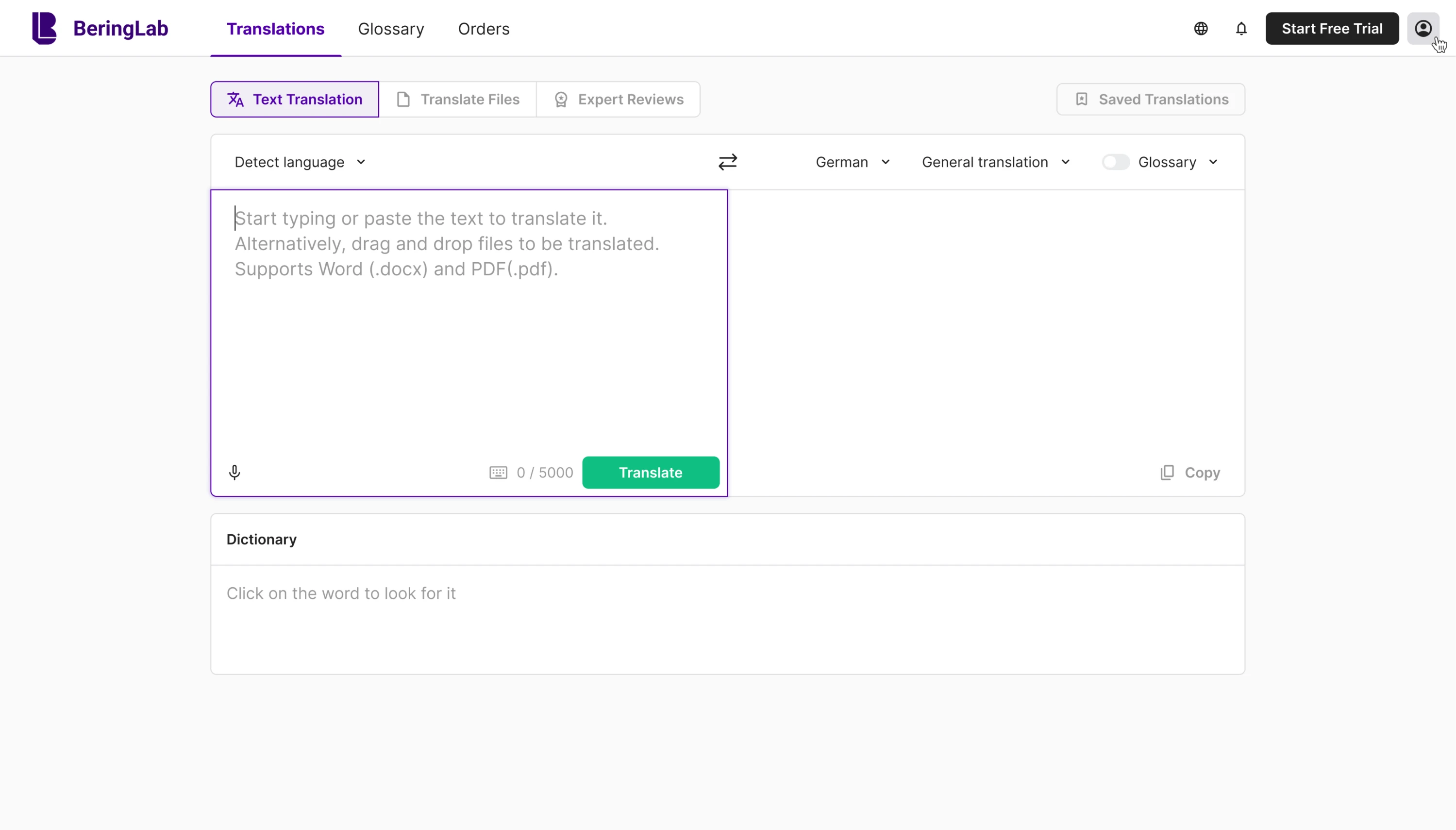
- Bering Lab had an 89% bounce rate on their legal translation product. People arrived, took one look, and left. Our designers analyzed the core flows, redesigned the experience around the product’s value, and made its premium features easier to understand and use. After our collaboration, Bering Lab reported a 90%+ repurchase rate and raised $2.3M in pre-Series A funding.
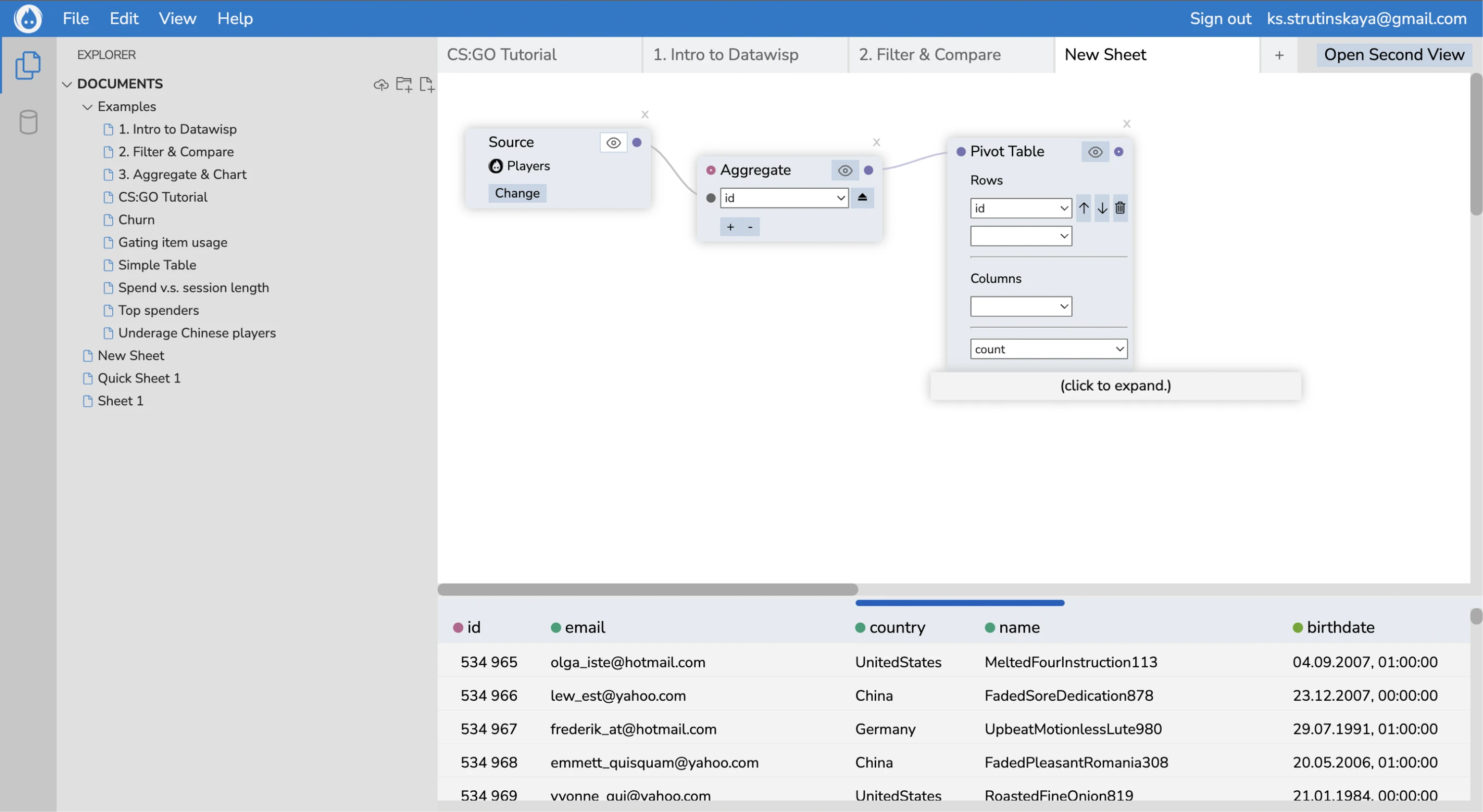
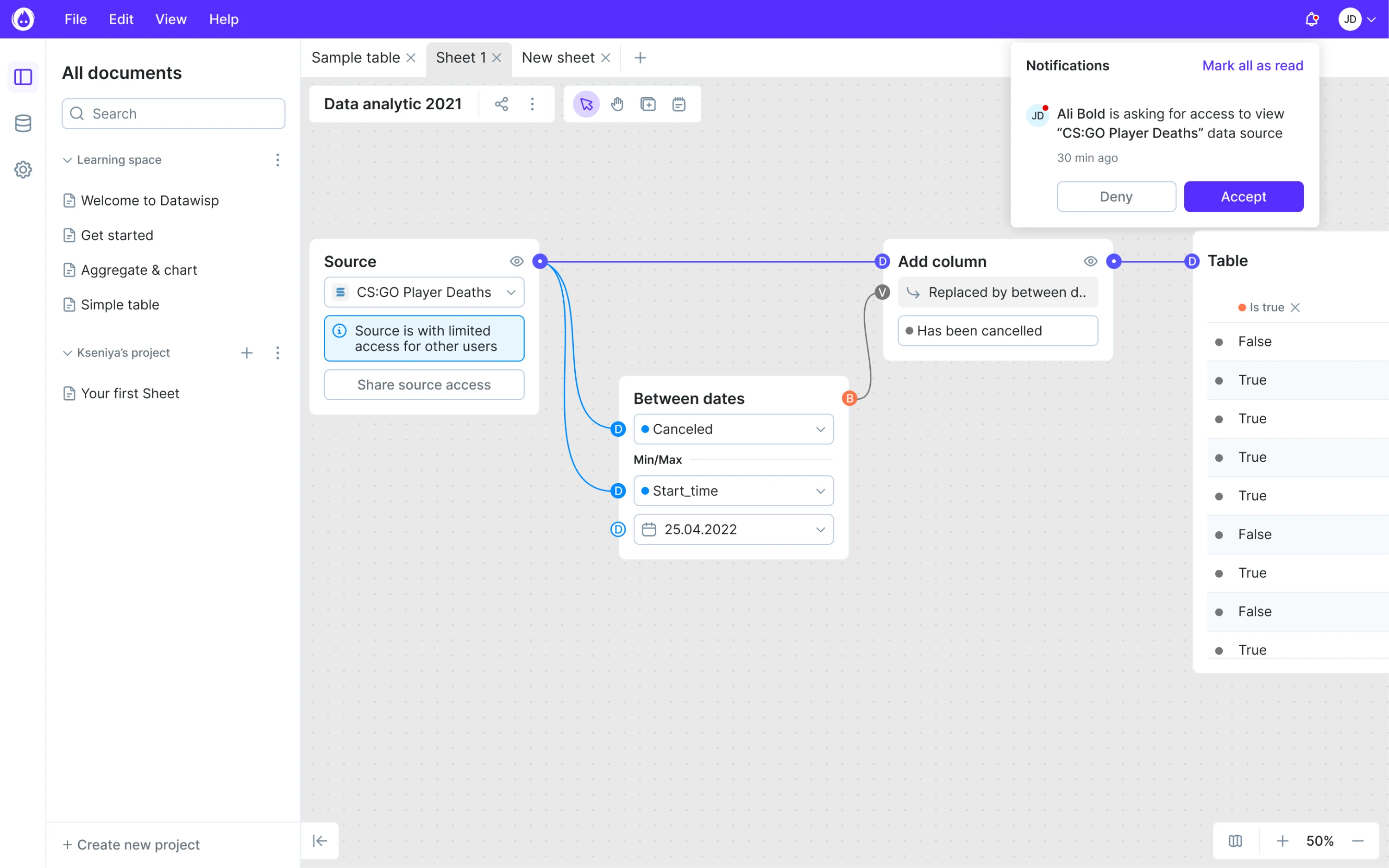
- Datawisp had a subtler issue. The product was powerful, and it looked it, which turned out to be the problem: investors kept saying it seemed complicated. A UX audit and redesign shifted that perception to "looks easy." They closed a $3.6M seed round. Same underlying capability, different first impression.
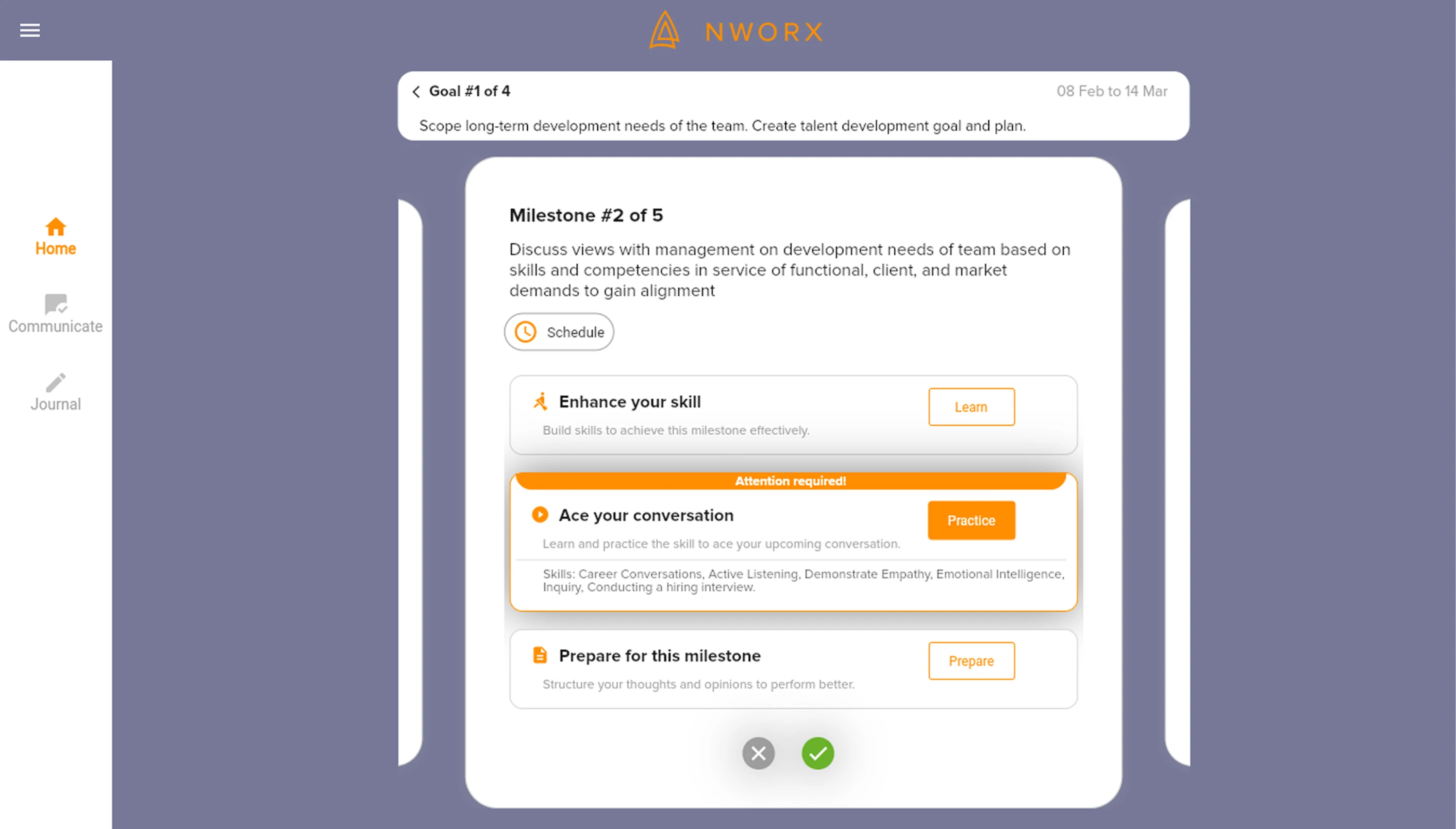
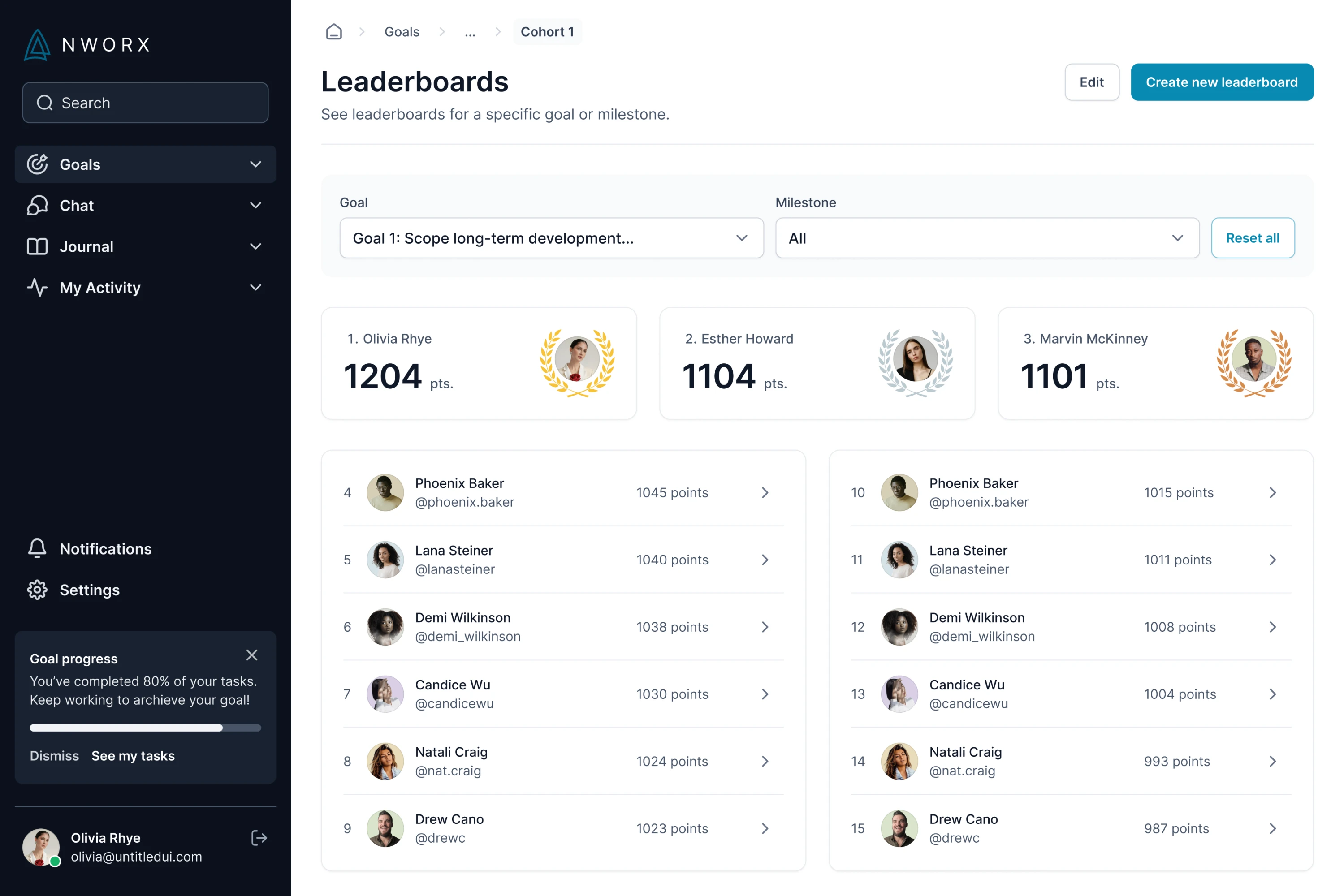
- Nworx saw a 200% increase in positive UI feedback from end users after we reworked their flows and navigation. That one matters because it's not a vanity metric; it's the users themselves reporting the change.
The mechanics behind these outcomes are less dramatic than the headlines. None of it is magic. It's just UX optimization applied where the evidence points, and it compounds across the whole customer experience.
One caution. Be skeptical of anyone quoting enormous percentage lifts without context. A 400% conversion improvement usually means the starting number was terrible. Ask for the before figure, not just the after.
What does UX consulting cost?
There's no standard price for UX design consulting because “consulting” can mean anything from a focused UX audit to months of research, strategy, testing, and redesign.
For a more reliable benchmark, we looked at Clutch's 2026 UX pricing data, which is based on first-party reviews submitted by verified clients. UX/UI projects reviewed on the platform typically fall between $10,000 and $49,999, while the average project cost is much higher at $84,973. The average engagement lasts around 10 months, with an average monthly cost of $8,895.
Hourly rates vary considerably by location of a UX consulting company. Clutch reports these typical ranges:
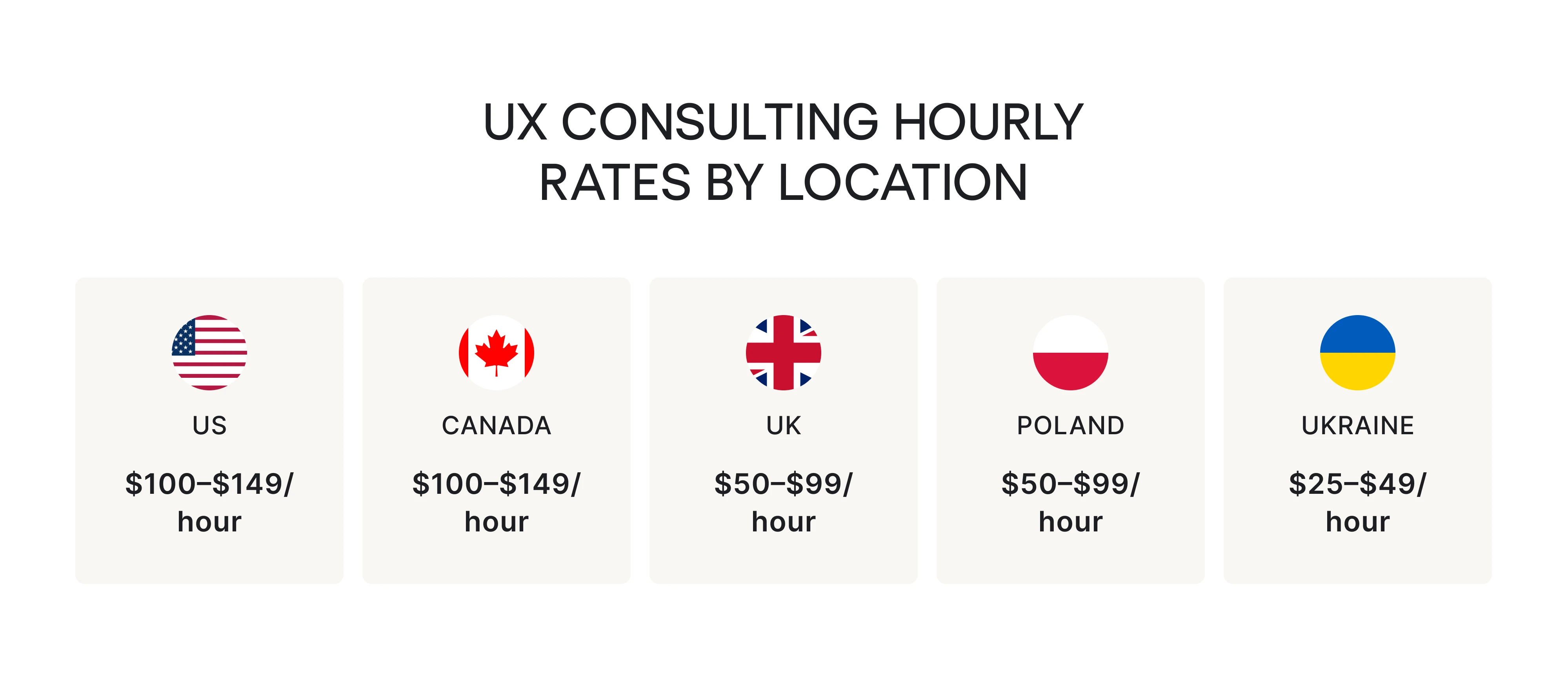
Price depends less on the label “UI UX consulting” and more on what the engagement includes. Clutch identifies scope, timeline, team size and experience, and UX design consulting firm location as major cost factors. A focused evaluation of one workflow will naturally cost less than an engagement involving user research, usability testing, prototypes, new functionality, and multiple design iterations.
The engagement model matters too. UX consulting firms may charge hourly, per project, through a retainer, or as an ongoing subscription. A fixed project works well when the problem and deliverables are clearly defined. Ongoing product work is less predictable, so a retainer or subscription gives the team room to investigate, design, test, and iterate. Your existing UX team structure also matters here: you may need a one-off consultant, extra design capacity, or a designer who can embed into your product team.
At Eleken, a UX audit starts with the business, not the screens. We first define what the product needs to improve and how success will be measured. Then we look at the relevant product metrics and user behavior to understand where UX may be holding the product back. The goal isn’t simply better design. It’s better business metrics through better design.
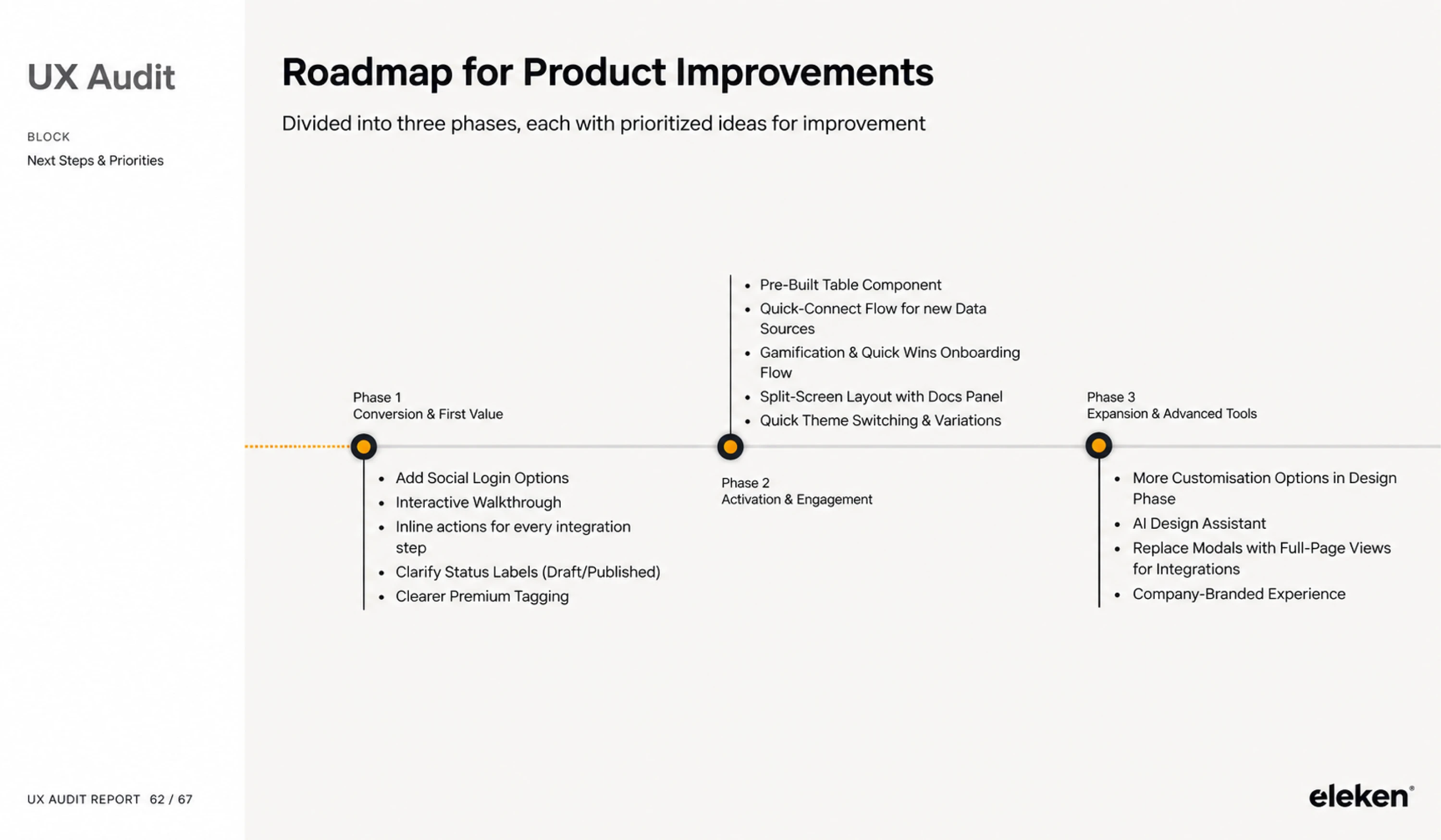
This also affects how we work with clients. Eleken designers embed into the product team and communicate directly with stakeholders, while being supported by a design lead and the wider Eleken design team. So research, analysis, and implementation happen within the same collaboration instead of ending with an audit report someone else has to act on.
We also start with a free three-day trial. You get one or two real product screens before committing to the full engagement, so you can evaluate both the designer and the way we work.
And that's ultimately the more useful way to think about UX consulting costs: not “How much does an audit cost?” but “How much work will it take to identify the problem, fix it, and see whether the fix worked?”
How to choose the right UX consultant
The market is crowded, and the difference between excellent and useless is hard to see from a website.
What to look for:
- A portfolio with before-and-after metrics, not just pretty screenshots.
- A structured, repeatable process they can describe without hedging.
- Reasoning grounded in data and research, not taste.
- Clear communication. If the sales call is confusing, the project will be worse.
- Relevant sector experience, particularly SaaS, fintech, healthcare, eCommerce, or enterprise.
Red flags are as follows:
- Opinions with no supporting evidence.
- No measurable outcomes anywhere in their case studies.
- No described process, or a process invented during your call.
- Reluctance to show work that didn't go well.
Domain fit matters more than most people expect. One of our clients put it bluntly: "Freelancers do everything. I need SaaS specialists."
A consultant who has seen forty onboarding flows in your category recognizes patterns in an afternoon that a generalist needs three weeks of research to find.
Here is what to ask on the first call:
- What framework do you use to rank severity? Vague answers here predict vague deliverables.
- How many users will you test with, and how did you pick that number?
- Walk me through an engagement where the metric didn't move. What happened? The best answer to this question is a real story, told without defensiveness.
- What do you need from my team, and how many hours per week? Consulting isn't a service you can fully outsource.
- Who implements the recommendations? You, them, or a handoff- decide now, not in month two.
- What does your final deliverable physically look like? Ask to see a redacted one.
- What would make you tell us we don't need this? Anyone who can't answer will always find a reason you do.
Location matters less than it used to, though if you're searching regionally, a local UX design agency can be easier for on-site workshops.
The bottom line
UX consulting follows a simple chain: find what's broken, decide what matters, fix it, and measure what changed.
Skip the diagnosis, and you're redesigning on instinct. Skip measurement, and you won't know whether the redesign actually worked.
That's why a UX engagement should start with a clear product or business goal. Maybe it's getting more users to activation, reducing time to value, improving conversion or retention, or removing a workflow that generates too many support requests. Define the outcome first, then use research, product data, and user behavior to decide what deserves design attention.
The best result of UX consulting isn't a deck full of recommendations or a set of polished screens. It's a product that works better for users and has the metrics to prove it.
That's also how we work at Eleken. We start with your business goals, analyze the product and its metrics, identify where UX is holding those goals back, and then design the improvements — all within the same collaboration.
If you want to find out what's getting in the way of your product's growth, talk to Eleken.