

When conversions drop, users abandon flows, or a redesign fails to move the needle, product teams usually turn to the same question: What's broken, and where do we start fixing it? That's what a UX audit agency helps you answer.
To cut through the noise, we compiled this list based on verified ratings and reviews from Clutch and DesignRush. The result is a shortlist of 10 agencies, with Eleken, our own team, featured first based on a 4.9 Clutch rating and recognition among top UX audit companies on DesignRush.
Let’s break down what each agency is best for, what their process looks like, and how to tell whether they're the right fit for your product.
1. Eleken — UX audit agency for SaaS products
Eleken is a UX design agency focused exclusively on SaaS, with over 200 products designed and audited since 2015. Their designers specialize in complex SaaS workflows, work directly with clients on a full-time basis, and communicate without account managers or intermediaries.
Clients can start with a standalone UX audit to identify usability issues and prioritize the improvements that matter most. If they decide to move forward with Eleken, part of the audit fee is credited toward the subscription, making the transition from diagnosis to redesign straightforward.
Eleken holds a 4.9-star rating on Clutch across 120+ reviews and is recognized among the top UX audit agencies on DesignRush.
What their audit process looks like
Eleken's audit combines expert review with real product context rather than running through a generic checklist. It typically covers:
- User flow walkthrough — onboarding, activation, key features, and upgrade paths, mapped to spot where users get confused or drop off.
- Heuristic evaluation — navigation, information architecture, forms, and interaction patterns reviewed against usability best practices.
- Competitor analysis — benchmarking your experience against category leaders to surface gaps in user expectations.
- Stakeholder interviews — short sessions with your product and support teams to tie findings to the real business context.
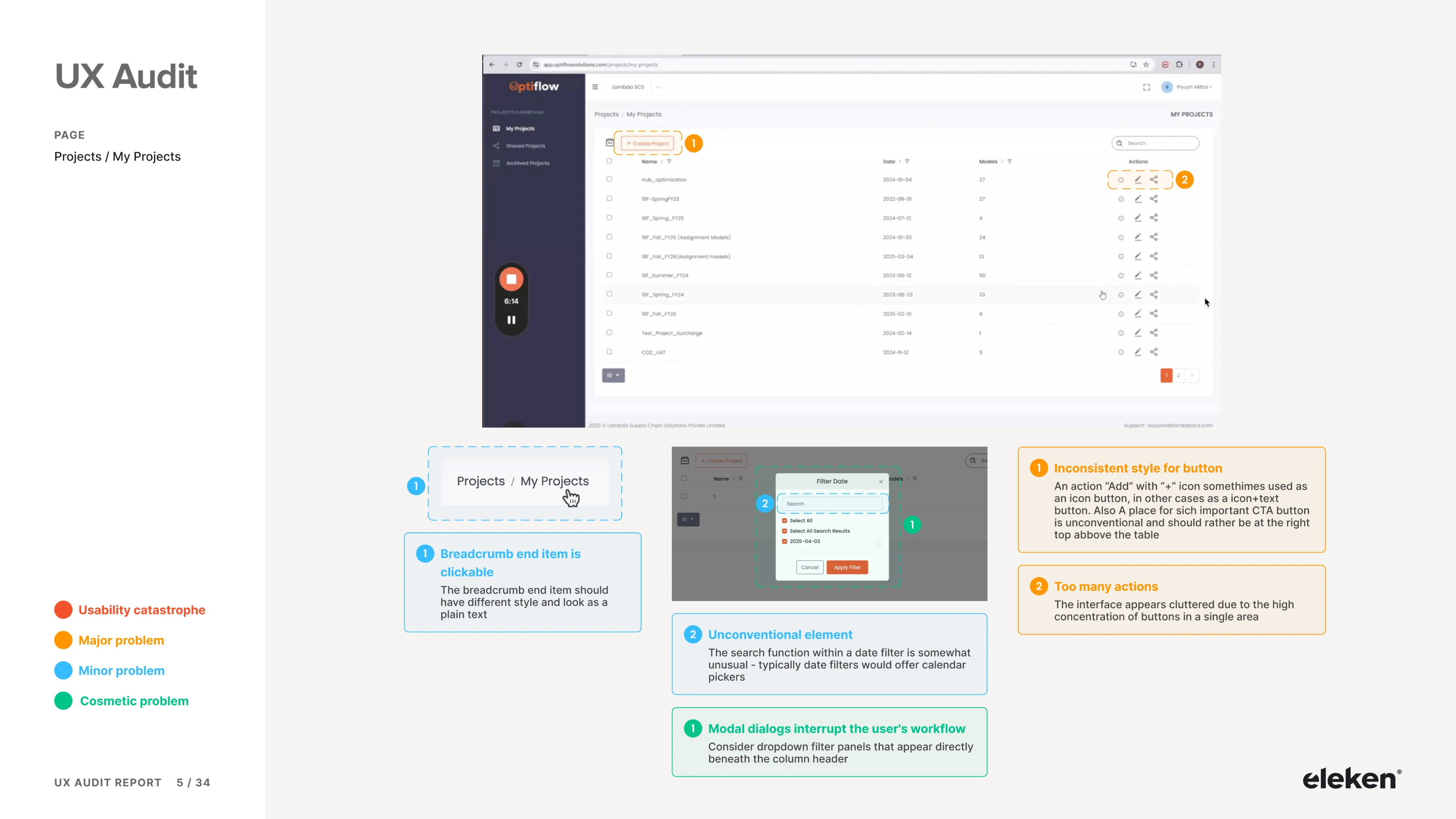
The deliverable is a UX audit report with annotated screenshots, severity ratings for each issue, and a prioritized redesign roadmap your team can act on. A dedicated designer walks you through the findings and helps align next steps with your goals.
Pros
- Deep SaaS niche expertise across industries.
- Part of the audit fee goes toward the subscription if you continue with Eleken.
- Actionable output packed into a step-by-step redesign roadmap.
- Flat monthly subscription with no hidden fees and a 3-day free trial.
Cons
- Not suited for non-SaaS products.
2. Nielsen Norman Group — Enterprise UX audit agency

Nielsen Norman Group is one of the most recognized names among the best UX audit providers, with a consulting practice built on global usability research and decades of experience. Their expert review service is designed for organizations that need a rigorous, fully independent evaluation.
NN/g doesn’t promote any specific tools or technologies, which makes its recommendations genuinely vendor-neutral. Pricing starts at $60,000 for a single website or application review, reflecting both the depth of the research and the seniority of the experts involved.
What their audit process looks like
NN/g's expert review is led by a senior usability researcher who inspects the interface against established best practices and their own heuristic framework. Every finding is severity-rated to help design teams prioritize what to fix first.
The review can optionally include a competitive benchmarking component, evaluating your experience alongside up to 3 direct competitors. Findings come as a written report or a presentation deck, depending on what works best for your team.
Pros
- Findings backed by decades of usability studies.
- Fully vendor-independent perspective.
- Severity-rated findings make prioritization straightforward.
- Flexible deliverable format (report or deck).
Cons
- High entry price starting at $60,000.
- Focused on evaluation only.
3. Baymard Institute — Ecommerce UX audit agency
Baymard Institute is a UX research institution that offers auditing services. Their credibility comes from 200,000+ hours of large-scale usability testing, used by 71% of Fortune 500 ecommerce companies and over 29,000 UX professionals worldwide.
If you run an online store and want your audit grounded in the most comprehensive e-commerce usability dataset in the industry, Baymard is the obvious choice. Pricing is tailored per organization, and they offer a guaranteed positive ROI. If you don't get value from at least 5 of their 40 recommendations, the audit is free.
What their audit process looks like
Baymard's audit evaluates the experience against 500+ UX parameters, benchmarking your project’s performance against 280 leading sites. The process covers homepage and navigation, on-site search, product listings, product pages, cart and checkout flows, user accounts, and mobile-specific UX.
The deliverable is a 120+ page report with 40 research-backed improvement suggestions. The audit is walked through in a 2-hour video call with your assigned researcher, followed by three additional follow-up calls to support implementation.
Pros
- 200,000+ hours of usability testing behind every recommendation.
- 500+ scoring parameters with direct benchmarking against industry leaders.
- Industry-specific audit options across 30+ verticals.
- Guaranteed ROI, or the audit is free.
Cons
- Focused almost exclusively on e-commerce.
- Audit only, implementation is up to your team.
- Turnaround of 17–25 business days.
4. Onilab — UX audit agency for Shopify & Magento
Onilab is a full-cycle ecommerce agency with 10+ years of experience specializing in Shopify and Magento development, design, and auditing. Unlike other top user experience audit companies, the team can both evaluate your store and rebuild it.
Their audit scope covers e-commerce UX/UI, mobile app UX, web app usability, and conversion rate optimization. The agency is well-suited for mid-market online retailers that want findings tied to real development resources.
What their audit process looks like
Onilab's full audit typically takes 40–60 hours and follows a four-stage process:
- Business discovery — gathering context on goals, current designs, target users, and market position before any evaluation begins.
- Competitor analysis — benchmarking the store's usability and interface against direct rivals to identify gaps and missed best practices.
- Usability analysis — heuristic evaluation and task-based testing across navigation, product cards, visual design, information architecture, and conversion flows.
- Report delivery — a detailed document covering identified issues, their impact on KPIs, recommended fixes, and resource estimates for implementation.
Pros
- Deep Shopify and Magento platform expertise.
- Full-cycle agency offering audit, design, and development.
- Broad audit scope, including UX/UI, mobile, web app, and CRO.
- Practical output includes resource estimates alongside recommendations.
Cons
- Less suited for non-ecommerce digital platforms.
- Pricing isn't publicly listed.
5. Rubyroid Labs — UX audit for web & mobile apps
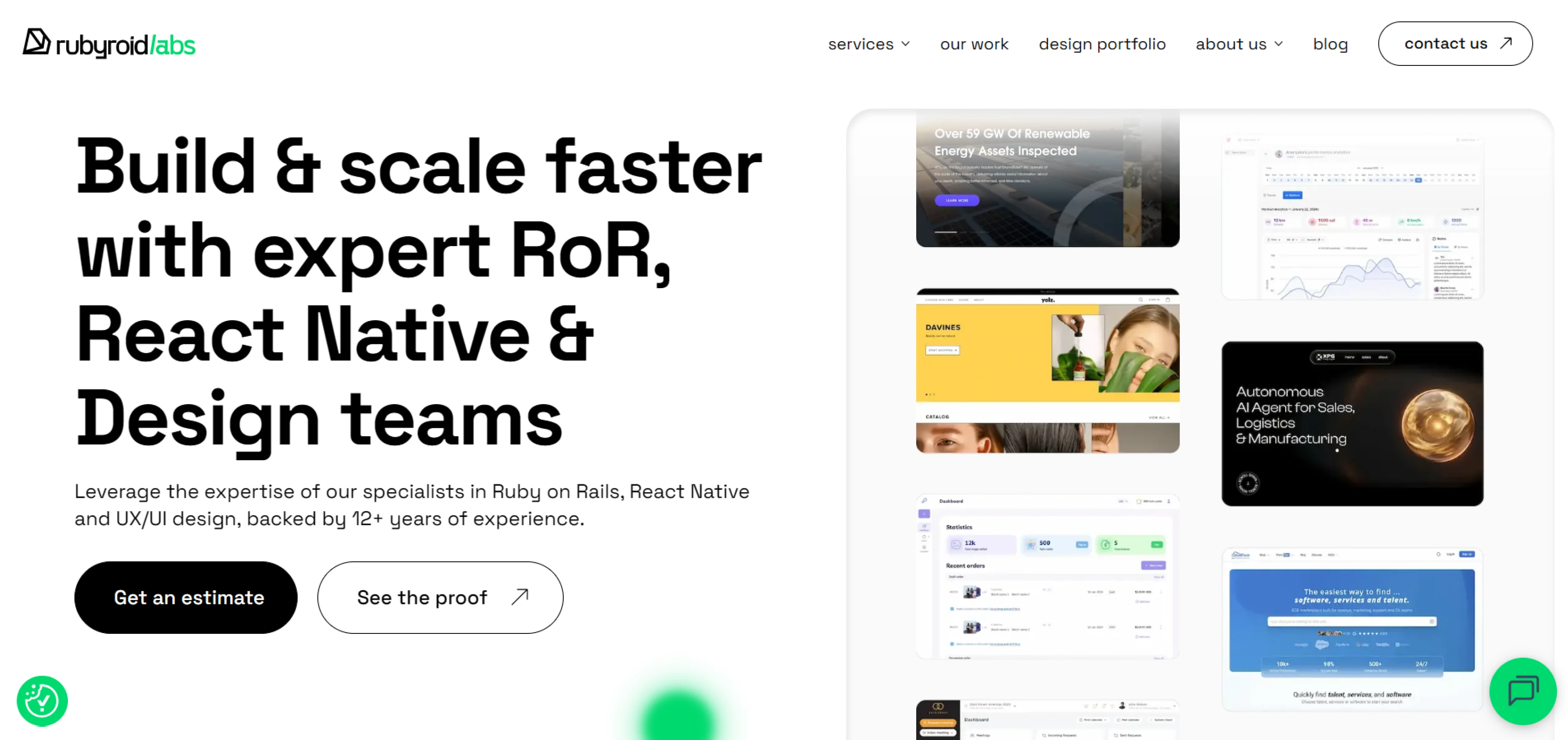
Rubyroid Labs is a full-cycle product agency with 12+ years of UX/UI experience, working across ecommerce, real estate, healthcare, and fintech. Their UX audit service stands out for combining design analysis with behavioral data.
They hold a 5.0 rating on Clutch and are a DesignRush award winner, with clients including Toyota, Mastercard, and Volvo. Audit pricing ranges from $1,000 for a focused feature review up to $15,000+ for a full-scope engagement.
What their audit process looks like
Rubyroid Labs needs 2–4 weeks to run an audit through four stages:
- Discovery session — understanding your business goals, user complaints, and the scope of what needs to be evaluated.
- Audit execution — design and usability analysis, heatmap studies, and identification of drop-off and friction points across the product.
- Actionable insights — delivery of a written report plus Figma mockups with concrete recommendations focused on improvements.
- Implementation support — optional redesign or consulting services to help the team act on findings.
Pros
- Heatmap analysis is included as part of the standard process.
- Deliverables include Figma mockups.
- Flexible scope, from a single feature to a full product review.
- Direct communication with a UX designer.
Cons
- Not specialized in a single product type.
- Pricing can reach $15,000+ for comprehensive audits.
6. Artkai — UX audit services for enterprise products
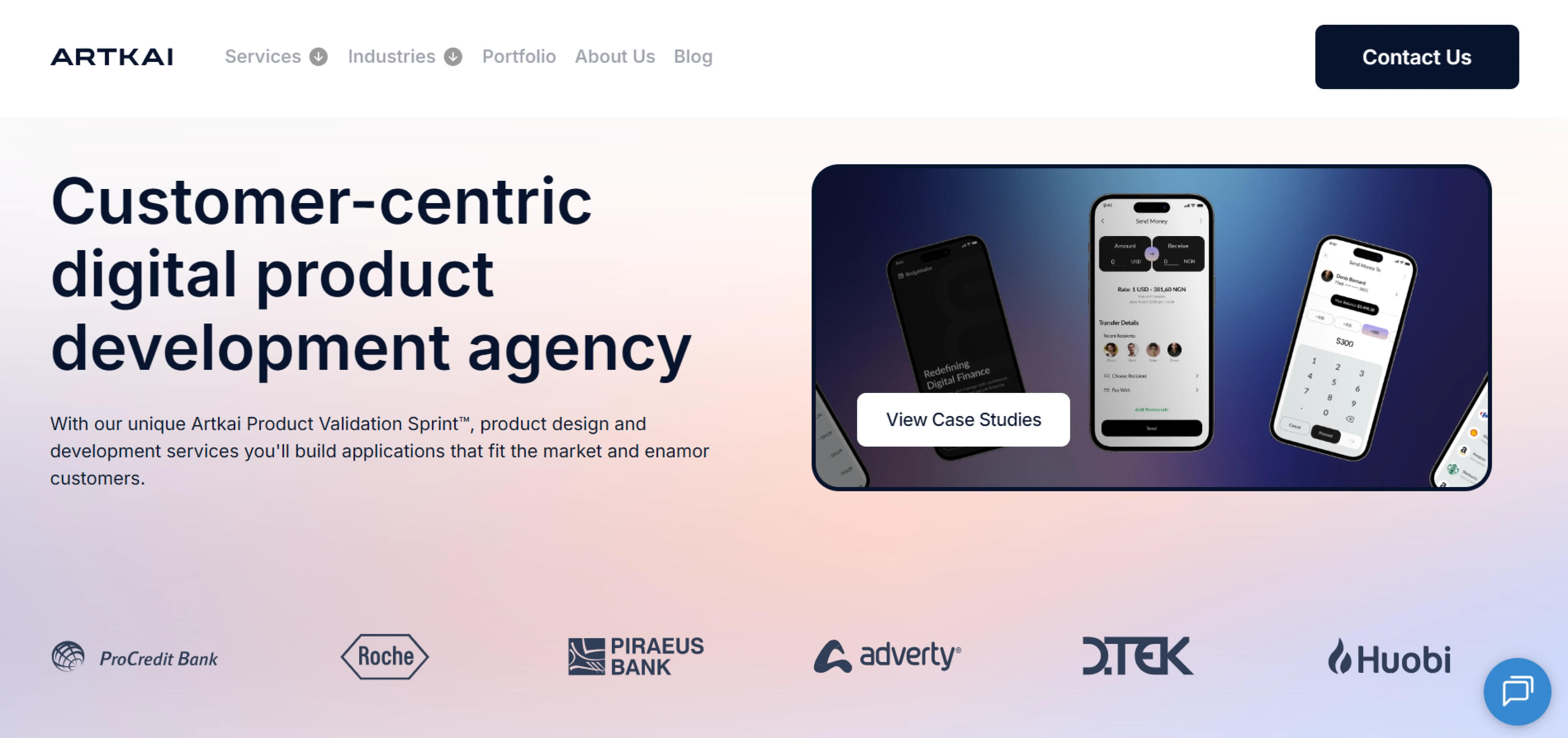
Artkai is an end-to-end product development agency and part of Euvic Group, a leading EU software house. Their user experience audit service is built around enterprise-scale digital products, including banking platforms, fintech solutions, healthcare systems, and complex SaaS.
The agency follows an evidence-based design approach, tying audit findings directly to business KPIs such as user adoption, engagement, and conversion rates. They hold a 4.9 rating on Clutch, with audit packages starting at $5,000.
What their audit process looks like
Artkai's audit starts with stakeholder interviews to align on business objectives, product goals, and KPIs. This is followed by user research and competitor analysis to map behavior patterns and benchmark the product against direct rivals.
From there, the team builds a customer journey map to surface friction points across key flows, with a focus on drop-off and conversion blockers. The final deliverable is a report with redesign suggestions, accessibility insights, and a modernization roadmap.
Pros
- Strong enterprise and fintech domain expertise.
- AI-augmented UX audit process for faster analysis.
- Accessibility audits are included as a dedicated service.
- Full-cycle agency that carries findings through to design and development.
Cons
- Enterprise focus may be overkill for early-stage startups.
- Less specialized in SaaS-specific UX patterns.
7. Lazarev.agency — UX audit for complex AI products
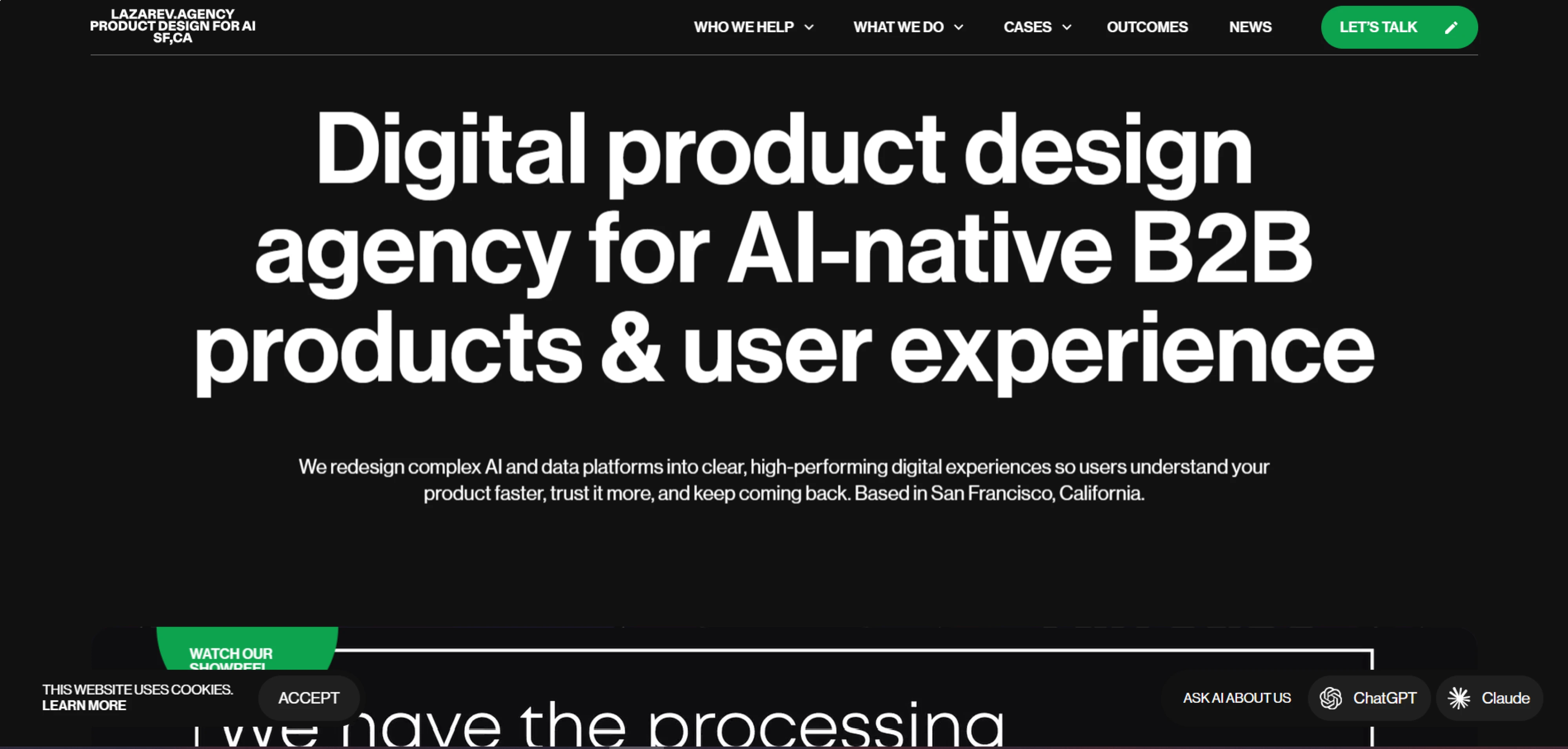
Lazarev.agency is a product design agency best known for working on data-heavy and AI-powered B2B products. With 600+ products shipped, they bring a level of craft and design ambition that's rare among audit-focused agencies.
Their UX audit is the first step of every redesign engagement, used to surface the real reasons behind usability problems before any design decisions are made. Audit pricing typically falls between $2,000 and $8,000, with a 2–4 week timeline.
What their audit process looks like
Lazarev begins with strategy workshops focused on business goals, product strengths and weaknesses, and the broader growth context. The team analyzes user behavior through Hotjar and Google Analytics to identify patterns, drop-off points, and friction in existing flows.
During evaluation, the team applies heuristic principles and industry standards to assess the digital experience, with a dedicated pass for mobile responsiveness. The output is a detailed audit report with recommendations and a strategic roadmap.
Pros
- Exceptionally strong design craft.
- Deep AI and data product expertise.
- Behavioral data tools are integrated into the audit process.
- Audit is always tied to a broader product strategy.
Cons
- Not the most accessible option for teams on a tight budget.
- Audit is typically bundled with redesign work.
8. Excited — UX audit agency for SaaS & Web products
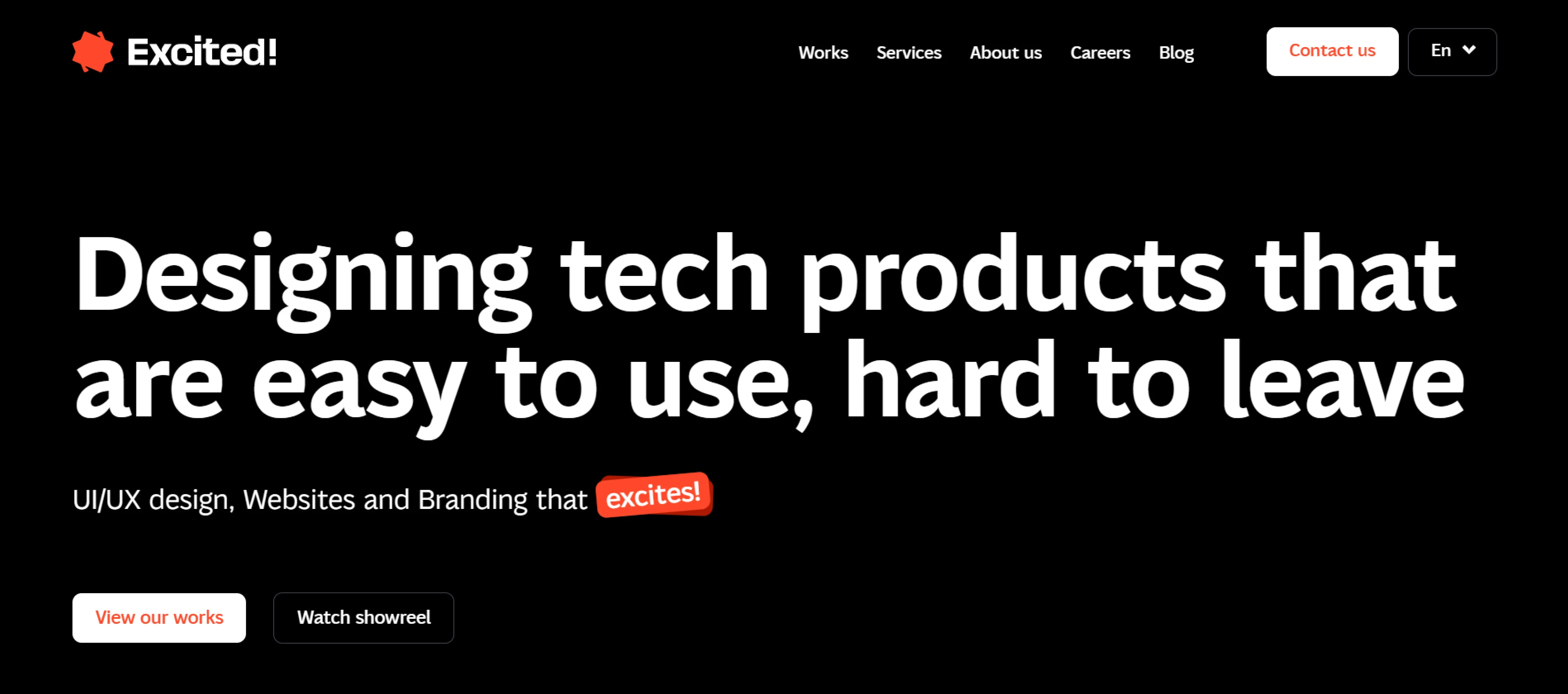
Excited is a product design agency with 8 years of experience and a strong track record in SaaS, fintech, marketplaces, and web applications. They're ranked among the top 5 UX agencies worldwide on Clutch and hold a 5.0 rating across 50+ reviews.
Their audit covers the website UX, mobile apps, SaaS dashboards, and visual consistency, making them a solid fit for product teams. Their design outcomes have reached over 15 million users across 20 countries.
What their audit process looks like
Excited relies on analytics, session recordings, and user feedback to map where users struggle before drawing any conclusions. Usability audit and heuristic analysis help uncover hidden UX gaps and prioritize high-impact fixes.
The team also reviews navigation and information architecture alongside accessibility and UI checks, covering color contrast, touch targets, and cross-device compliance. The final deliverable is a structured audit report with UX issues ranked by business impact and effort, paired with a conversion-focused roadmap.
Pros
- Session recordings and analytics are integrated into the audit.
- Strong SaaS and dashboard audit expertise.
- 30+ design awards signal high visual and interaction quality.
- Accessibility review is included as a standard part of the process.
Cons
- Less specialized in enterprise-scale or highly regulated industries.
- Pricing not publicly listed.
9. GojiLabs — UX audit agency for startups & digital products
Goji Labs is a product development agency with 10+ years of experience building and auditing digital products. They've helped clients raise over $1B in funding, and earned recognition from Forbes, CES, and Clutch as a top creative and design agency in California.
On Clutch, they hold strong ratings, with project costs ranging from $25,000 to $600,000+. Their audit is aimed at founders, CTOs, and CEOs who need clarity on usability, retention, and engagement issues before investing in a full redesign.
What their audit process looks like
Goji Labs approaches UX audits through user research, business analysis, and market evaluation. The team reviews the experience against usability principles, maps end-to-end user journeys, and evaluates navigation and accessibility standards.
Visual and functional consistency across the user interface is examined alongside a competitor benchmarking pass to surface gaps against UX best practices. Findings are delivered as a structured roadmap with improvements.
Pros
- Strong expertise across a wide range of digital product types and industries.
- Audit findings are tied to business goals.
- Competitor analysis is included as part of the audit scope.
- The agency can carry audit findings through to design and development.
Cons
- Audit pricing is not publicly disclosed.
- The LA-based team may introduce timezone friction for non-US clients.
10. Goodface agency — UX audit for fintech & web products
Goodface is a design and development agency founded in 2016, with 100+ projects delivered and a strong concentration in fintech. They hold a 4.9 rating on Clutch across 40+ verified reviews, with audit packages starting at $7,200.
Their UX audit is positioned as a root-cause analysis aimed at uncovering what’s blocking users. It typically serves as the first phase of a broader product redesign, making the agency a strong fit for teams that already know UX changes are needed.
What their audit process looks like
Goodface's audit covers user flow analysis, conversion path testing, and design consistency review to identify friction and drop-off points across the product. This is informed by competitor research and market analysis conducted upfront to give findings proper context.
The output includes prioritized UX recommendations alongside wireframes and design direction, so the team can move from audit insights directly into redesign. Engagements are run in structured sprints with weekly checkpoints.
Pros
- Deep expertise in the fintech field.
- Audit feeds directly into redesign.
- Competitive analysis is included as part of the process.
- Sprint-based process with clear milestones and weekly client touchpoints.
Cons
- Primarily focused on fintech and web products.
- Pricing is not fully transparent beyond the $7,200 entry-level package.
Best UX audit agencies at a glance
Every leading UX audit company on this list approaches audits differently — in scope, price, timeline, and how findings connect to actual design work. The table below gives you a side-by-side comparison of the most decision-relevant factors.
How to compare UX audit agencies
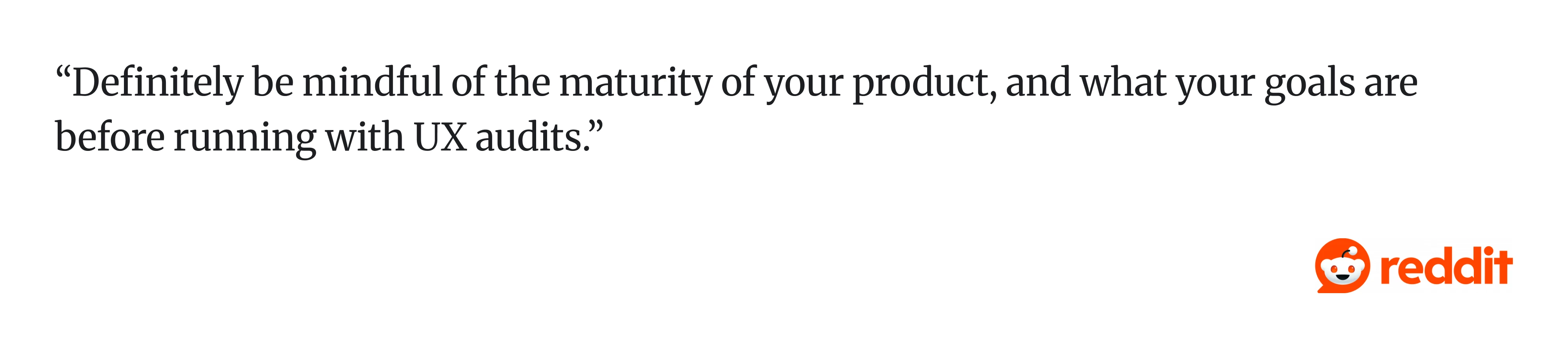
After looking at this list, you'll notice that every agency describes its service in almost identical terms. But UX audits deliver widely different levels of depth, insight, and usefulness. Before you decide who to work with, here's what actually matters.
1. Assess audit depth
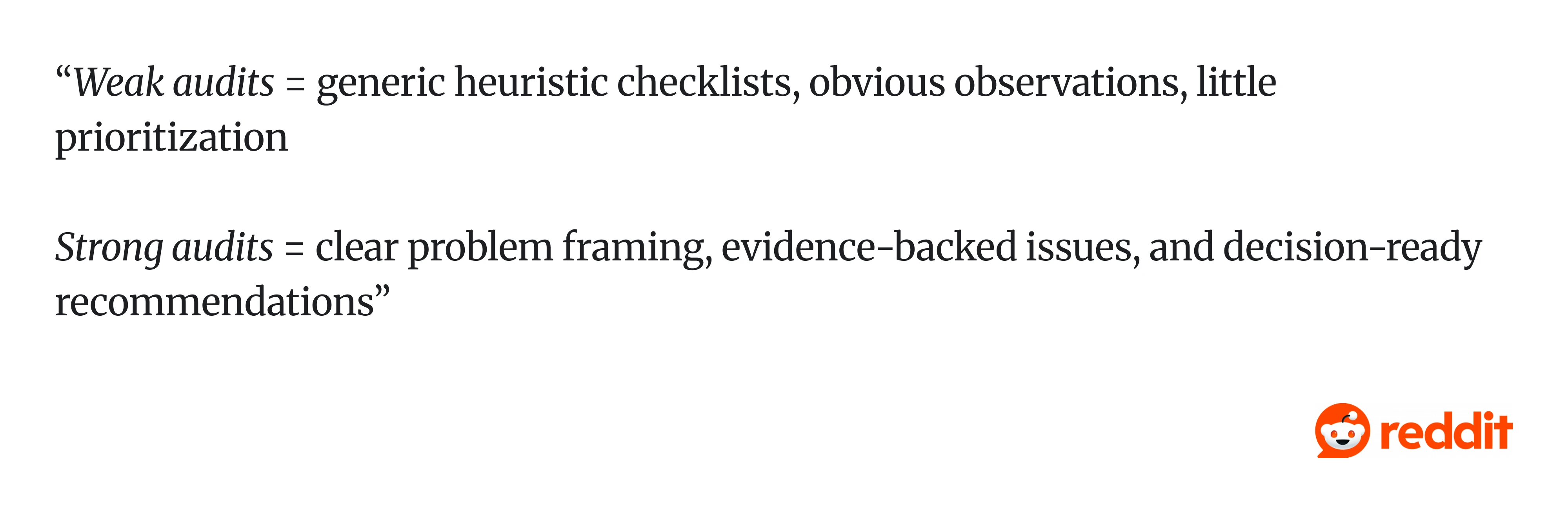
The most basic audits run your product against a standard checklist of usability heuristics. A thorough UX audit combines expert evaluation with behavioral data, user interviews, and competitor benchmarking to surface what's broken, why it's broken, and what fixing it would actually mean for your business.
If you're dealing with a complex product or a specific conversion problem, a checklist-level audit is unlikely to give you the clarity you need.
2. Ask about deliverables
Ask any agency what they deliver, and you'll hear the same answer: “a detailed report with actionable recommendations.” The real question is what that means in practice. Does the report include severity ratings? Are recommendations tied to specific screens? Is there a redesign roadmap, or just a list of issues?
Some agencies include Figma mockups alongside findings, so you start the redesign with visual direction already in hand. Others hand over a PDF and consider the job done. Before signing, ask to see a sample deliverable.
3. Check industry fit
A UX auditor who mostly works on e-commerce stores will approach your SaaS dashboard very differently from someone who's spent years inside complex B2B products. The patterns are different, the user expectations are different, and the metrics that matter are different.
Before choosing the best user experience audit agencies, check whether their case studies and client list reflect your product type. Domain familiarity is what turns audit findings into relevant outcomes.
4. Look for business impact
A UX audit documents usability problems, but it also should explain what those problems are costing you. Friction in the onboarding flow is an activation rate problem. A confusing upgrade path is leaving revenue on the table.
The best agencies frame their findings in terms of conversion, retention, and user engagement, so when you present the roadmap internally, you're arguing for specific business outcomes. If an agency can't connect its audit findings to metrics your stakeholders care about, the recommendations are likely to get deprioritized.
How much does a UX audit cost?
Pricing across UX audit companies in 2026 ranges from $1,000 to $25,000 for most engagements, with enterprise-scale or heavily regulated products reaching $30,000 to $75,000. And the agencies we've covered in this list reflect that.
The price difference comes down to a few concrete factors. Product complexity is the biggest one. A site with 3–5 pages and linear flows might need 10–20 hours of work, while an enterprise SaaS with multiple user roles, complex features, and third-party integrations can require 100–200+ hours, plus specialized expertise in UX heuristics.
Methodology matters too. A basic heuristic checklist costs far less than an engagement that includes user interviews, behavioral data analysis, competitor benchmarking, and accessibility evaluation.
Deliverable format also affects price. An annotated PDF is cheaper to produce than a report paired with Figma mockups, severity-rated findings, and a prioritized redesign roadmap (but the latter is what actually gets implemented).
Here's how pricing compares across the top UX audit service companies on this list:
- $1,000–$8,000 — focused or feature-level audits: Rubyroid Labs, Lazarev.agency.
- $5,000–$15,000 — full-product audits for mid-market teams: Artkai, Goodface Agency, GojiLabs.
- $25,000–$60,000+ — enterprise-grade evaluations with research depth: GojiLabs, Nielsen Norman Group.
- Subscription-based — start with a separate UX audit, then move into ongoing redesign: Eleken ($6,599/month).
Let’s fix what's broken
A UX audit is only useful if it leads somewhere. The best UX audit companies on this list will each hand you a report, but implementation is what turns that report into results. Before you start outreach, get clear on one thing: are you looking for a diagnosis, or are you looking for a team that will see the fix through?
If your product is a SaaS and you want the audit to feed directly into a redesign without switching vendors, rewriting briefs, or losing context along the way, that's exactly what Eleken is built for. The audit is the starting point. Let's talk about yours.


.webp)