
You can embed designers in every product squad, give them shiny titles, even triple the headcount, and still end up with a powerless UX team. That usually happens when teams get stuck in structures that quietly strip away their coherence.
One day, you’re helping define product strategy. The next, you’re tweaking button labels because “the real decisions have already been made.”
The fix is a deliberate UX team structure. In this guide, we’ll walk through common team models and unpack the key roles and reporting lines. By the end, you’ll have a clear picture of how to organize your own team, and a plan to make it work.
Why UX team structure matters more than you think
It’s easy to assume that the structure of your UX team is just an operational detail. As long as the work gets done, who cares where people sit or who they report to?
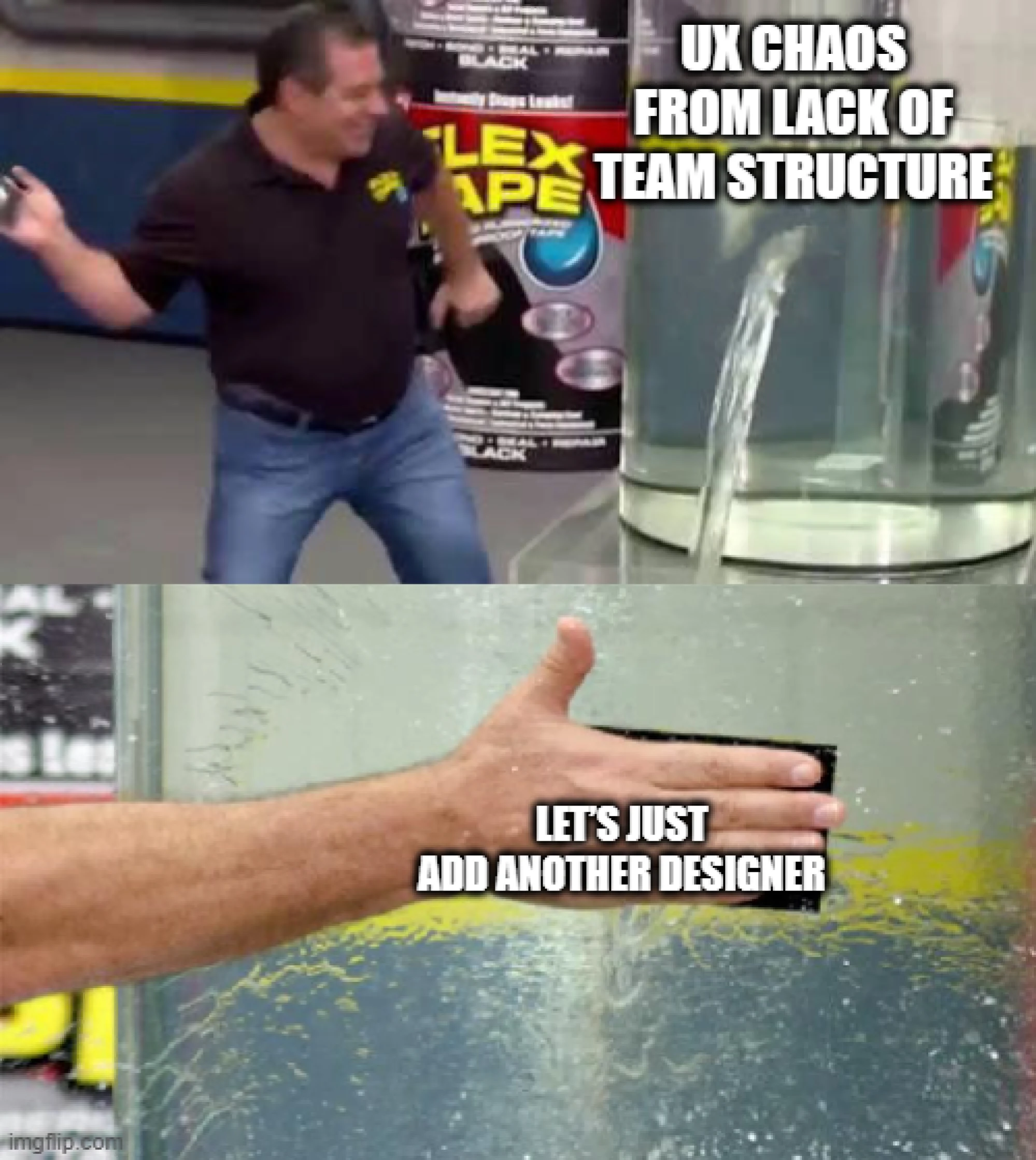
Structure quietly shapes everything. It determines what designers are invited to, what they’re responsible for, and how seriously their input is taken. A team can be full of smart people and struggle if they’re organized in a way that limits their influence.
Here’s what structure actually controls behind the scenes:
- How early UX gets involved in the product process.
- Who designers collaborate with, and who they don’t.
- What kind of work they’re asked to do.
- Whether they grow as a team or spin off into isolated silos.
- How reusable and consistent their work becomes over time.
It’s tempting to think of user experience team structure as something you’ll fix “later,” once the team is bigger. But the longer you wait, the harder it is to course-correct.
Common UX team structures
Every organization is different, but most UX design teams fall into a few familiar structural models. The right setup for your team depends on a mix of factors, and to help you make the right call, we’ll walk through the three most common structures.
Centralized UX team
In a centralized UX team, every member belongs to a single core group led by a UX leader. Designers, researchers, writers, and other specialists report to the same manager and are assigned to projects across the company as needed.
This model is sometimes called an internal agency because it resembles how external design agencies allocate talent. It’s particularly common in mid-size and larger organizations that have enough UX staff to form a department.

Pros
- Strong cohesion and consistency. With everyone reporting to the same UX leader, it’s easier to maintain unified design standards and user experience.
- Resource and knowledge sharing. UX professionals collaborate regularly, share research, tools, and best practices, and can mentor each other.
- Cross‑disciplinary exposure. Working across different projects gives UX team members broad insight into the business and reduces monotony.
Cons
- Limited visibility. Without daily presence on product teams, UX may get involved too late in planning or be treated as a consultative add‑on.
- Weaker relationships. Product managers and engineers may struggle to build trust or strong relationships with designers they only see occasionally.
- Potential backlog and bottlenecks. During peak demand, the central UX group may not be able to support every team immediately.
Decentralized UX team
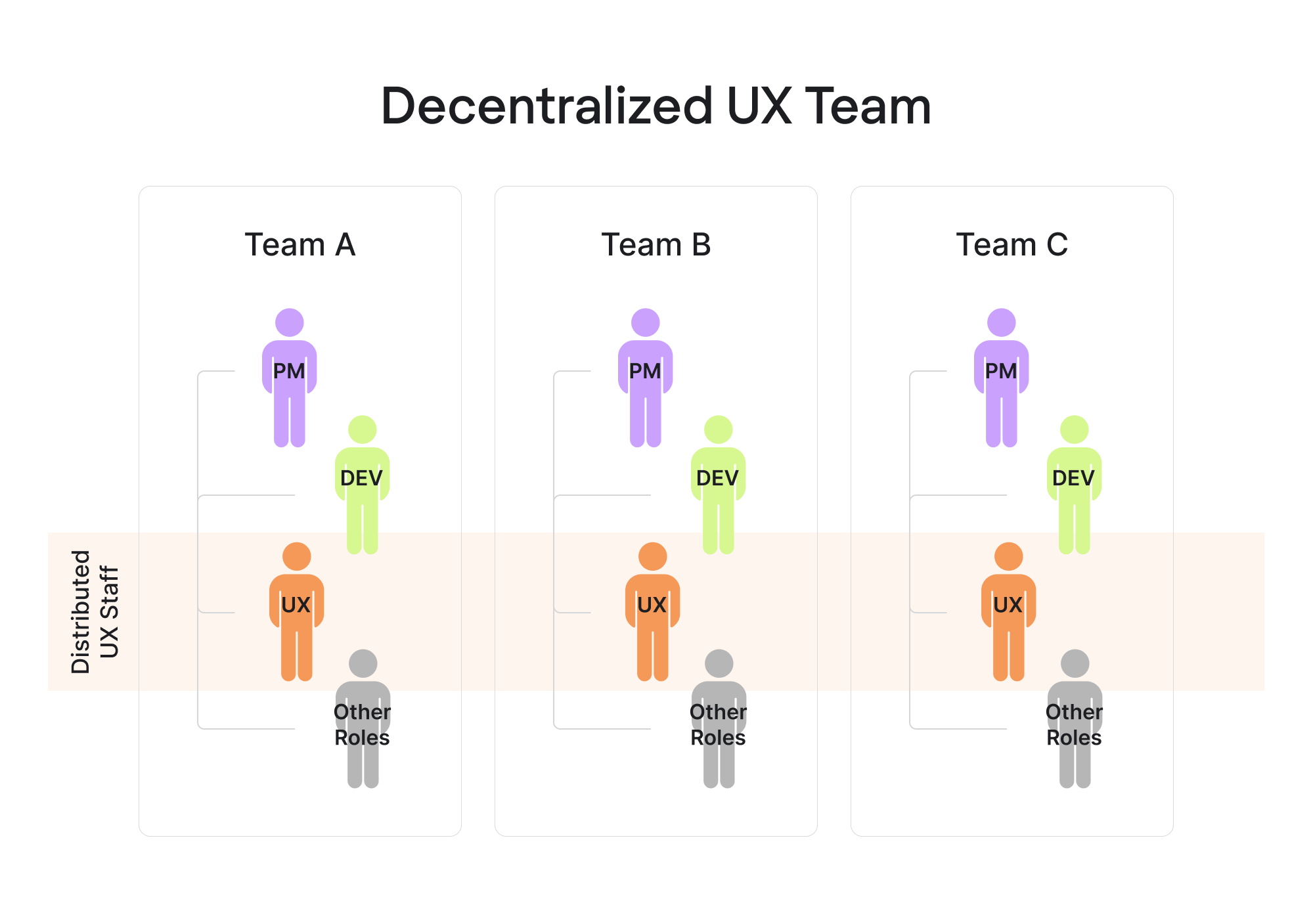
In a decentralized UX team structure, also called an embedded or distributed model, designers are assigned directly to product teams. In this setup, team members often report to the product or engineering lead of the squad they support.
This model is common in startups and smaller companies, often out of necessity. When you only have one or two UX people, embedding them as full members of cross-functional teams is the most straightforward way to get things done.
Pros
- Close collaboration and context. UX is part of the team’s daily rhythm, which helps build trust and shared ownership with product and engineering.
- Deep product expertise. Embedded UXers tend to become subject-matter experts in the area they support, leading to highly tailored solutions.
- Stronger alignment with outcomes. When designers see how their work directly impacts product metrics, it becomes easier to show the value of UX.
Cons
- Risk of isolation. One‑off UXers on separate teams can feel outnumbered or out of sync, especially if the organization isn’t strongly user‑centric.
- Inconsistent practices. When UX work is scattered across squads, teams can drift into fragmented standards that harm overall product cohesion.
- Limited knowledge sharing. Distributed design teams have fewer opportunities to exchange ideas, research, or patterns.
Matrix UX team
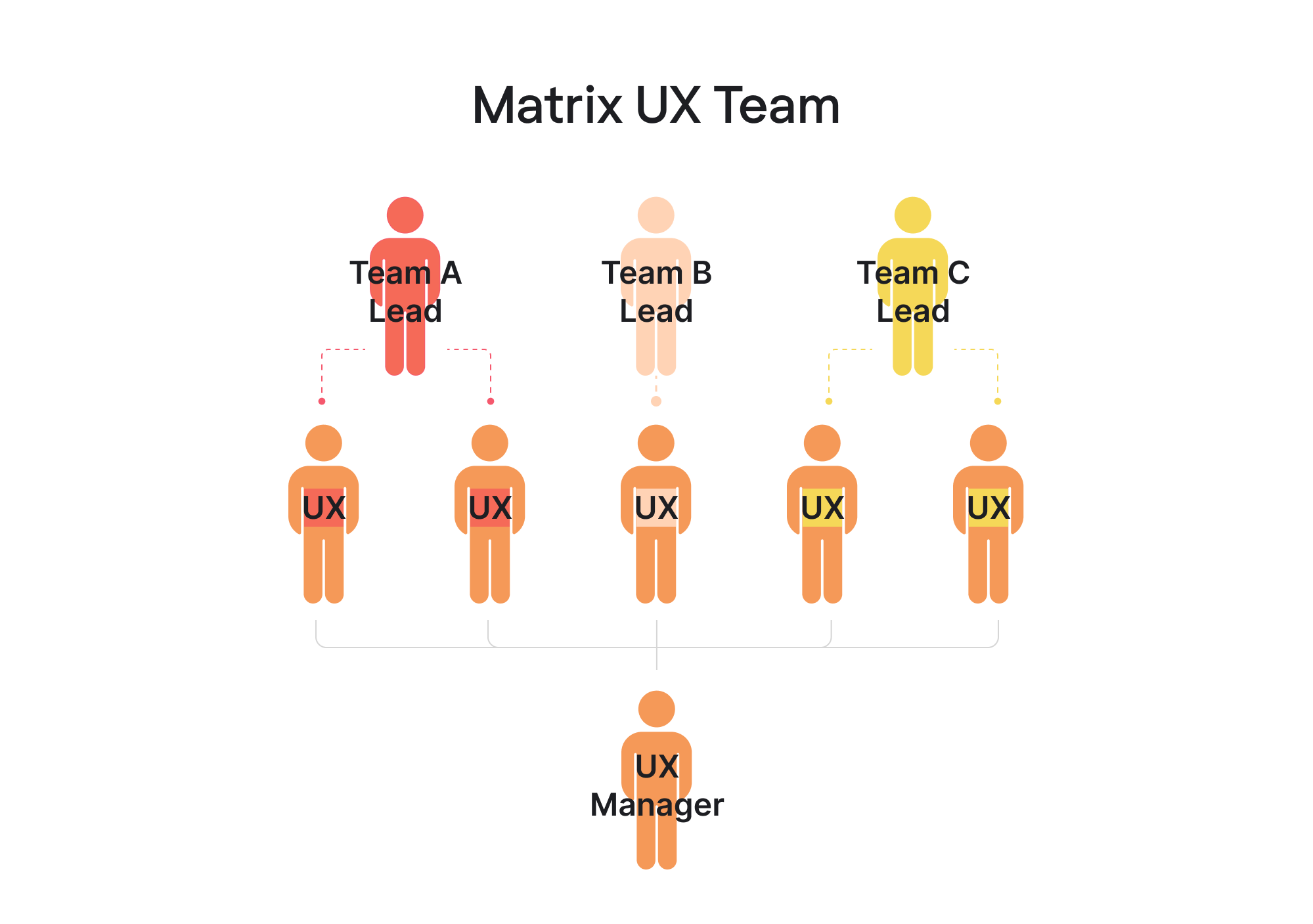
The matrix UX model is a hybrid that aims to capture the benefits of centralized and decentralized structures. Designers belong to a central UX team led by a UX manager and are assigned long‑term to product teams, where they work day to day.
You’ll sometimes hear this described as a “dotted‑line” structure or a chapter‑and‑squad model. The idea is to embed designers early enough to shape product decisions, while keeping them connected to shared standards.
Pros
- Best of both worlds. Designers stay deeply involved in product work while remaining part of a unified UX function with shared standards and practices.
- Better career support. Designers get proper mentorship, feedback, and growth paths from UX managers who understand their craft.
- Balanced decision‑making. UX managers collaborate with leads, so designers don’t have to navigate conflicting priorities alone.
Cons
- Dual reporting complexity. Designers may receive direction from product and UX leads, which can cause confusion if roles aren’t clearly defined.
- Higher coordination overhead. UX managers must actively stay connected to day‑to‑day work to support designers effectively.
- Potential ownership tension. Product teams may feel less control over designers who don’t fully report into their org.
Key roles in a UX team and reporting relationships
A high-performing user experience team is usually made up of several specialized roles working in concert. As a mid-level UX manager, part of your job is to oversee these roles and understand how they report within the organization.
UX Lead
A UX Lead is a senior role that blends design expertise with perfect design team strategy. As a UX manager, you’re responsible for coaching, skills development, and aligning design quality while coordinating with product managers.
At the same time, you work closely with product, engineering, and other stakeholders to ensure design efforts are aligned with both user needs and business goals.
Key responsibilities of a UX Lead include:
- Set and communicate design direction across stakeholders.
- Lead and mentor team members.
- Guide or contribute to research planning, usability testing, and validation.
- Advocate for user needs and design rationale in cross‑functional discussions.
- Ensure consistency and design quality.
As the organization grows, the role’s focus often shifts from hands-on execution to setting direction, mentoring, and coordinating high-level initiatives.
UX Designer
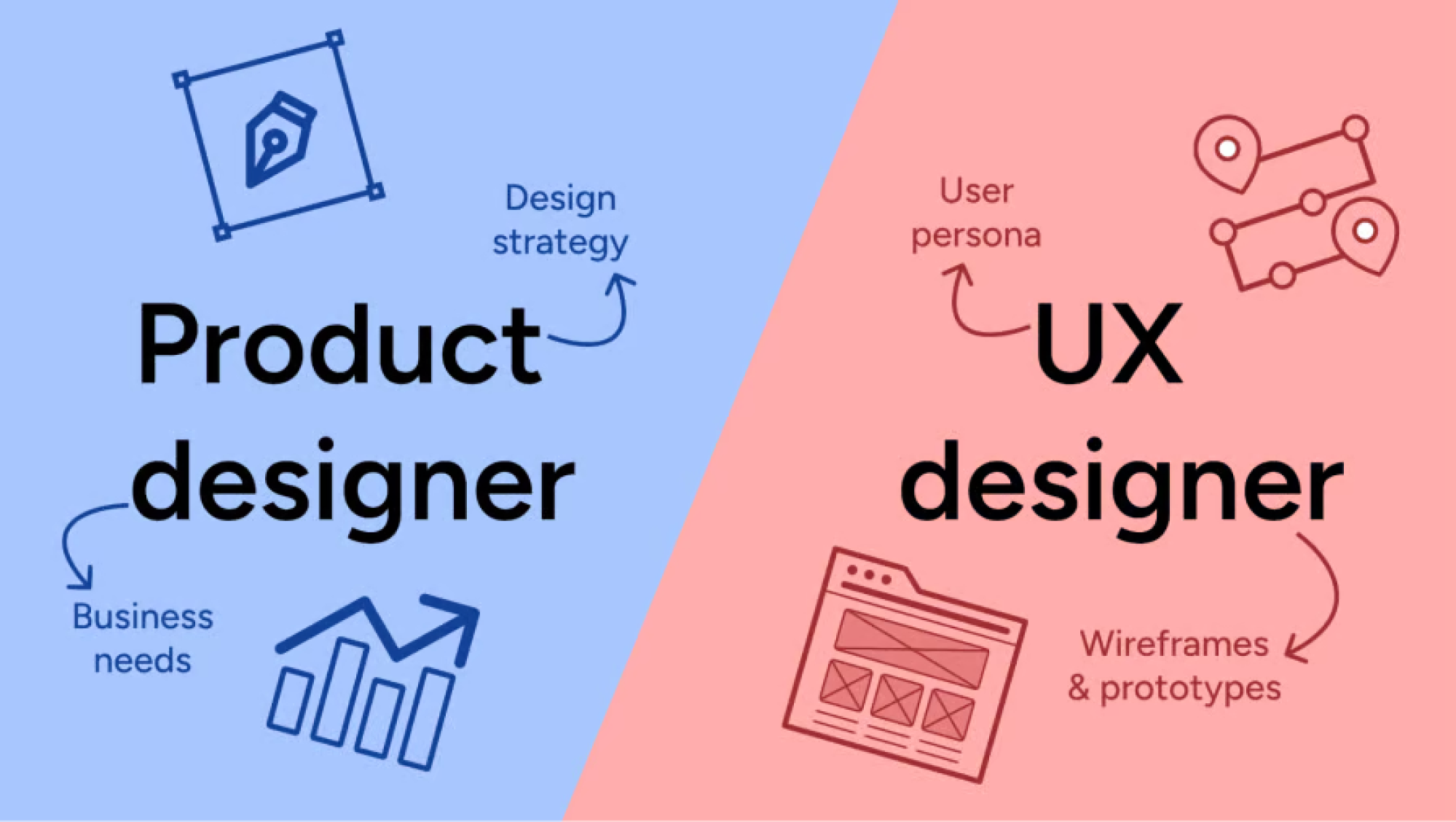
A UX Designer, sometimes called a Product Designer, is the core practitioner on a team. They shape how a product feels and works, using research, interaction design, and iterative problem solving to create user‑centered experiences.
In companies where “Product Designer” is used, the title usually signals a blend of UX and visual/UI responsibilities within one role.
Key responsibilities of a UX Designer include:
- Conducting and applying user research to inform design decisions.
- Creating wireframes, mockups, and interactive prototypes.
- Designing user flows and interaction patterns that solve real problems.
- Iterating on designs based on usability testing and feedback.
- Working closely with product, engineering, and other stakeholders.
At Eleken, our UX designers work as independent specialists, communicating directly with clients and stakeholders to shape strategic design decisions.
UX Researcher
A UX Researcher helps teams understand what users need, how they behave, and where they struggle. They plan and conduct studies using methods like user interviews, usability testing, and surveys to deliver actionable recommendations.
While designers often make decisions based on known patterns or product intuition, UX researchers bring in direct evidence from real users.
Key responsibilities of a UX Researcher include:
- Planning and conducting qualitative and quantitative research.
- Analyzing data to uncover user needs, behaviors, and pain points.
- Presenting findings and recommendations to teams.
- Collaborating with stakeholders to prioritize user research questions.
- Maintaining research standards, ethics, and documentation practices.
By grounding their work in user insights, UX Researchers help product and design teams make smarter decisions and build better experiences.
Information Architect
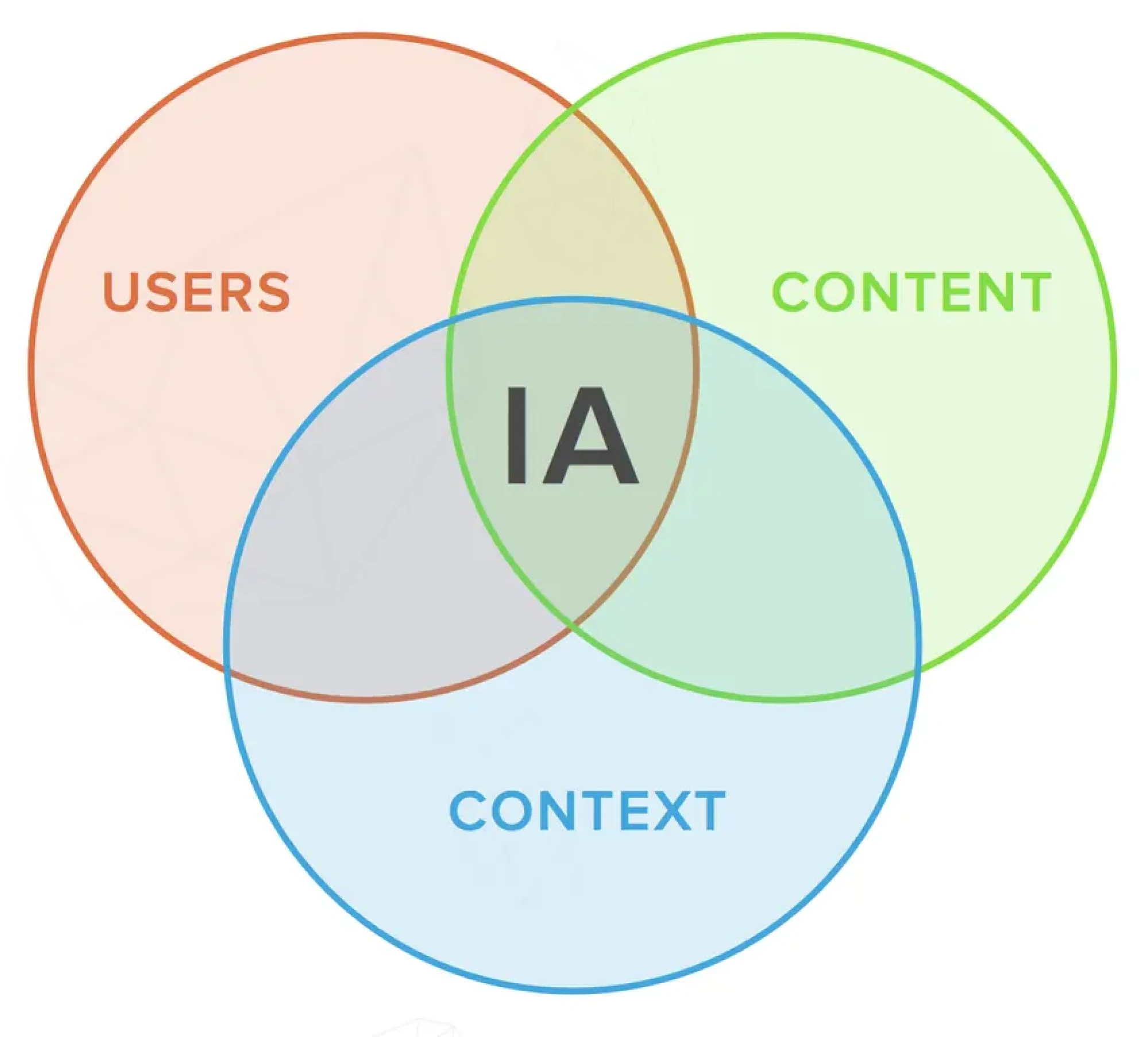
An Information Architect (IA) focuses on how information is structured, labeled, and accessed across a digital product. Their main goal is to make content easy to find and understand by organizing it in a way that aligns with user expectations.
In many cases, Information Architects contribute to interaction design and content strategy, especially in products with large or complex information ecosystems.
Key responsibilities of an Information Architect include:
- Designing site maps, taxonomies, and navigation structures.
- Organizing content to support usability, findability, and scalability.
- Collaborating with designers, writers, and researchers.
- Supporting content strategy through structure and hierarchy.
- Contributing to interaction design and system-level UX decisions.
IAs may report to a UX Manager, a Content Design Lead, or another cross-functional UX leader. They’re less likely to be embedded in a single product team.
UX Engineer
A UX Engineer blends front-end development skills with a strong understanding of user experience. Sitting at the intersection of design and engineering, UX Engineers create production-ready code based on design specifications.
Their technical UX expertise allows them to flag feasibility issues early, suggest refinements, and ensure the final implementation stays true to the design vision.
Key responsibilities of a UX Engineer include:
- Developing interactive prototypes to test and validate design ideas.
- Translating design specs into reusable, accessible front-end components.
- Collaborating with designers to align visual intent with technical feasibility.
- Partnering with engineers to bridge gaps between design and production.
- Supporting design system implementation and maintenance.
This UX team role is valuable in organizations where rapid prototyping, pixel-perfect implementation, or tight designer–developer collaboration is a priority.
UX Writer
A UX Writer is responsible for the words users see in the product interface. They craft microcopy for button labels, error messages, onboarding screens, and more to guide users, reduce friction, and make the experience feel human.
Beyond that, UX Writers define voice and tone, ensure messaging is consistent, and work closely with designers to match language with flows, actions, and intent.
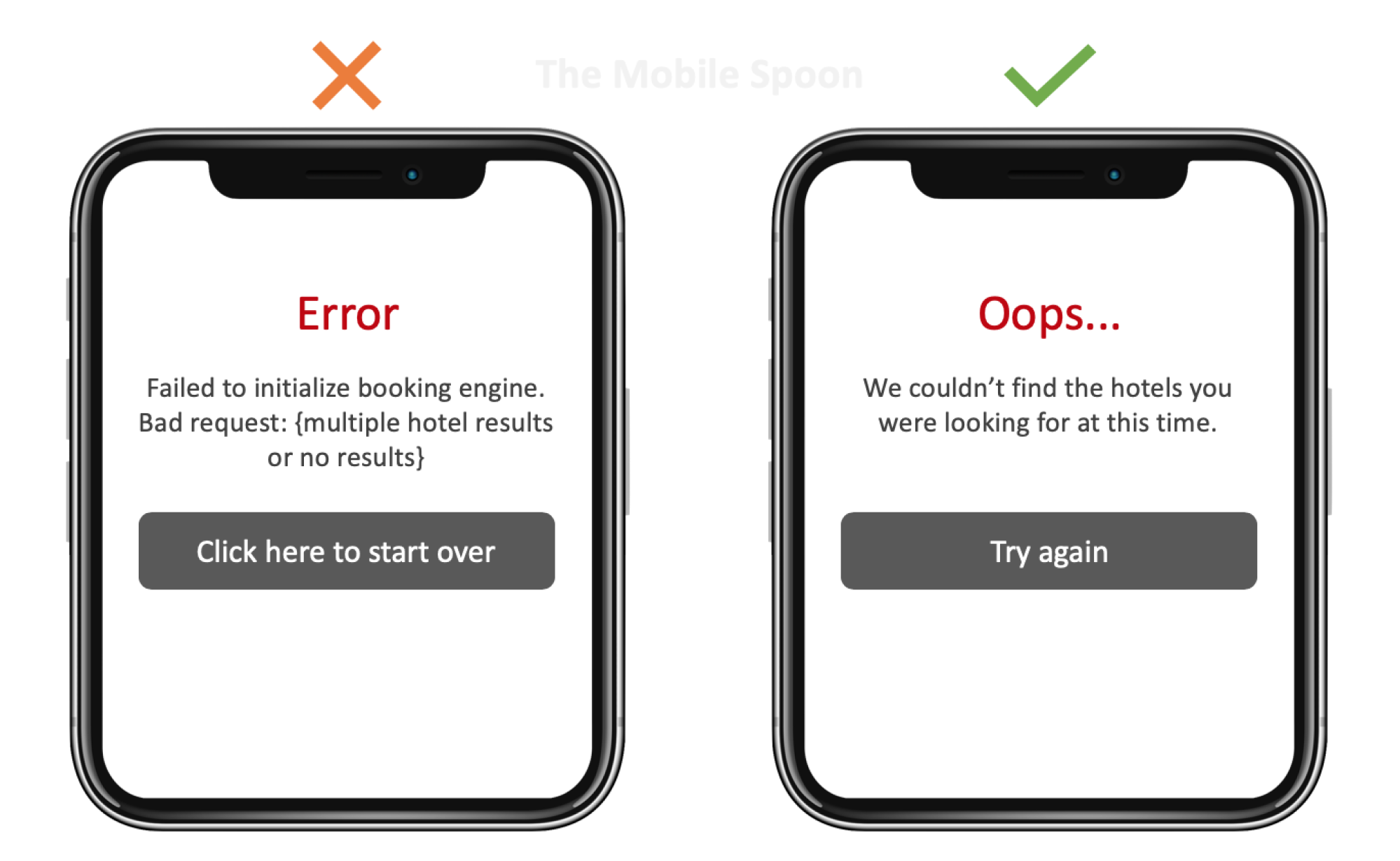
Key responsibilities of a UX Writer include:
- Writing interface copy that’s clear, consistent, and aligned with user goals.
- Defining and maintaining voice and tone guidelines.
- Collaborating with designers to align content with UI flow and intent.
- Working with researchers to validate copy through testing.
- Supporting accessibility, inclusivity, and localization through language choices.
In teams that treat content as part of the design system, UX Writers help shape the product’s personality and clarity just as much as visuals or interactions.
UI Designer
A UI Designer crafts visual elements like layout, typography, color, spacing, and iconography. While some teams combine UX and UI into a single Product Designer role, in larger organizations, UI Design is treated as its own specialty.
UI Designers often work closely with UX Designers, Design Systems teams, and Front-End Engineers to ensure precise visual execution.
Key responsibilities of a UI Designer include:
- Designing visual components and layout patterns for digital interfaces.
- Ensuring visual consistency across screens, platforms, and states.
- Defining and applying color, typography, spacing, and iconography.
- Collaborating with UX, engineering, and design system teams.
- Supporting accessibility and responsive design best practices.
UI Designers are also key contributors to building and scaling design systems, helping teams move faster and maintain visual consistency.
How to optimize and scale your design team structure
As your company and product grow, your UX design team structure shouldn’t stay static. For mid-level UX managers, this means recognizing when your current structure starts getting in the way of collaboration, clarity, or speed.
A small startup can run fine with one designer per squad. But as the team grows, this decentralized setup can start to create fragmented design decisions and duplicated work. At that point, introducing some centralized leadership, even just a single design lead, can help align the vision across teams and avoid silos.
In medium-sized companies, that central leader often acts as a unifying force, managing daily design operations and helping shape a common direction. When your team reaches scale, a matrix model can help maintain consistency.
Another key decision point is when to introduce management layers. Many UX leads find that once they have 5 to 7 direct reports, the demands of mentoring, reviewing work, and coordinating across projects start to overwhelm.
That’s often a good moment to make the case for an additional manager or to split the team into smaller units with leads. These leads can specialize — one might focus on UX research and discovery, while another takes ownership of design systems and consistency. Just be careful not to add hierarchy for its own sake.
Scaling a UX team is less about adding headcount and more about designing how the team works. Keep listening, keep adjusting, and don’t hesitate to evolve.
One last thing
UX team structure might not be the first thing you think about when problems start piling up. But more often than not, it’s the hidden force behind misaligned decisions, designer burnout, or slow execution that drags everything down.
At Eleken, we’ve grown into a team of over 100 professionals, and we’ve seen what it takes to build the best design team. So if you’re scaling a SaaS product and need one more skilled UX designer on your side, we’re just a message away.