


Building is expensive. Learning is cheap. Yet many founders do the opposite: they spend months designing and developing a product before finding out whether customers need it.
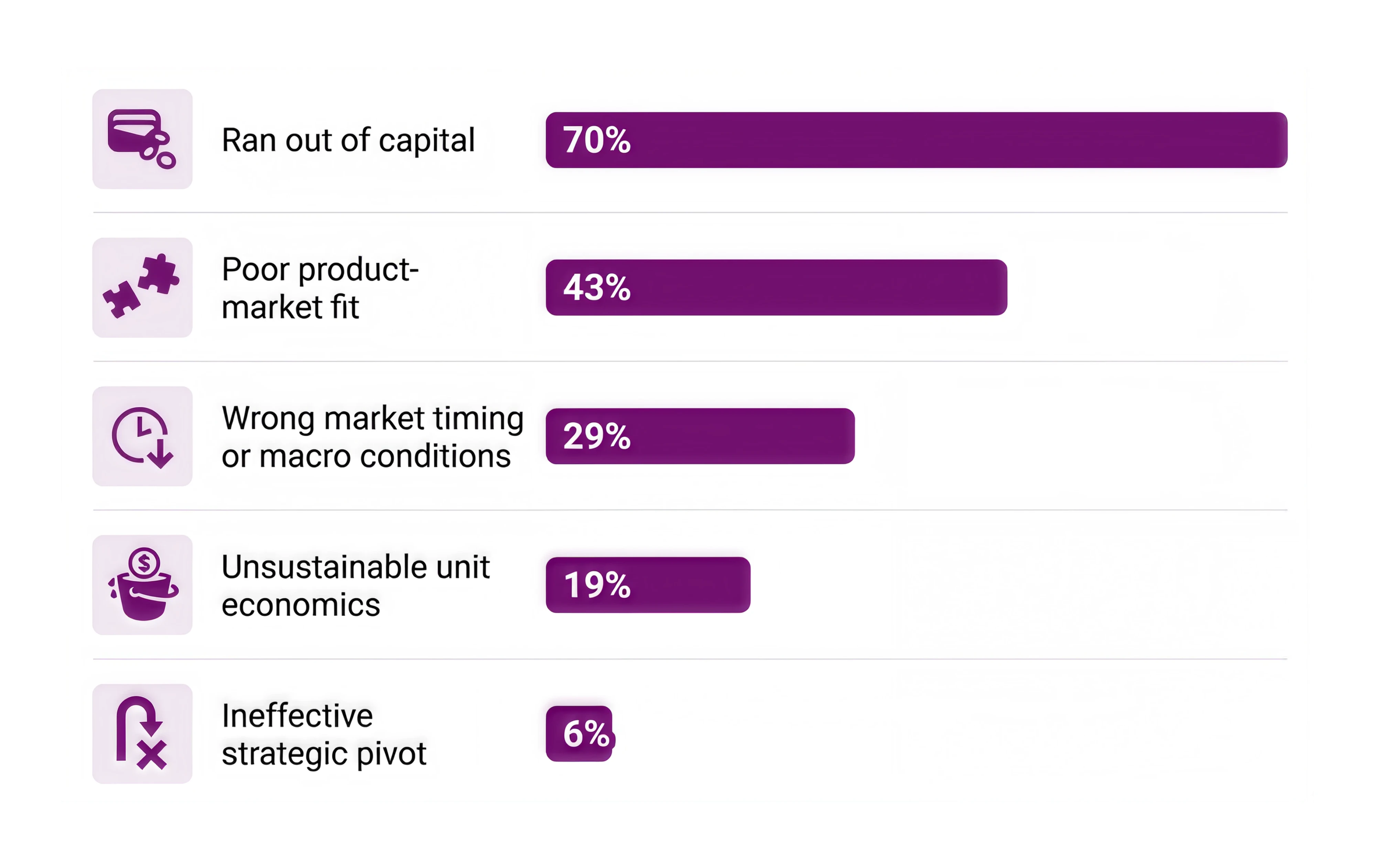
That gets expensive fast. CB Insights found that lack of product-market fit is one of the most common reasons startups fail, alongside running out of cash. The two are often connected: teams invest heavily in assumptions before they have enough evidence that the market will support them.
At Eleken, we’ve seen this pattern from both sides of product development. Clients come to us wanting to learn before committing to a full build: where users drop off, what they’re willing to pay for, and which parts of the product should be prioritized and launched first. Getting these answers early helps teams focus product decisions on what can create value while avoiding unnecessary design and engineering work.
That’s why we treat product idea validation as more than user research. It connects product management, design, and engineering decisions around one question: Are we solving the right problem, at the right time, for people who will pay to make it go away?
In this guide, we’ll show you how to answer that question before committing serious time, money, or engineering resources. You’ll learn how to validate market demand, identify your target users, test interest with simple experiments, and interpret the results. If you’re building software specifically, our deeper guide on how to validate a SaaS idea pairs well with this one.
Let’s start with why so many smart teams get this wrong.
Why most product ideas fail before they launch
Around 90% of startups fail, and one of the biggest reasons is a product that solves the wrong problem for the wrong audience.
Skipping validation feels like you're saving time. However, you're just postponing the cost. Instead of losing a week testing assumptions, you lose months of development, marketing spend, inventory, or runway, only to discover that enthusiastic feedback never translated into real demand.
Good validation answers four critical questions before you build:
- Is there a real market?
- Do you understand your customers and competitors?
- Can the business model work?
- Will people actually pay for your solution?
Miss any one of them, and you're making decisions based on assumptions rather than evidence.
The best founders approach validation with the opposite mindset: they try to prove it wrong.
As one founder on r/Entrepreneur put it: "The best MVP is a conversation. If people lean in, you're onto something. If not, no code will save it."

Totally agree. The best MVP is a conversation. If people lean in, you're onto something. If not, no code will save it.

With that mindset in place, let's walk through the five steps that help you separate promising ideas from expensive mistakes.
How to validate product ideas in 5 steps
The goal of product idea validation is to gather enough evidence to make smarter decisions. Follow these five steps to validate demand, understand your potential customers, and build with confidence.
Step 1. Assess the market opportunity
Before you talk to a single user, make sure you're walking into a market that exists. So look at three things:
- Demand is the raw "do people search for this and try to solve it today?" question.
- Trend tells you which direction that demand is moving.
- Saturation tells you whether the room is so crowded that there's no oxygen left, or whether there are gaps where existing products leave buyers frustrated.
The tools here are unglamorous and free to start:
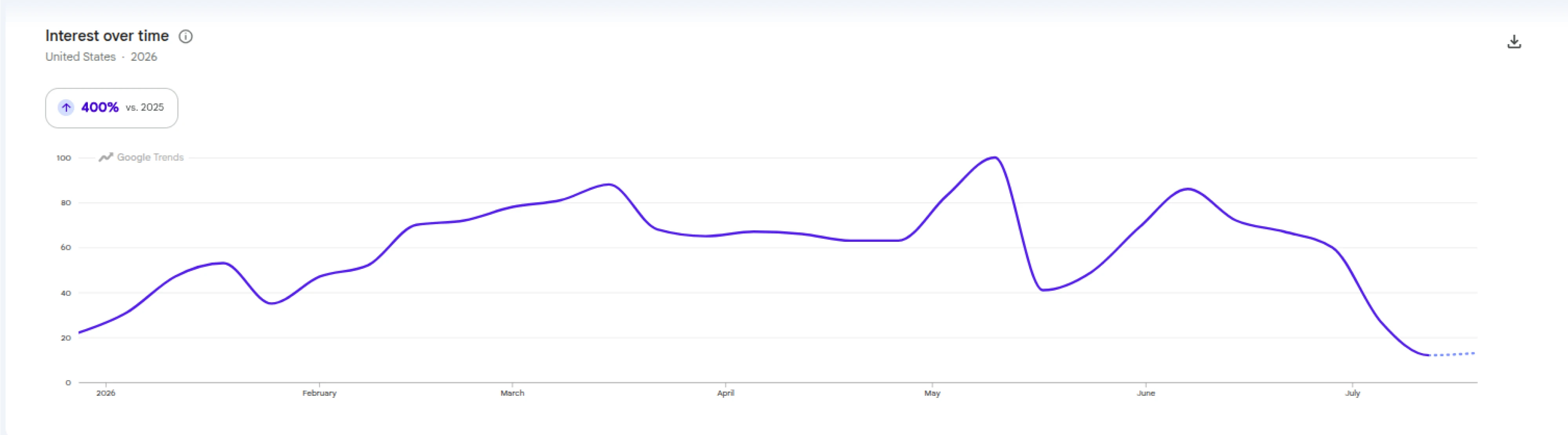
- Google Trends shows you whether interest is rising, flat, or quietly dying.
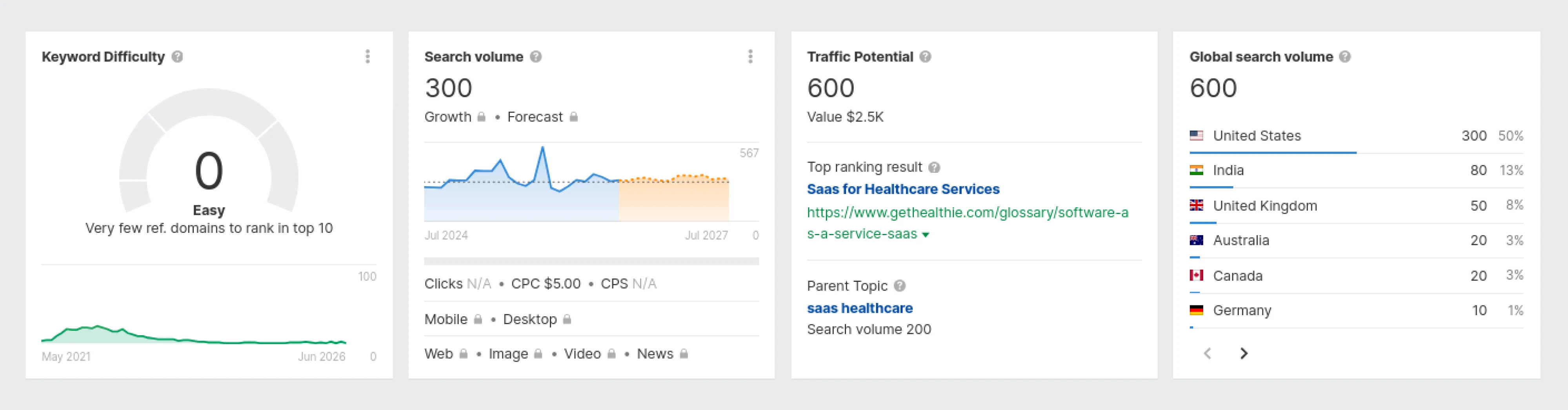
- Keyword research tools show search volume and seasonality, whether demand is steady year-round or spikes once and vanishes.
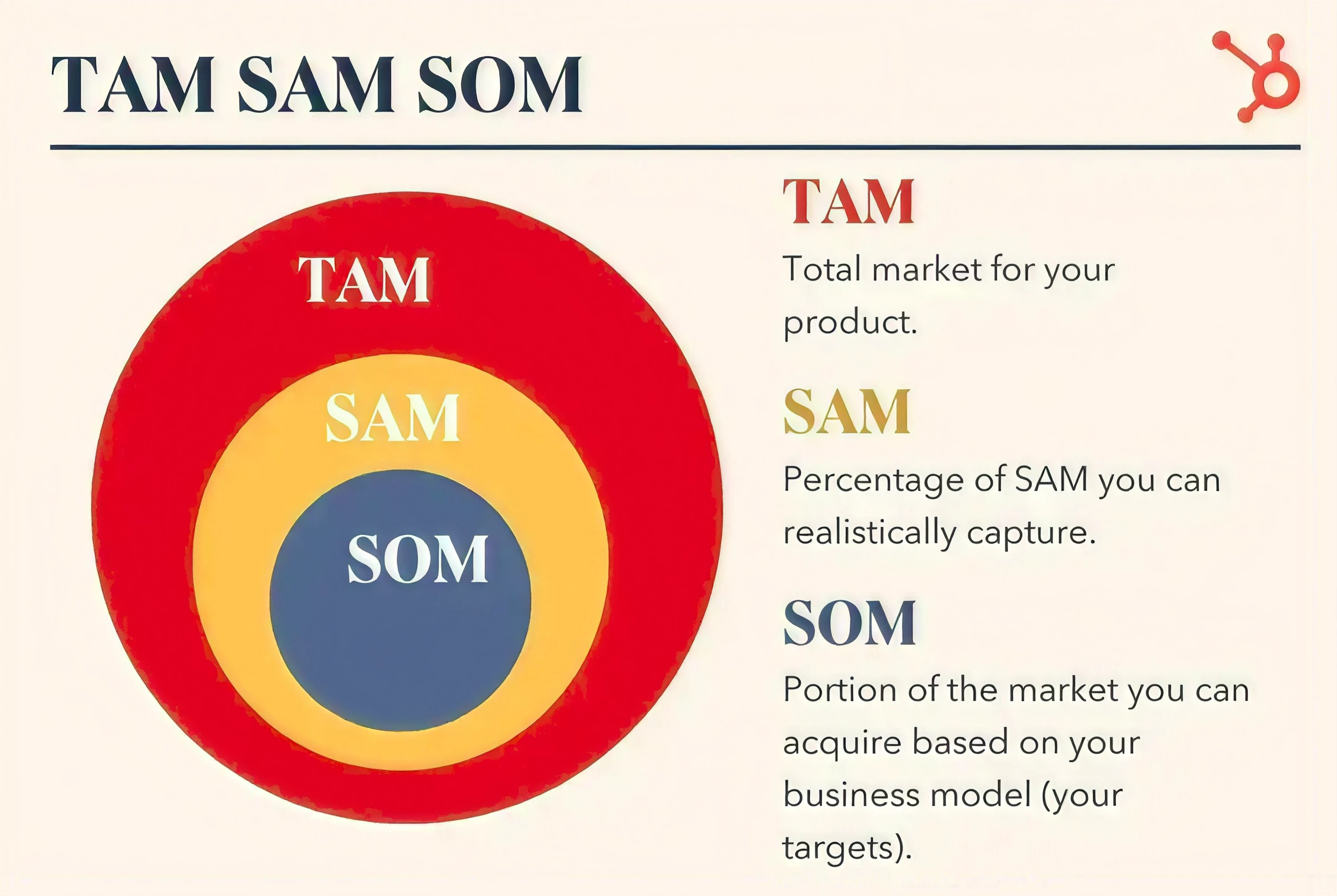
- For a sense of scale, founders use TAM/SAM/SOM math and category growth rates (CAGR) to size the opportunity without kidding themselves.
Seasonality deserves a second look, because it's a classic trap. A keyword with 50,000 monthly searches sounds incredible until you notice 45,000 of them land in two weeks of December. That's a part-time job with a brutal off-season, not a business. Steady demand beats spiky demand almost every time, unless seasonality is exactly your model.
Here's the signal-reading part, because raw numbers lie if you don't know what you're looking for:
- Keep going if: demand is stable or climbing, there's clear search volume, and you can point to specific gaps where current solutions underserve people.
- Be careful if: the trend line is a one-time spike with a long decline, or the category is bone-dry of competition. No competition usually means no market, not a hidden goldmine.
A growing, gap-filled market is the foundation everything else sits on. But "a market exists" is still abstract. Markets don't buy things; people do. So the next move is to get painfully specific about which people.
Step 2. Understand your potential customers
"Everyone" is not a target market. The narrower you can define who you're for, the sharper every other decision gets.
Start by defining your ideal customer profile (ICP). Skip the generic persona with a stock photo and a fictional name. Instead, identify the people most likely to buy your product: their role, company size, biggest pain point, what triggers them to look for a solution, and whether they have the budget and authority to make a purchase.
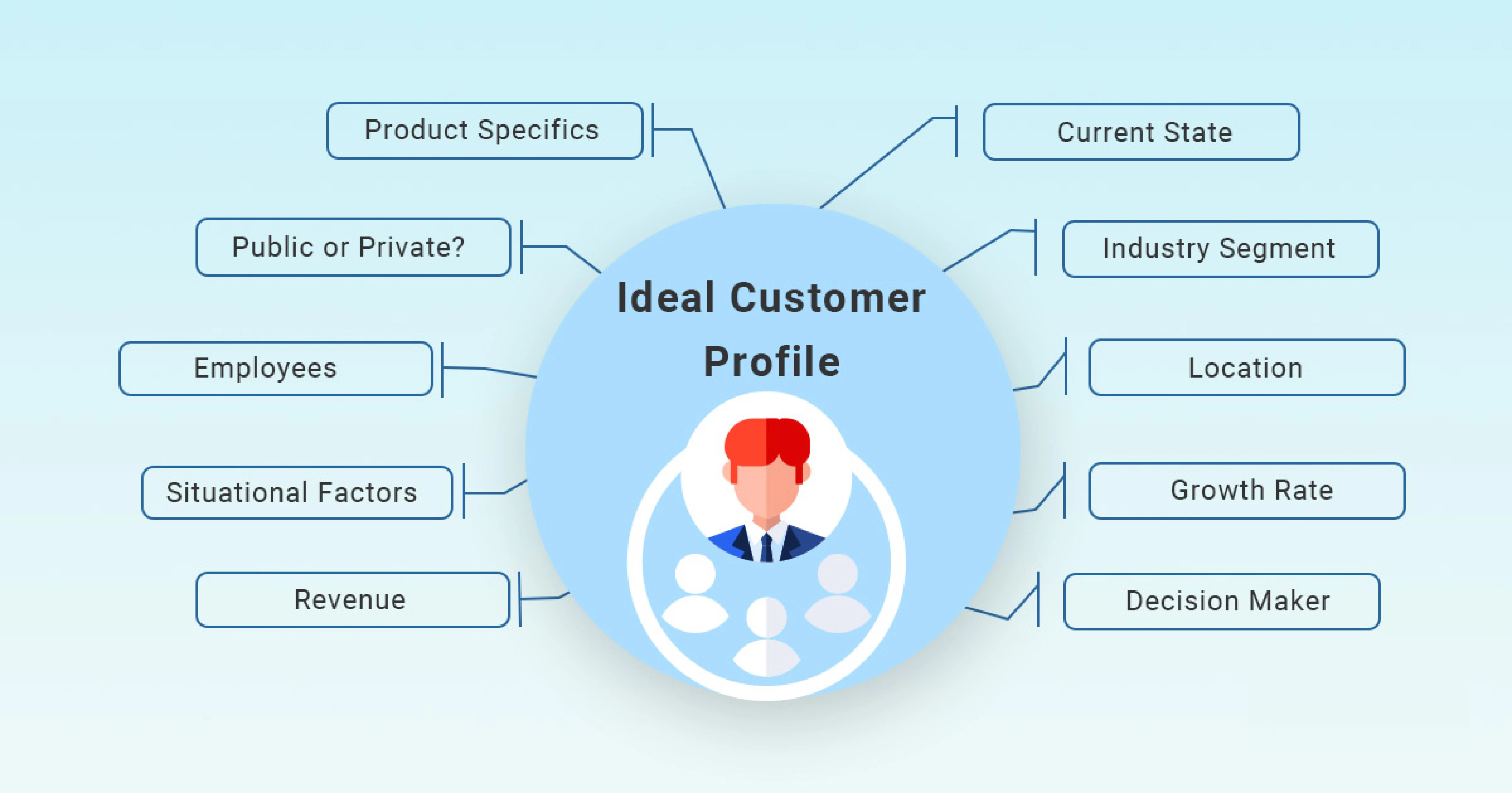
Two frameworks can help:
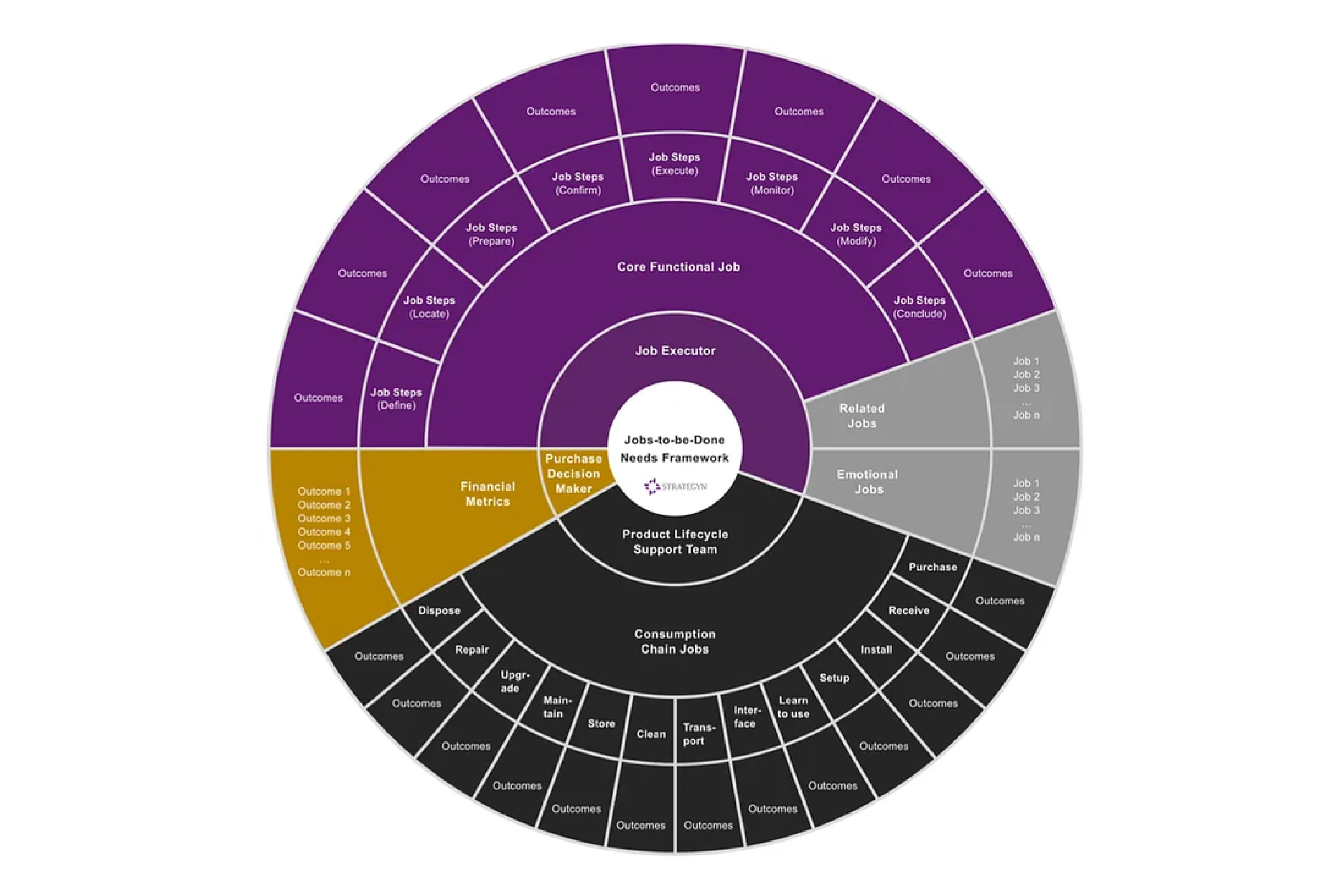
- Jobs-to-be-Done focuses on what customers are trying to accomplish rather than the product itself. People don't buy a drill because they want a drill but because they need a hole.
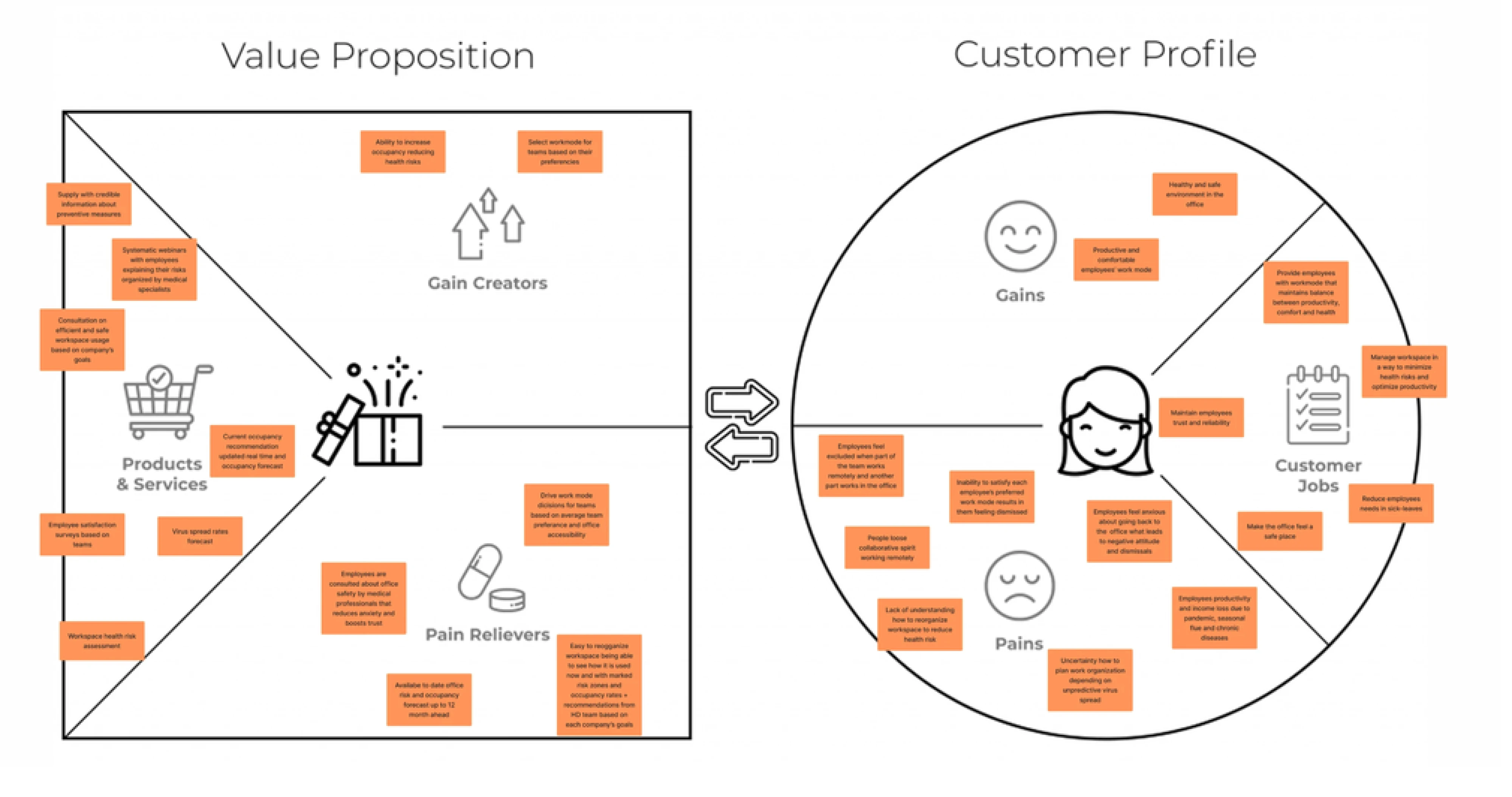
- The Value Proposition Canvas maps the pains you relieve and the gains you create against what the customer cares about.
Once you've defined your target audience, talk to them. Interview 10–40 people who experience the problem you're trying to solve.
Ask open-ended questions about their current workflow, frustrations, and previous attempts to solve the issue. Keep asking "Why?" until you uncover the root cause rather than the symptom. Avoid leading questions like "Would you use this?" They produce polite answers instead of useful insights.
If you don't know where to find these people, that's a solvable problem: we put together a full how to find users to talk to sources list for exactly this moment.
And if you want the questions themselves, our guide on how to interview users for fit saves you from the rookie mistake of asking leading questions.
There's a cheaper supplement to interviews, too: reviews on G2, Capterra, Reddit, the App Store, and Google Play for the competitor your users already tolerate.
When the same complaint shows up across twenty reviews, that's a pattern with a dollar sign attached, a market opportunity.
One thing worth saying plainly: this groundwork is the part most teams overlook, and it's the part that pays off the longest. Haven Diagnostics did it right. Before building anything, they invested in real pre-launch research, such as value proposition work, user empathy, and a tight ICP definition.
That discipline is exactly what most startups skip, and it's why their later product decisions had a foundation instead of a hunch. This phase has a name and a whole methodology behind it; if you want to go deeper, the product discovery phase is where validation process and design start to overlap.
So you know the market exists, and you know who you're for. The obvious next question is: who else already noticed?
Step 3. Analyze competitors and find your advantage
Competitors are free research you didn't have to pay for. Someone already spent money proving people will buy in this space. Your job is to figure out what they're getting right, what they're getting wrong, and where the wrong part is your opening.
Map both kinds:
- Direct competitors solve the same problem the same way.
- Indirect competitors solve it differently, including the duct-tape combination of a spreadsheet, a Slack channel, and sheer willpower that your prospect uses today. That last one is your real enemy, and it's the one people forget to list.
A simple SWOT or gap analysis gets you most of the way. For each competitor, pull apart their pricing, their positioning, their feature set, and most usefully their reviews. The one- and two-star reviews are a gift. People tell you, in detail and for free, exactly what's missing and what makes them furious. That's your feature roadmap and your messaging, handed over by strangers.
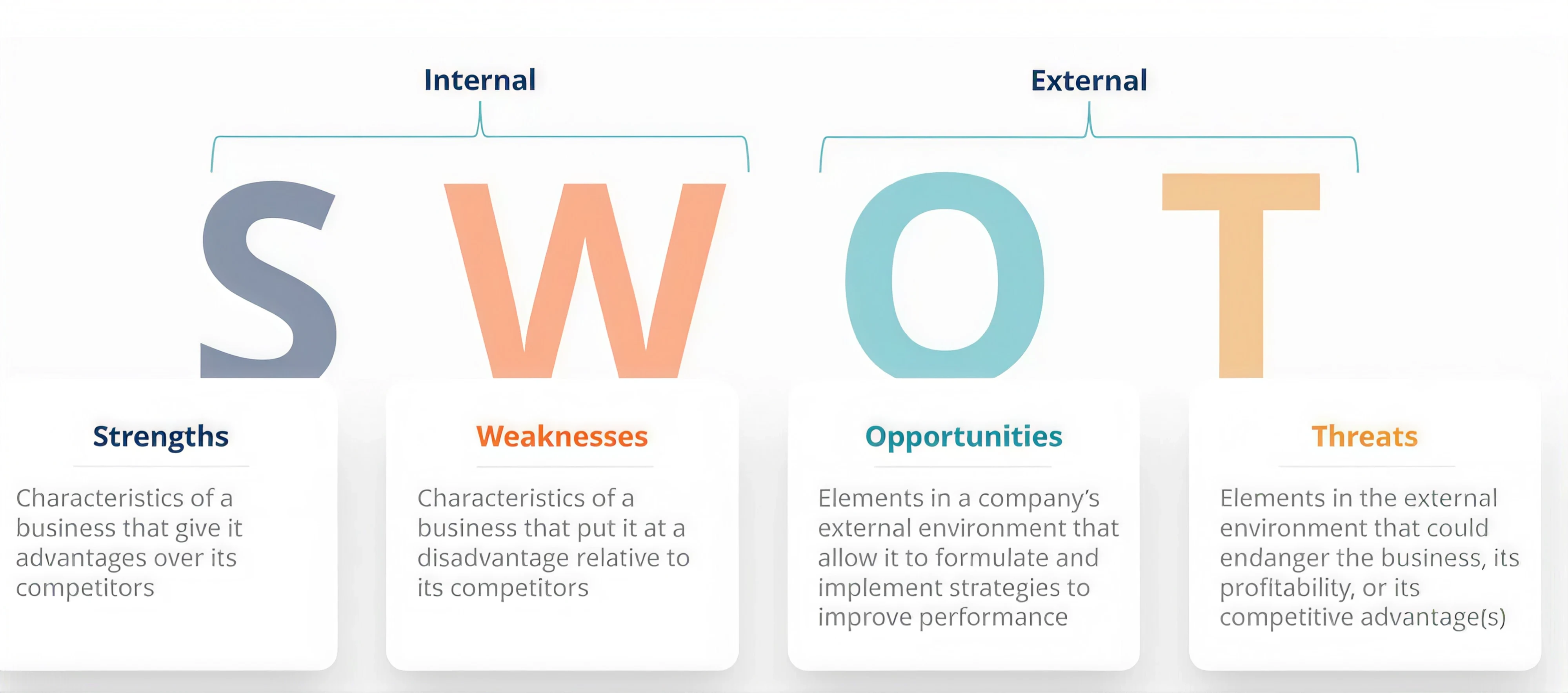
What you're hunting for is the difference between what the market already pays for and what it still lacks. The first proves demand. The second is your wedge.
And don't skip the boring competitor, the status quo. "They just use a spreadsheet" sounds like an opening, but spreadsheets are free, familiar, and already approved by IT.
Beating "good enough and free" is harder than beating a flashy startup, because inertia is the most powerful competitor in any market. If your only advantage over a spreadsheet is "it's nicer," you don't have a wedge yet.
Read the signals like this:
- Keep going if: competitors exist and are clearly making money, but their reviews reveal a consistent, painful gap you could own.
- Be careful if: there's a dominant incumbent with happy customers and no obvious weakness, or the space is so crowded that your only differentiator is "but cheaper." Competing on price alone is a race you usually lose.
Knowing the market, the user, and the competition tells you whether an opportunity exists. It doesn't yet tell you whether you can make a living from it. That's a math problem, and it's the next one.
Step 4. Test demand before building
The core equation is simple even if the inputs aren't: revenue minus the cost of delivering the thing minus the cost of acquiring the customer minus your overhead. What's left is whether you eat.
For SaaS, the two numbers that matter most are tied together:
- LTV is the lifetime value of a customer: how much they pay you over the whole relationship.
- CAC is what it costs you to acquire that customer. The ratio between them is the single best early read on whether the model works.
The rule of thumb worth tattooing somewhere visible: aim for at least 3:1 LTV to CAC before you commit to building. Below that, you're paying more to win target customers than they're worth, and no amount of growth fixes a bucket with a hole in it.
Read the signals:
- Keep going if: your LTV/CAC clears 3:1 with conservative assumptions, and your margins survive a few things going wrong.
- Be careful if: the model only works if you nail every assumption perfectly, or if a small change in acquisition cost wipes out your margin. Fragile economics on a spreadsheet become fatal economics in reality.
Next, run a smoke test (also known as a fake door test). Create a landing page, waitlist, preorder campaign, or even a fake feature inside an existing product.
Instead of asking people whether they'd use your product, watch what they do. Signing up for a waitlist, joining a beta, or placing a preorder are far stronger signals than positive survey responses.
Many successful companies validated demand this way before building. Robinhood attracted more than a million waitlist signups with a simple landing page.
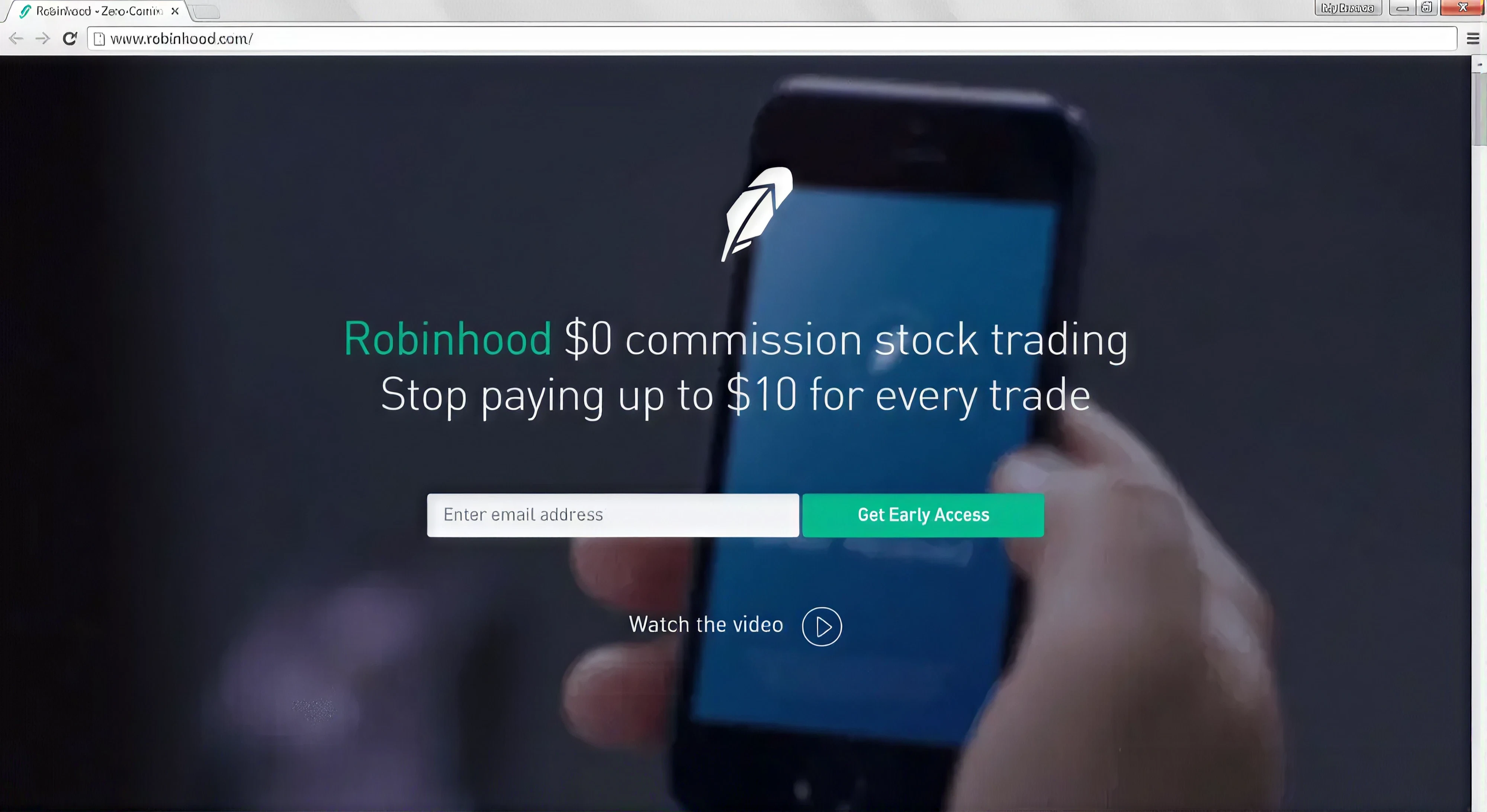
Superhuman built anticipation through an exclusive waitlist and onboarding process, while Semrush tested interest in a new feature by adding a fake button inside its existing product. Each experiment measured behavior, not opinions.
Now, the part that makes a smoke test worth running: knowing what the numbers mean. The benchmarks below are rough, but they'll keep you honest:
- Strong signal — keep going: above a 10% signup or conversion rate on targeted traffic. People are reaching toward the thing.
- Weak signal — fix something: below 5%. That's usually not a "people don't want this" verdict yet. It more often means your messaging is off or you're describing the wrong problem. Tweak the headline, sharpen the pain, try again.
- Track the supporting cast too: click-through rate, waitlist conversion, bounce rate, scroll depth, and where the traffic came from. A high bounce with deep scrollers tells a different story than a flat-out skip.
Design tools make the page itself cheap. Figma, Webflow, and Bubble get you a credible landing page or clickable concept in a day, no developer required. You don't even need a full product to test direction. Sometimes a few sharp visuals do it.
RedOwl, a fintech startup with no product yet, tested its direction by designing a dashboard concept in four different visual directions and seeing which one resonated before committing to code.
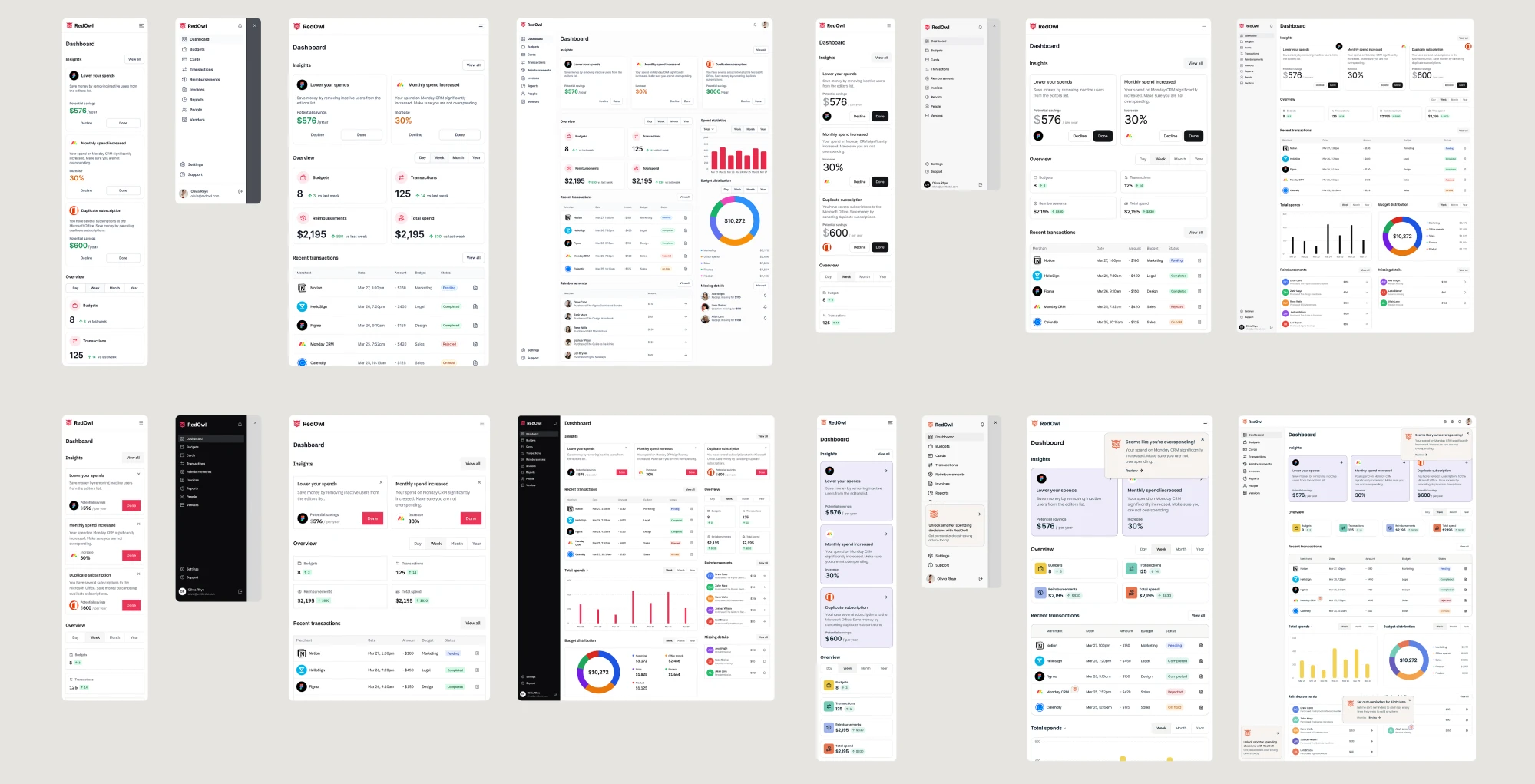
That low-cost experiment helped them raise $1M. This kind of behavioral evidence is what a real proof of concept is for, not to impress yourself, but to watch how strangers react.
Behavioral signals tell you people will act. But they don't tell you why, or what the product needs to do. For that, you have to go back to talking, but this time, listening differently.
What are real users telling you?
There are two kinds of evidence, and the order you collect them in matters:
- Qualitative comes first. Interviews, surveys, focus groups, community feedback: the messy, human, "tell me about the last time this annoyed you" material. It's how you discover what you didn't know to ask. Early on, this is everything.
- Quantitative comes later. Engagement scores, NPS, DAU/MAU ratios, dashboards full of numbers. These are great for confirming and measuring, but useless for discovering. You can't find a new problem in a metrics chart you built around your old assumptions.
So the rule is: early stage, lean qualitative. Later stage, layer in quantitative. Mature product, run both.
The tools are familiar: Google Forms, SurveyMonkey, Survicate for surveys; Reddit, Product Hunt, LinkedIn, and Facebook groups for finding people in their natural habitat.
What separates a useful survey from a useless one is the questions. Don't ask "would you use this?" Ask about reality:
- How much time do you currently spend on this problem?
- How often does it come up?
- How urgent is it when it does?
- And the one that cuts through everything: what are you spending today to deal with it?
Startup founders who skip real user conversations end up solving a problem nobody has, or worse, the wrong version of a real problem. They build for the pain they imagined instead of the pain people actually live with. The gap between those two is where startups quietly die.
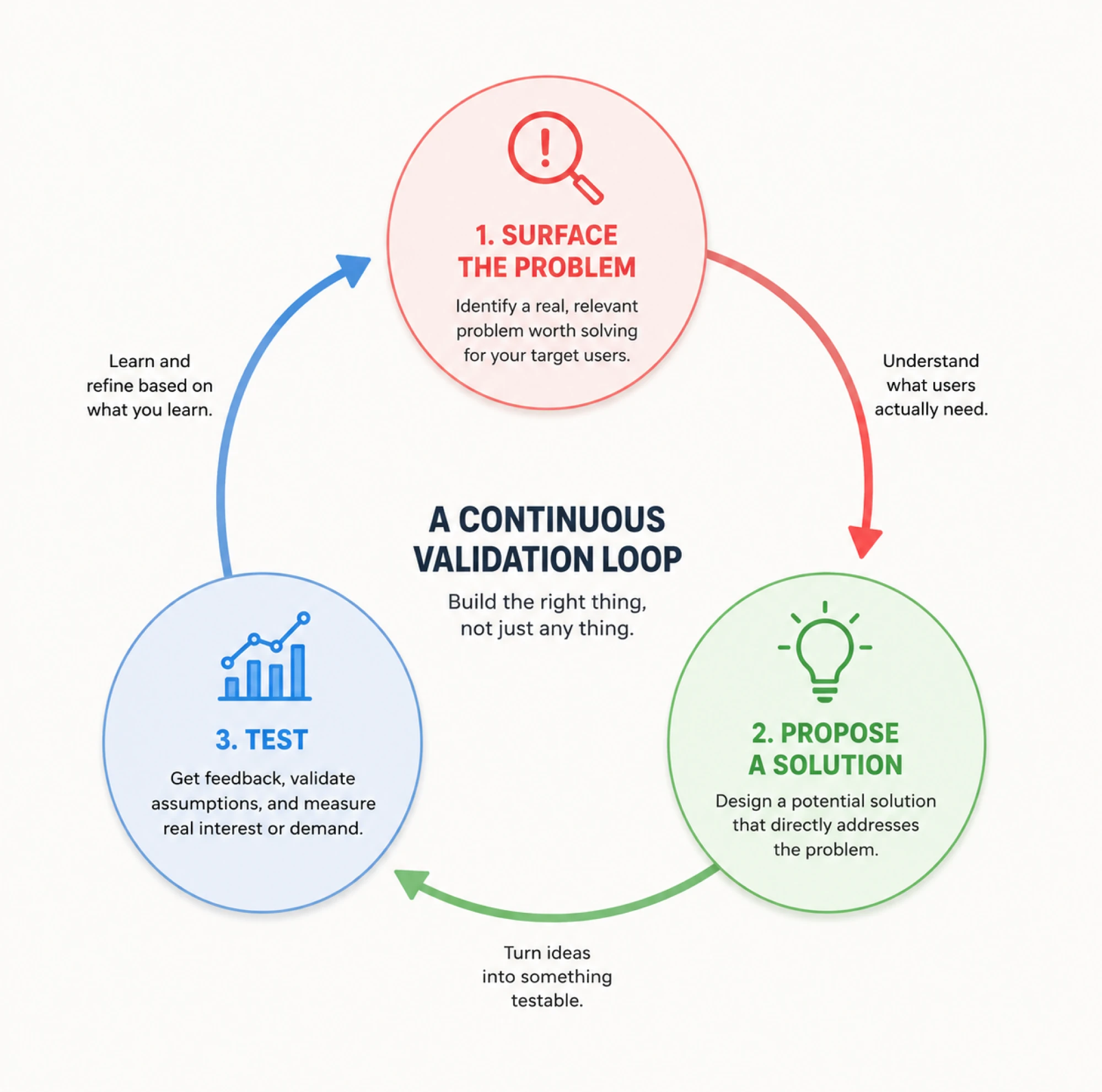
So follow a tight loop: surface the problem, propose a solution, then test whether your solution maps to their real problem.
You now know the problem is real, the demand is there, and you understand what users need. The temptation is to go build the whole thing. Resist it. There's one more cheap test between you and that commitment: the smallest possible version of the product.
Step 5. Build an MVP and test your business idea
The MVP is the smallest thing that tests your core promise and nothing more. Every feature you add "while you're at it" is a feature you're validating without permission.
So define it ruthlessly. What is the one thing your product must prove? Build only what you need to test it. If you want a fuller treatment, here's how to define an MVP without letting scope creep eat you alive, plus a companion piece on feature discovery for deciding what makes the cut.
This is where validation becomes a product management decision. When Eleken designers work on early-stage products, we use what we’ve learned about user pain, demand, and willingness to pay to help prioritize what belongs in the MVP and what can wait. The goal is to focus design and development on the smallest scope that can prove the product’s value.
Your toolkit at this stage is deliberately low-fidelity: clickable wireframes, no-code builds, and concierge tests where you manually do behind-the-scenes what the software will eventually automate.
Pair the build with a real hypothesis, a single variable, a defined success threshold, written down before you start so you can't move the goalposts later.
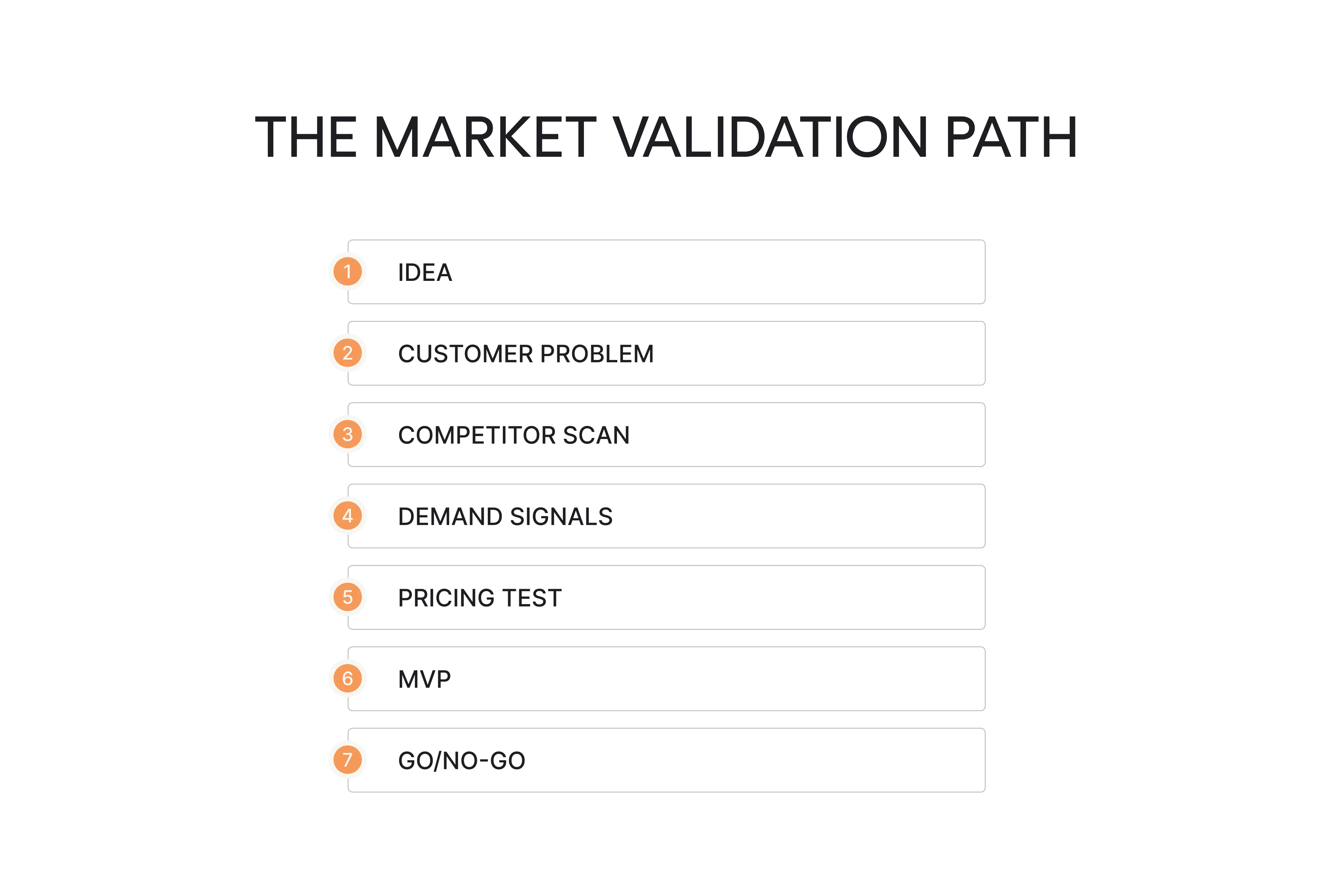
The market validation path, end to end, looks like this:
For many B2B SaaS products, you don't even need a working application. A realistic Figma prototype is often enough to run customer demos, collect feedback, and test willingness to pay. People respond far more honestly to something they can see and interact with than to a verbal pitch.
The same applies when pitching investors. For many early-stage teams, prototypes have also become the fastest way to align everyone around the same product vision. Instead of interpreting a written specification differently, founders, investors, designers, and developers can react to the same interactive experience before development begins.
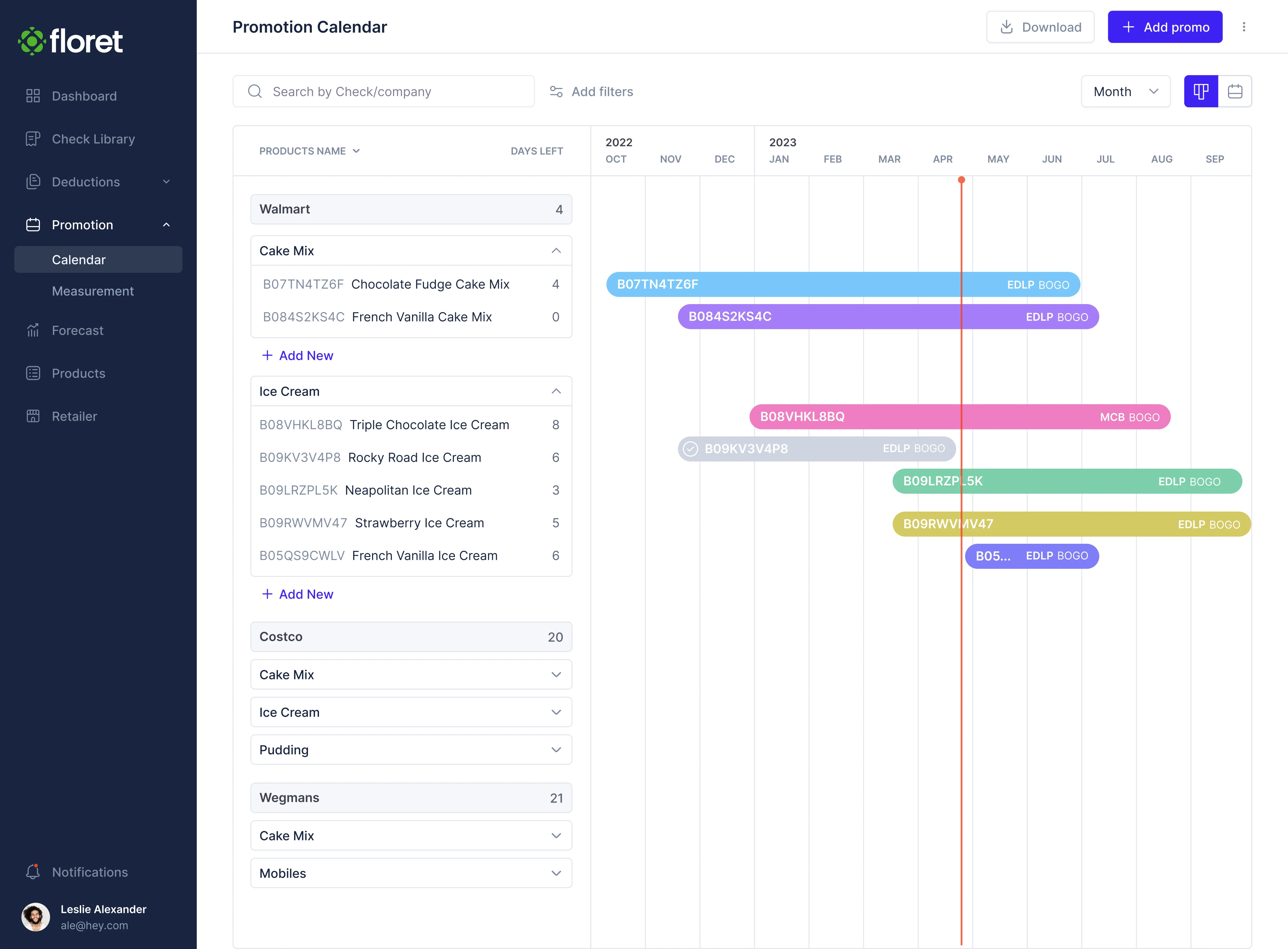
Floret secured a $2.3M investment after presenting a polished MVP designed in just two months. Investors described it as "really beautiful for early stage." That signaled a clear vision, thoughtful execution, and an idea that had already been pressure-tested.
How much design that early prototype actually needs is its own question, and this short talk on UX design for startups is a useful watch before you over- or under-invest:
A prototype also bridges one of the biggest gaps in product validation. Once you've confirmed the problem exists, conversations alone become limiting. Instead of asking people to imagine your product, you can put something tangible in front of them, observe how they interact with it, and gather far more reliable feedback before writing production code.
Datawisp illustrates this well. Their initial prototype was enough to raise $435K in pre-seed funding, but it wasn't enough for the next stage. After redesigning it into a polished MVP, feedback shifted from "this looks complicated" to "this looks easy," helping the company secure a $3.6M seed round.
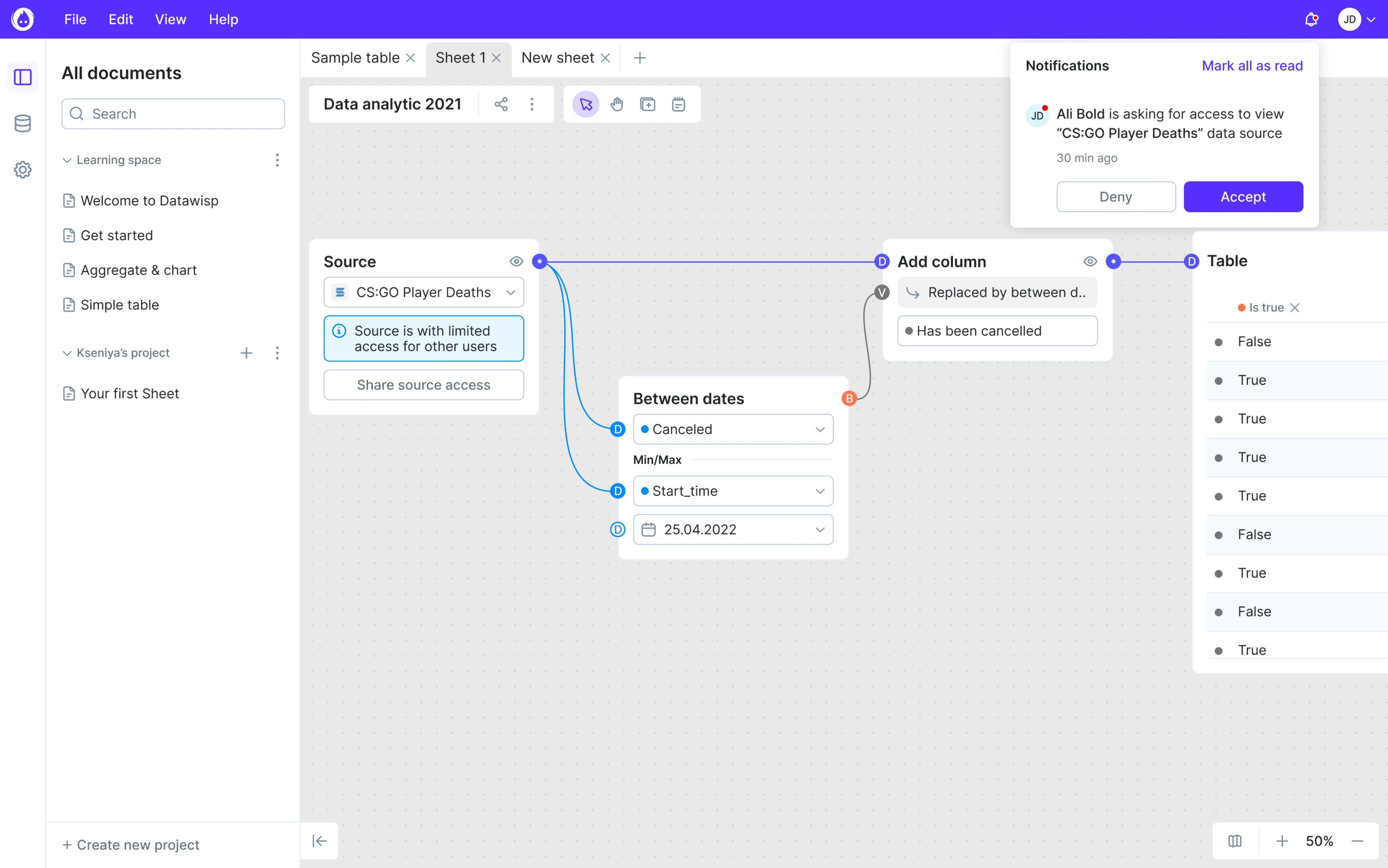
Another example comes from Maksym, Eleken's Head of Design. He created an interactive prototype below (you can test it yourself; just click the "Open live prototype" button) that let clients explore the product before it was built, clicking through key flows and features to understand how it would work before development.
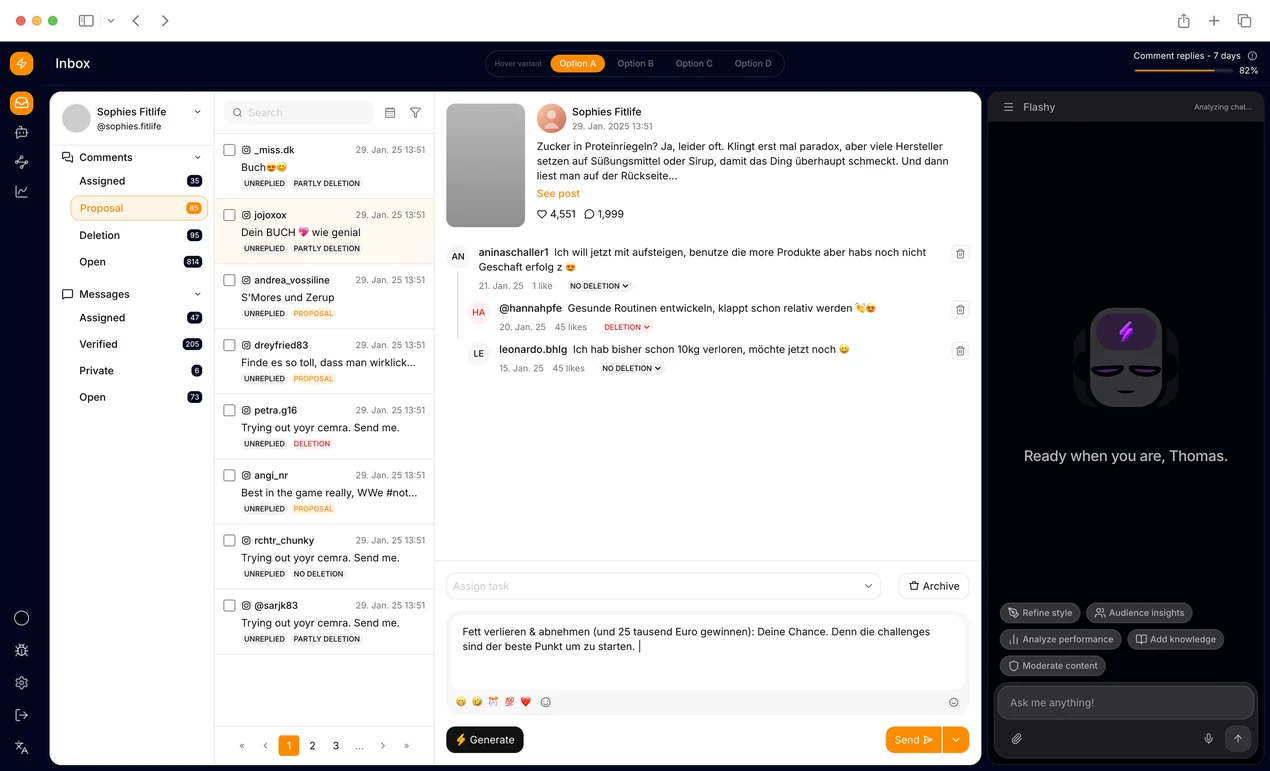
The lesson is simple: how a product looks affects whether people believe in it, including the people writing checks. That's why MVP design matters more than founders expect.
You've now run the tests. Market, users, competitors, money, demand, prototype. Which leaves the hardest part: deciding what the results mean.
The bottom line: Go, pivot, or kill?
Completing these five steps doesn't guarantee success, but it dramatically reduces the chances of building something nobody wants.
Before reviewing your results, define clear success criteria. For example, start with three questions that cut through most noise:
- Is the problem impactful enough that solving it matters?
- Is it urgent right now, or a someday-nice-to-have?
- And the clarifying one: what happens to your user if you don't build this? If the honest answer is "not much," you have your answer.
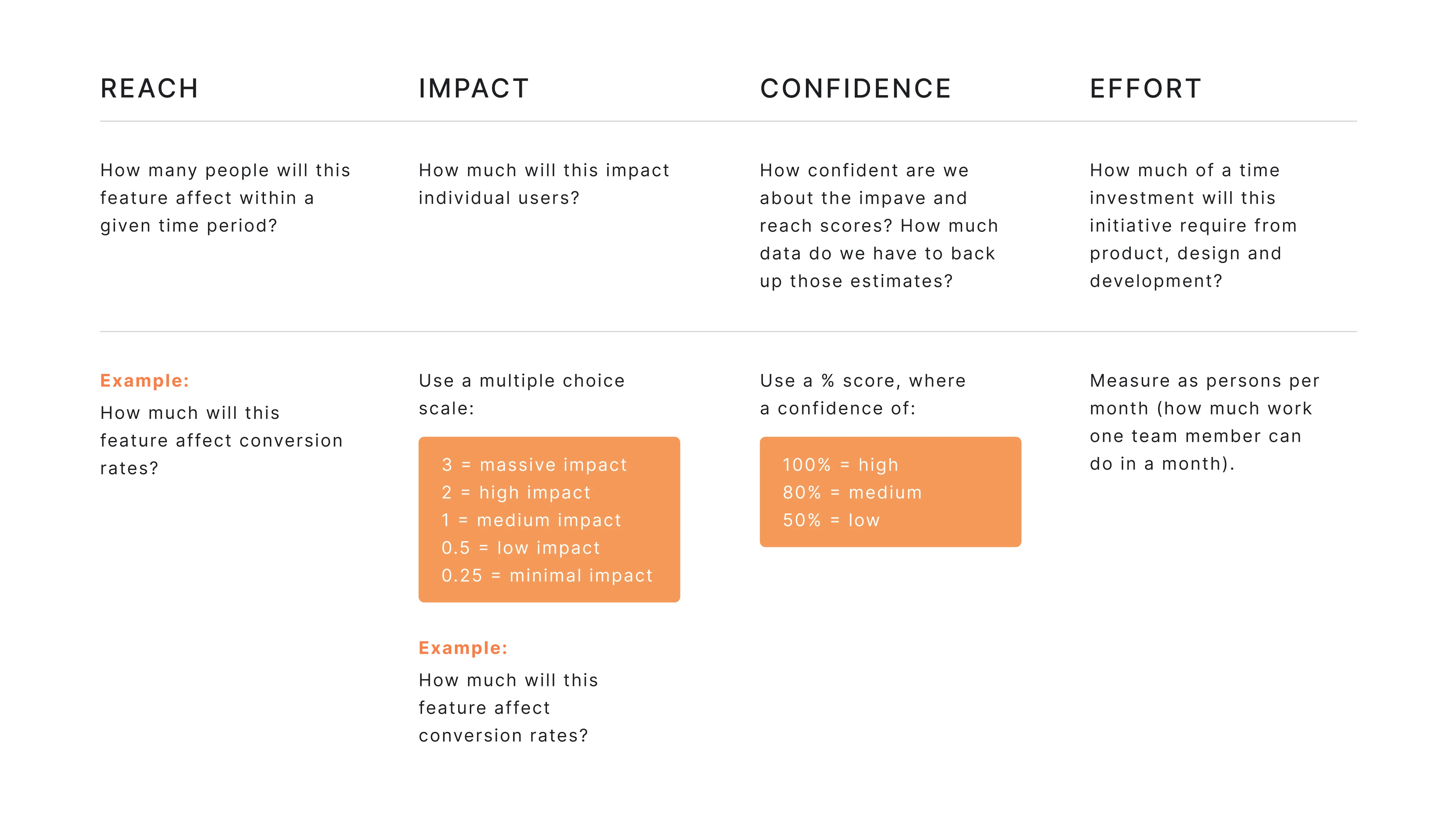
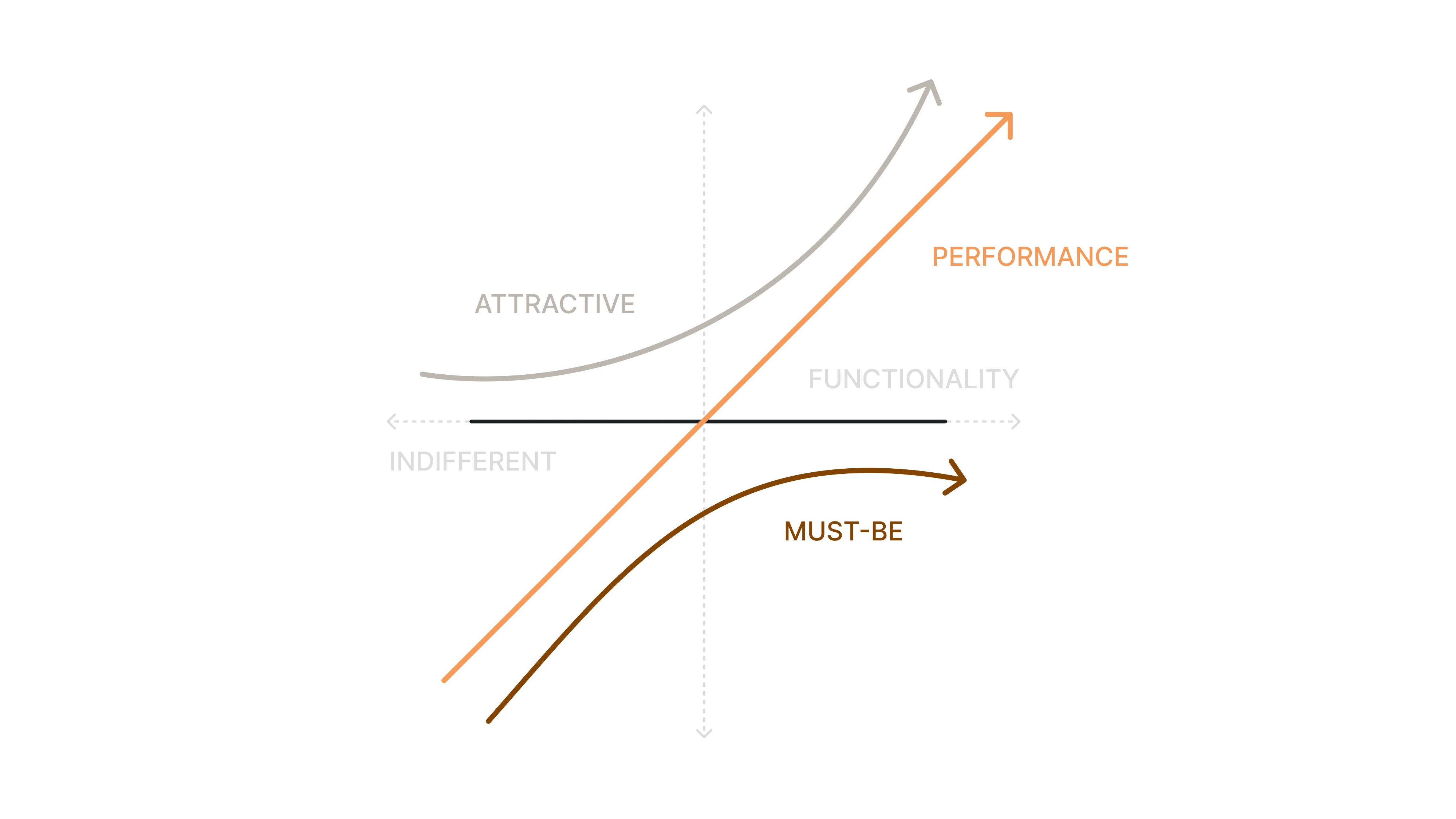
For structured prioritization, pick a framework and use it. Once validation tells you what matters to users, turn that evidence into product priorities. Frameworks like RICE, ICE, or Kano can help you decide what to build first, what can wait, and what doesn’t deserve development time:
- RICE and ICE score ideas on a few weighted dimensions.
- The Kano model sorts features into must-haves, delighters, and don't-bothers.
Before you review your results, define clear success criteria. For example:
- Complete at least 20 customer interviews.
- Achieve a 5%+ landing page conversion rate from targeted traffic.
- Reach an LTV:CAC ratio of at least 3:1.
Writing these thresholds down in advance helps you avoid the temptation to reinterpret disappointing results. A 3% conversion rate isn't "basically 5%" just because you want your big idea to succeed.
Most importantly, remember that interest isn't validation. A waitlist, survey response, or positive interview is encouraging, but it's not the finish line. True market validation happens when someone is willing to pay for your solution, and your product solves their problem.
From there, the path is simple:
- Go if the evidence consistently supports your assumptions.
- Pivot if the problem is real, but your audience, positioning, or solution needs to change.
- Kill the idea if demand is weak, customers won't pay, or the economics don't work. That saves you months of work and a significant amount of money.
Killing an idea cleanly is a skill, and it's one of the most valuable ones you'll develop. But for the ideas that survive, what does the other outcome look like?
If validation eventually points toward product-market fit, that's its own deep topic; our guide to product-market fit and a set of real product market fit examples pick up exactly where this leaves off.
Validation is a habit: run cheap tests, read the results honestly, and kill what doesn't earn its place. The startup idea you're sitting on might be the one. The only way to find out is to try your hardest to prove it wrong, cheaply and quickly, before you bet everything on a feeling.
And when your assumptions hold up, when you've validated the market, confirmed customer demand, and know the business can work, you'll need something tangible to put in front of first paying customers and investors.
That's where Eleken can help. We design investor-ready MVPs and interactive prototypes for SaaS startups, helping founders test ideas, gather real feedback, and move toward product-market fit before investing in a full-scale build.


%2520cover.png)


