

Too often, a proof of concept (PoC) is treated like a baby version of the product. Something you can show off, demo to stakeholders, or worse, slap into a pitch deck and call it “validation.” But that’s not what a PoC is for.
The goal of a proof of concept is to answer one question: Can this work?
It’s not whether users will like it or investors bite, but is this idea operationally, conceptually, or technically feasible?
If you run a PoC without knowing the exact risk you're testing, you might get the worst possible outcome: false confidence. You'll come out thinking you're ready to build, when all you’ve done is burn time proving something irrelevant.
That’s why this guide exists to give you a playbook for:
- Deciding when a PoC is worth running.
- Knowing what to test and why.
- Building just enough to get real evidence.
- And most importantly, deciding what to do next.
Let’s break the “mini-product” myth and treat PoC like what it is: a decision-making tool. But first, we’ll define what a proof of concept really means and how it differs from a prototype, MVP, or pitch.
What is meant by a proof of concept?
A proof of concept (PoC) is a short, focused experiment designed to prove or disprove one key assumption. That’s PoC's meaning in business.
It’s not a product, a feature, or even a prototype. A good PoC exists to answer one question: “Can this work under real-world constraints?”
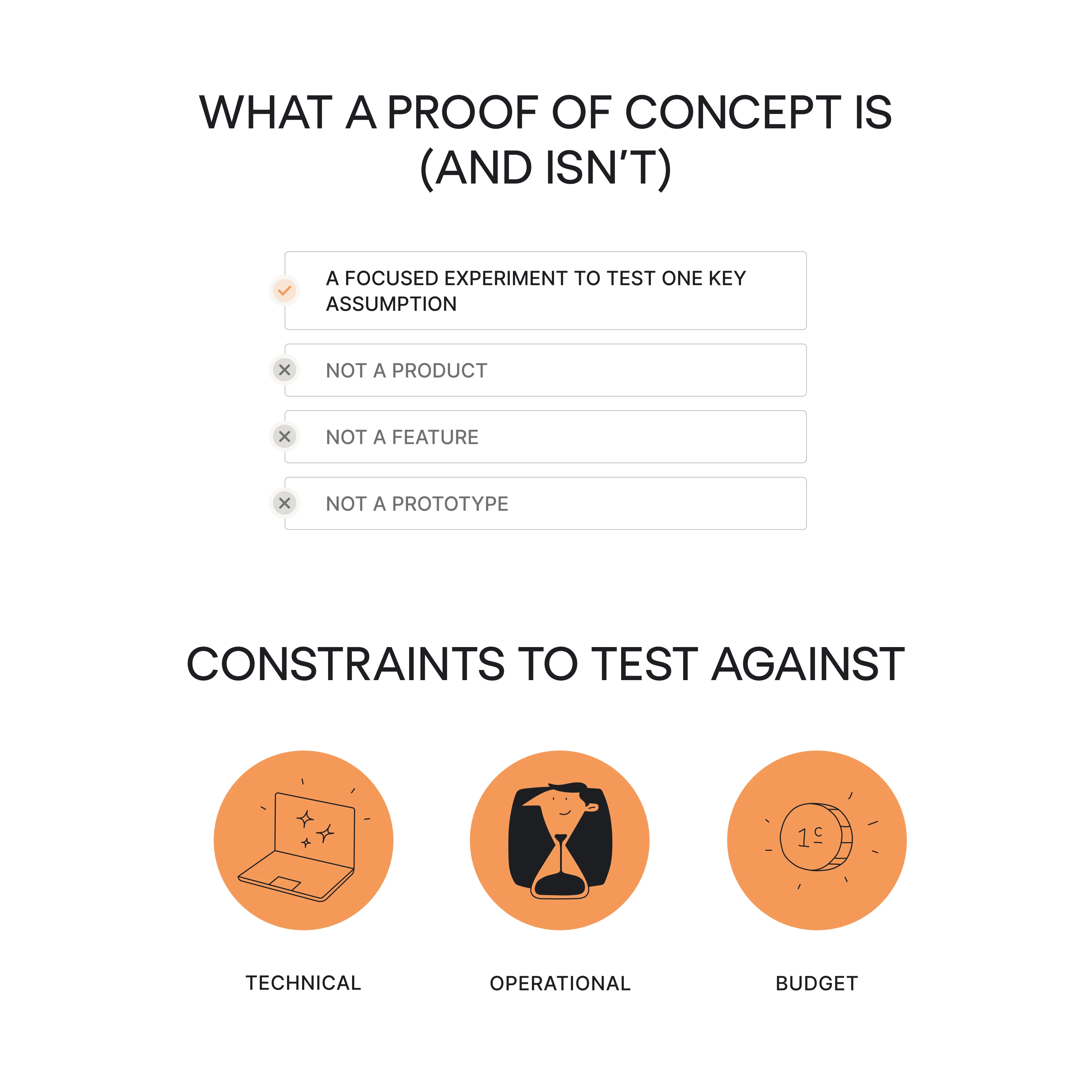
The constraint might be:
- Technical: “Can we integrate these systems without breaking everything?”
- Operational: “Can we generate results in under 5 seconds?”
- Budget-related: “Can we do this without blowing $50k on infrastructure?”
But it should never be vague. A PoC is like a lab test: quick, specific, and deliberately limited in scope.
So, what a PoC is not, and why that matters?
Let’s clear this up, because mixing up concepts leads to bad decisions and overbuilding. A proof of concept tests whether something can be done, while a prototype explores how it might look or work, an MVP delivers a usable first version, and a pilot project runs the solution in a real-world setting.
Here’s how they compare:
Most teams blur these lines, trying to test feasibility, usability, and target market demand all at once, and end up validating nothing.
Why does this matter for SaaS startups? How can the early-stage business differentiate proof of concept vs prototype? The short answer’s in the video below:
Next, we’ll zoom in on how early-stage startups can use PoCs wisely, and what is a PoC in business.
Proof of concept in startups: key components
Early-stage startups are scrappy; that’s why a PoC matters. It shows your idea has legs before you burn runway, and that’s exactly what investors want to see.
But what does a strong PoC include? Here are the key components of a high-signal proof of concept for startups:
1. A clear risk you're trying to reduce
Investors don’t need to see pixel-perfect mockups. What they care about is whether you’ve reduced a key risk. Here is what you can do:
- If your startup depends on processing real-time data from 1,000 devices, show that you can do that.
- If you claim your AI model detects fraud better than Stripe Radar, prove it (even on a small scale).
- If your pitch is “Slack, but encrypted end-to-end,” show you can actually deliver that encryption.
2. A reason to skip it
What investors want is a clear signal: this idea has been de-risked in some way that matters. However, if the main risk is demand, not feasibility, skip the PoC. Test your market instead.
Here’s what doesn’t need a PoC:
- A lightweight no-code product.
- A new idea where tech is already commoditized.
- Anything where the challenge is getting users to care, not getting the thing to work.
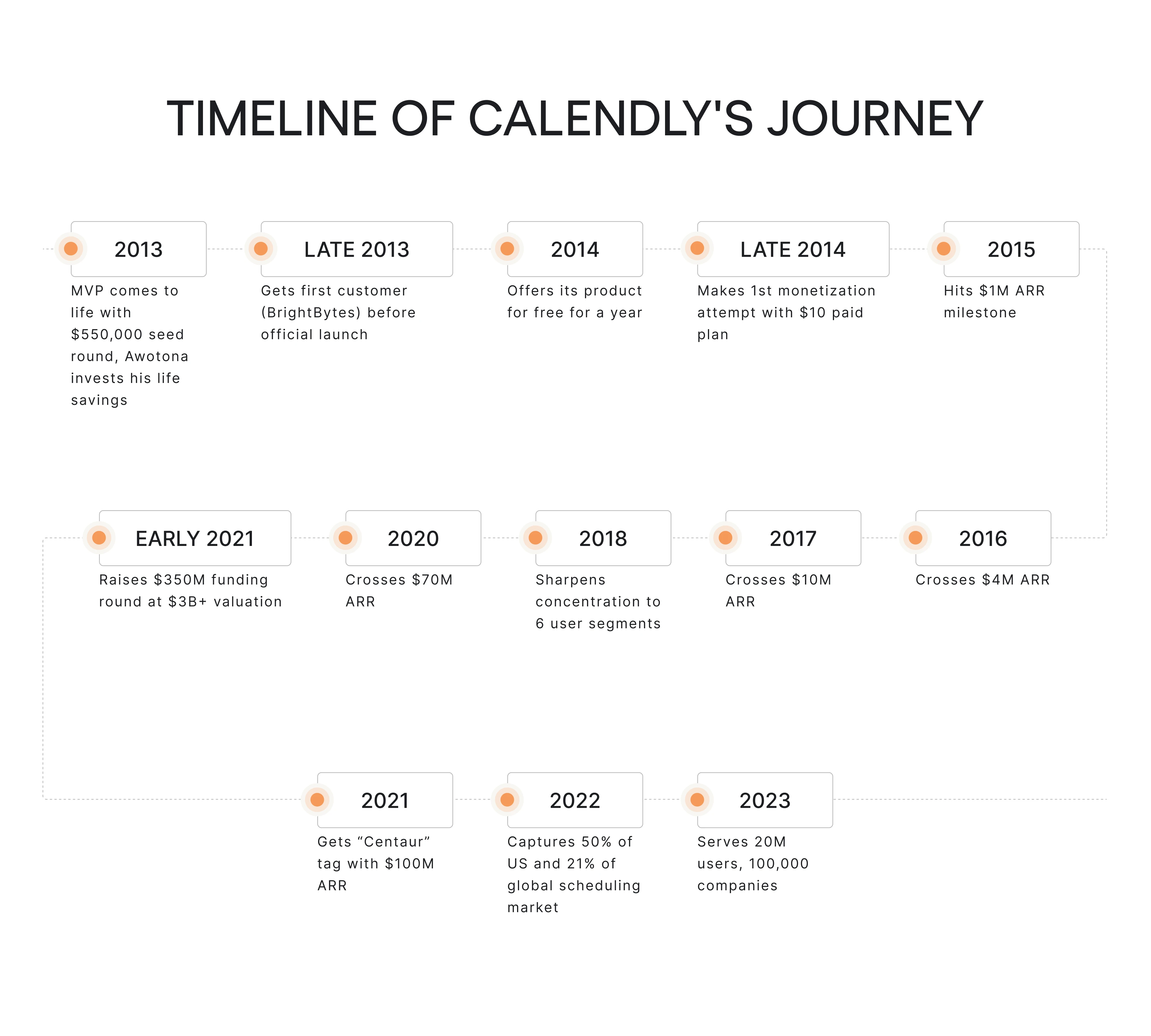
Take Calendly, for instance. Their early product focused on solving key pain points: endless back-and-forth emails just to schedule a meeting. Scheduling links already existed, so they didn’t need to prove technical feasibility. Instead, they built a clean MVP and focused on adoption, letting product-led growth do the heavy lifting.
3. A lean approach
In Eleken’s experience, many early-stage teams build quick PoCs internally, often skipping design entirely. We typically join after this stage, once the team knows something works and needs to shape it into something the target audience will adopt.
So, how do you build a lean PoC without overthinking it?
- Skip the fancy UI. Mock data, a command-line interface, or even a Google Sheet will do.
- Timebox it. A few days to a couple of weeks, anything longer, and you’re probably overbuilding.
- Test under real conditions. Even if it’s rough around the edges, your goal is proof, not polish.
Next up, we’ll help you define the most critical part of your PoC: the question it’s trying to answer.
Start with the right question: what are you trying to prove in business development?
A PoC starts with one key uncertainty: what’s the single thing we need to know before moving forward? That’s the core of the “one-question rule.” Every proof of concept should be built to answer one high-risk question. But how to identify your riskiest assumption?
Ask yourself:
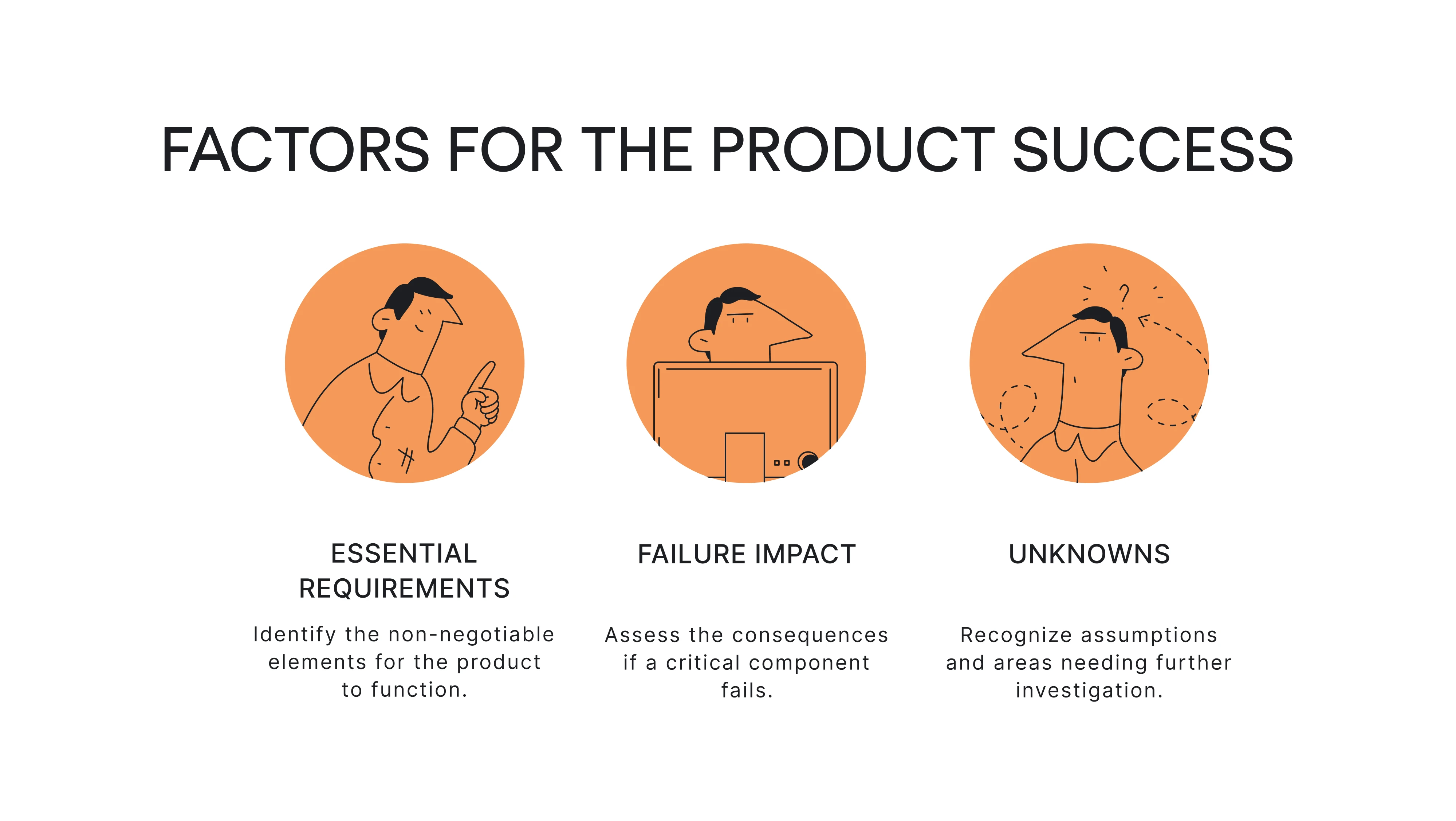
- What absolutely must be true for this product to work?
- If this doesn’t work, is the whole project idea dead?
- What don’t we know yet that we’re currently assuming?
Then pressure-test that assumption. Can you simulate it? Fake it? Hack it together with duct tape and a cron job?
A few common PoC questions:
- Can we deliver real-time results in under 2 seconds?
- Can our backend integrate with this clunky legacy system?
- Can we get accurate predictions from this machine learning model?
- Can users complete a 3-step workflow without getting stuck?
If you’re trying to answer all four of those in one go, you’re not doing a PoC. You’re writing a thesis.
Why you must avoid “multi-question” PoCs
Let’s say you’re building a new video analytics tool. You want to:
- Test the AI tracking algorithm.
- Try a new onboarding flow.
- Prove you can store terabytes of footage.
- Show potential customers a demo.
But the statement above just described four different projects. And yet this happens all the time in early-stage teams. It’s how “a quick PoC” turns into a 3-month black hole with no clear outcome.
To fix that, ruthlessly narrow the scope, test one thing, and document everything else you learn along the way, but optimize for one answer.
Up next, we’ll show you how to choose the right kind of PoC based on the risk you’re tackling with concrete examples.
Choosing the right type of PoC based on the risk
The right proof of concept depends entirely on what kind of risk you’re trying to reduce.
Below is a quick selector-style guide to help you match your risk to the type of PoC that makes the most sense.
Next up, we’ll walk you through exactly how to run a PoC step-by-step, from hypothesis to decision.
How to run a proof of concept process, step by step
This is the part most teams rush. They skip straight to “let’s build something” without defining what project success looks like or what the PoC is even supposed to prove.
Here’s how to do it right in five clear steps:
1. Write the PoC hypothesis
This is one sentence like “We believe that [X] will be possible under [Y constraints].”
Examples:
- We believe our system can process 10K events per minute without dropping data.
- We believe we can scrape this data daily without triggering rate limits.
- We believe users can complete this setup process in under 3 minutes with no help.
This is about forcing focus. If your team can’t agree on one sentence, you're not ready to build anything yet.
2. Set predefined success criteria
This is where you say: What does “it works” actually mean? You’re looking for binary or measurable results, not opinions.
Examples:
- API call latency is consistently under 500ms.
- 95% of test users complete the flow without asking for help.
- The script runs for 7 days without crashing or timing out.
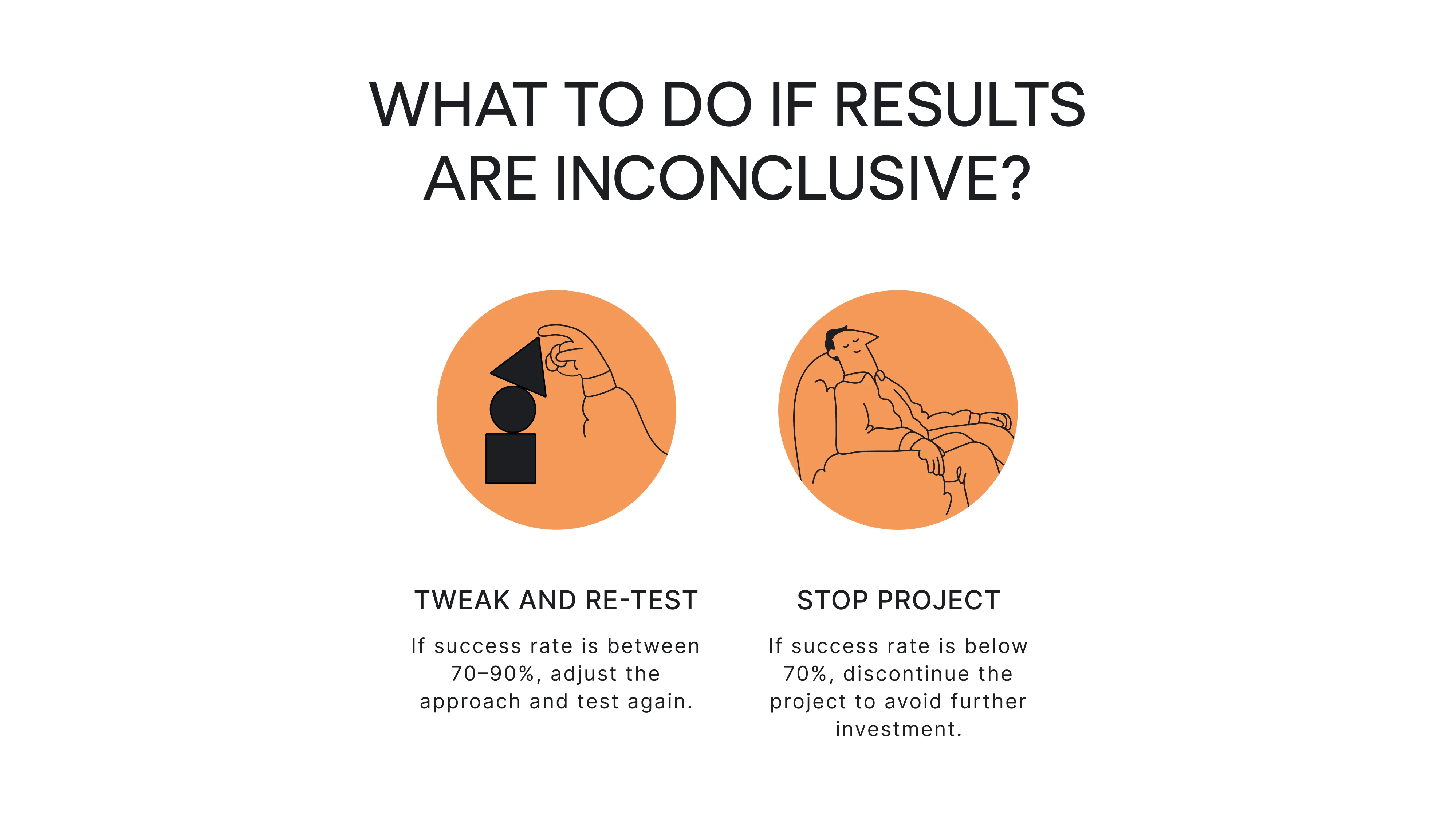
Also, a concept plan for ambiguity. Define what you’ll do if the results are inconclusive. (e.g., “If 70–90% success, we’ll tweak once and re-test. If below 70%, we’ll stop.”)
3. Set scope and time limits
PoCs should take days or weeks, not months. Set a deadline and don’t blow past it.
More importantly, write down what is not included.
Example:
- “We are NOT designing a UI.”
- “We are NOT handling edge cases or internationalization.”
- “We are NOT testing user comprehension yet.”
A timebox and a scope box are your guardrails. Without them, your PoC will quietly morph into a stealth MVP.
4. Build and test concept examples
This is the hands-on part, but don’t over-engineer it. Instead:
- Use fake data.
- Mock APIs.
- Skip error handling.
- Comment your code like you’re the only one who’ll ever see it (because you are).
Your PoC is the start of your learning process. Also, document surprises. If something breaks, if an assumption fails, write it down. These “failures” are often the most useful outcomes.
5. Evaluate results and make a decision
Compare what happened to your success criteria, not what you hoped would happen or what your key stakeholders felt went well.
Your PoC either met the goal, missed it, or landed in that “maybe” gray zone you already defined. This is the real output of the PoC, as you’re delivering a decision.
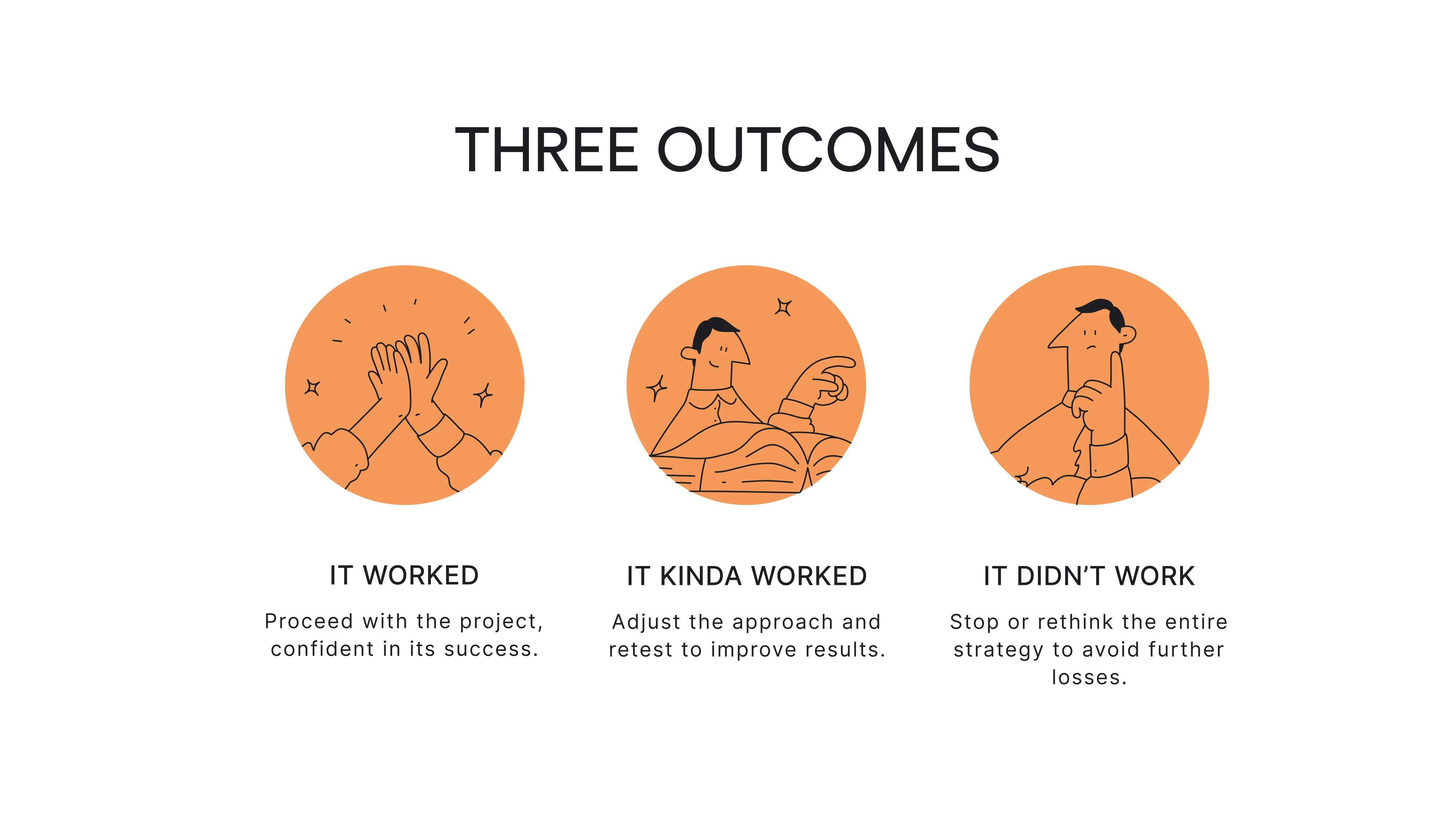
One of three intended outcomes:
- It worked: we can move forward.
- It kinda worked: let’s tweak and retest.
- It didn’t work: let’s stop or rethink the approach.
Even “failure” is success here. A PoC that saves you six months of building the wrong thing is a win.
Next, we’ll show you what “success” looks like with proof of concept examples, and how to avoid fooling yourself with false positives.
What “success” looks like in a PoC with real examples
Below are some real-world examples of what success looks like, categorized by type of risk. So, what does poc mean in business?
Technical feasibility
You’re proving that your tech works at all.
Success metrics might look like:
- API returns results in under 500ms 95% of the time.
- ML model detects 80% of anomalies with <2% false positives.
- CLI tool completes a full sync across 3 systems with no manual intervention.
Dropbox famously validated its SaaS idea before building the full backend by creating a simple explainer video showing how file syncing would work, not a polished product, but enough to prove the concept and drive interest that justified building the actual technology later.

Integration feasibility
You’re checking if systems can talk to each other reliably.
Success metrics:
- 99% sync success rate during a 7-day test window.
- All errors are caught and logged (even if not fixed yet).
- Integration doesn't exceed rate limits or timeout thresholds.
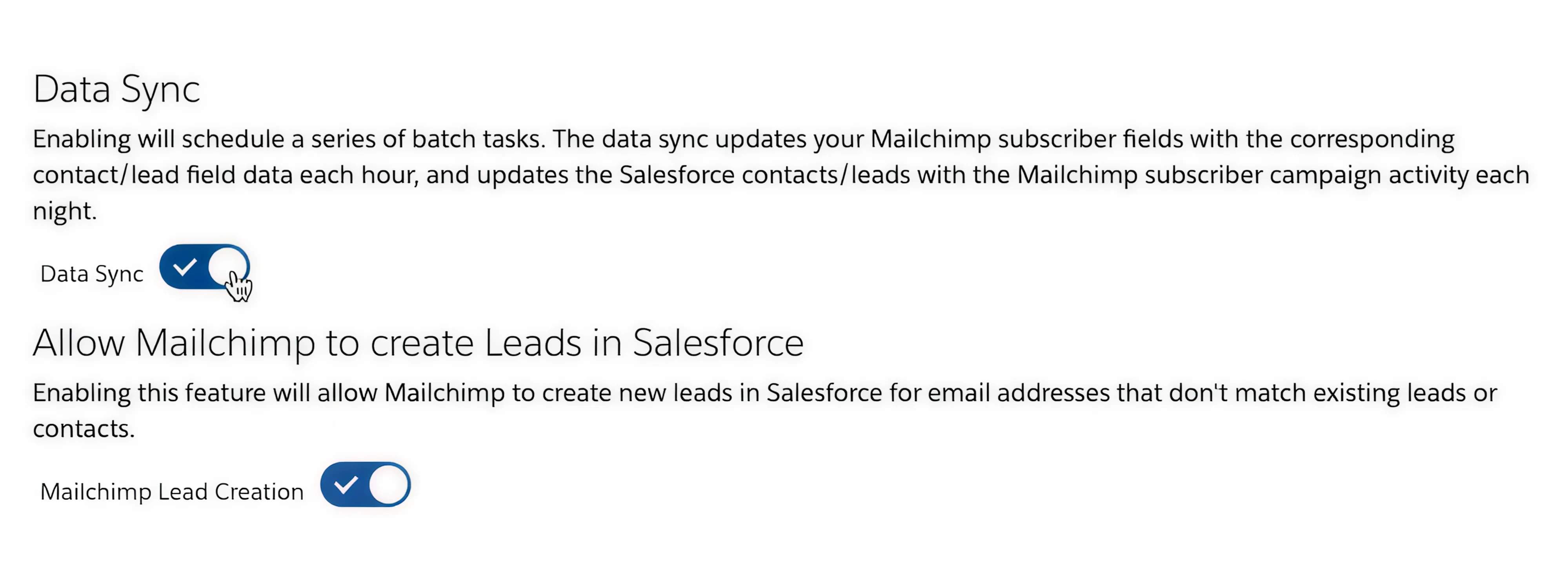
For example, before launching a full integration, a team might test whether Salesforce can sync reliably with an email marketing tool like Mailchimp. The PoC focuses on verifying that lead updates in the CRM reflect correctly in Mailchimp without delay, data loss, or rate-limit issues.
In one such PoC, your team can measure a sync success rate across records during a 5-day test, with all failures logged for review, enough to move confidently into full SaaS development from scratch.
Cost or performance feasibility
Can you do this without setting money or CPUs on fire?
Success metrics:
- $0.01 per transaction with acceptable latency.
- Average CPU usage stays under 40% across the load test.
- Storage costs stay under $X per 1,000 users.
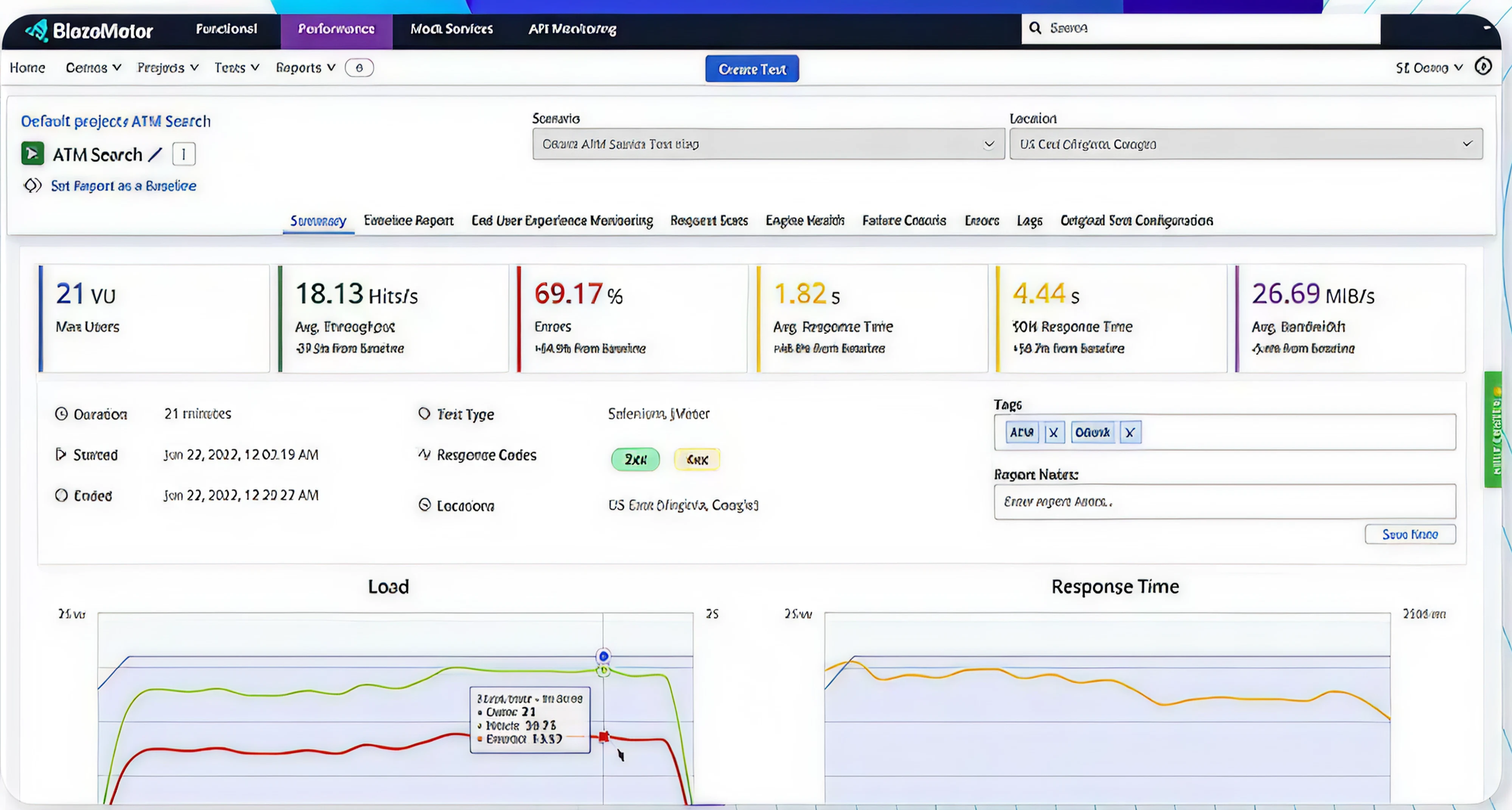
Let’s take an example of proof of concept from performance testing practice. Before scaling a SaaS application, teams use tools like BlazeMeter, a cloud‑based load and performance testing platform, to simulate user traffic and assess how their system handles stress. BlazeMeter recommends replicating real-world peak scenarios, like tax season loads for accounting platforms, to surface bottlenecks and prevent costly downtime.
Workflow feasibility (a.k.a. can humans actually use this?)
This is where the line between PoC and prototype gets fuzzy.
Success metrics:
- 80%+ task completion rate in early test runs.
- Error rate below 5% on critical tasks.
- Users get from start to finish without help.
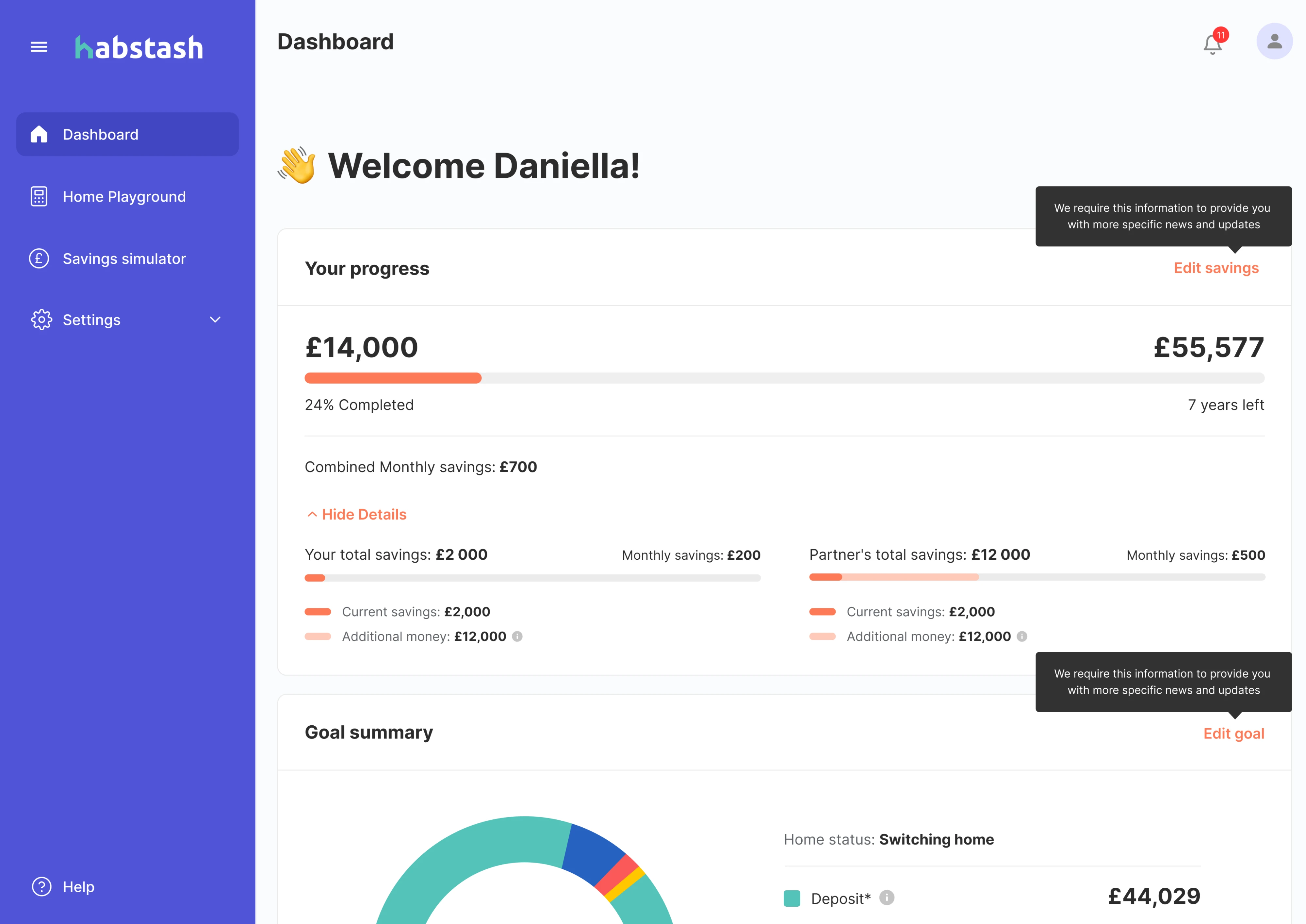
Take our client Habstash, a home savings and financial planning startup. When they approached Eleken, they already had some rough materials and early UX assumptions. Our role was to bring those assumptions to life in a way that could be tested. We created a clickable flow and put it in front of real users to see if they could complete key tasks without getting stuck. The insights we gained helped the team refine their SaaS onboarding and planning steps before writing a single line of production code.
A good PoC doesn’t give you confidence that something can work. It gives you confidence that it will work and under what conditions. Let’s wrap up the core with a sharp look at what not to do.
Common PoC mistakes and how to avoid them
A PoC is supposed to help you move fast and learn, not sink your time or mislead your roadmap. Here are five common failure modes we see all the time, and how to prevent them:
- PoC creep (a.k.a. accidental MVP)
What it looks like:
“We’ll just polish it a bit.” → “Let’s hook up a UI.” → “Now it’s demo-ready!”
Suddenly, you’re maintaining a semi-product you never meant to build.
Why it happens:
No one defined a clear scope or deadlines.
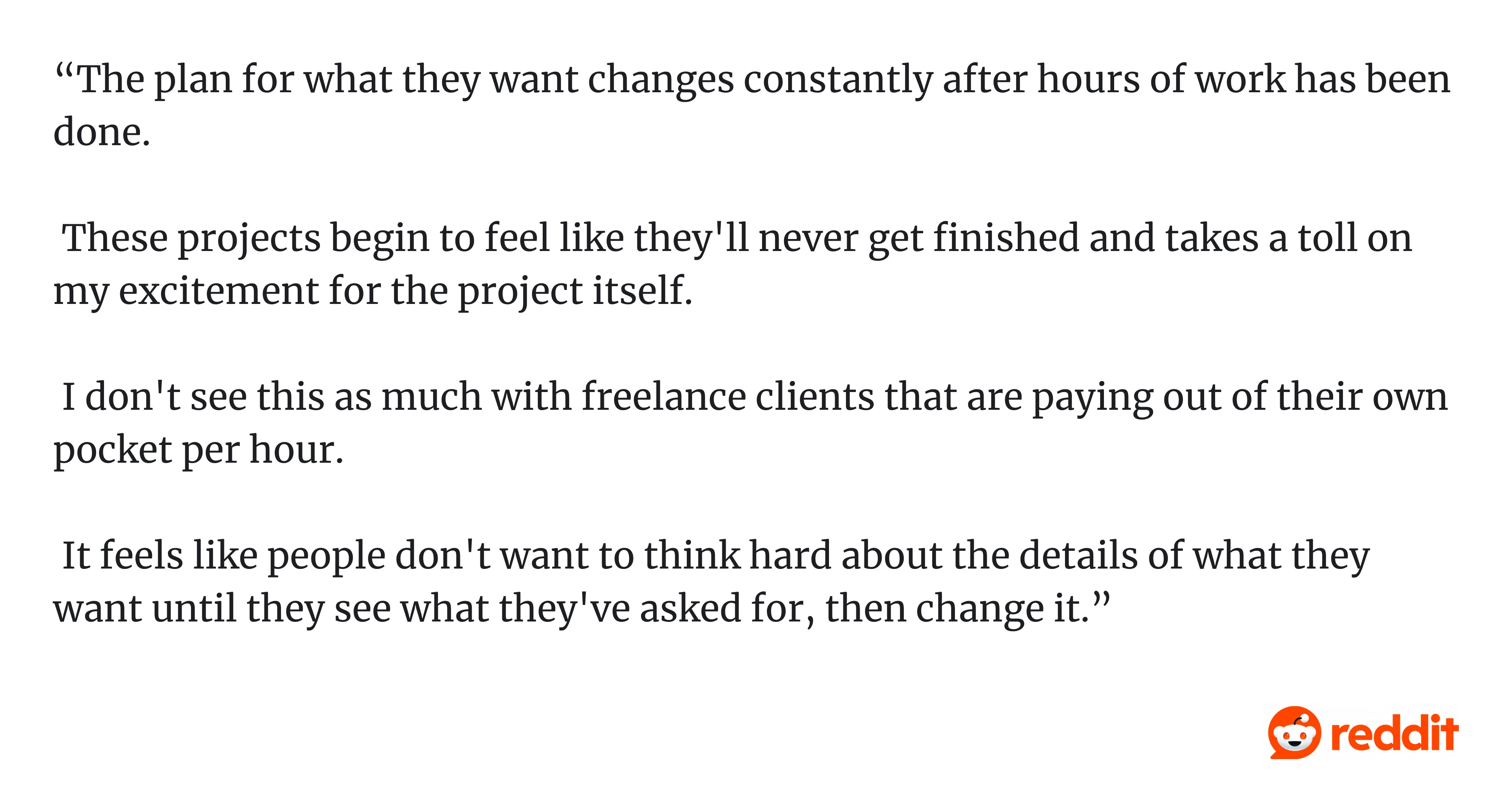
It started as an experiment, and now it’s become… something else. As one Redditor put it: “The plan for what they want changes constantly after hours of work has been done... These projects begin to feel like they’ll never get finished.”
Here is how to prevent it:
- Timebox the PoC.
- Write down what’s intentionally excluded.
- When the deadline hits, stop, evaluate, and decide, without rolling extensions.
- Building for production too early.
What it looks like:
You’re adding error handling, edge cases, localization, and onboarding flows… for a test that’s supposed to last two weeks.
Why it happens:
Perfectionism or stakeholders who expect a polished “preview.”
How to prevent it:
Remind the team: the PoC is disposable. It’s here to teach you something, not live forever. Ugly is fine. Reliable isn't.
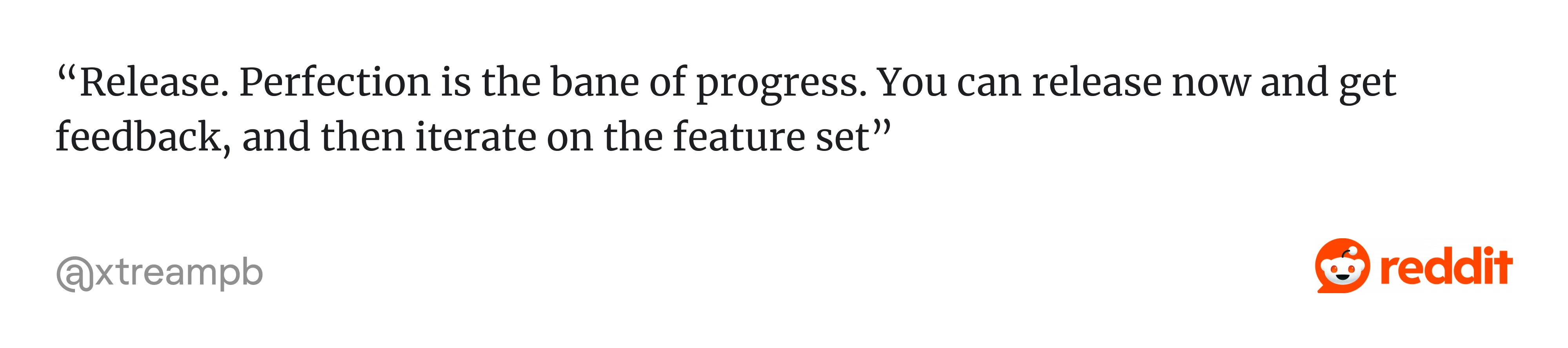
This Redditore advised: “Release. Perfection is the bane of progress. You can release now and get user feedback, and then iterate on the feature set.”
- Proving the wrong thing
What it looks like:
You build cool basic features... that answer none of the core questions behind your business model.
Why it happens:
No one clarified the hypothesis. The project team built what felt good, not what was risky.
How to prevent it:
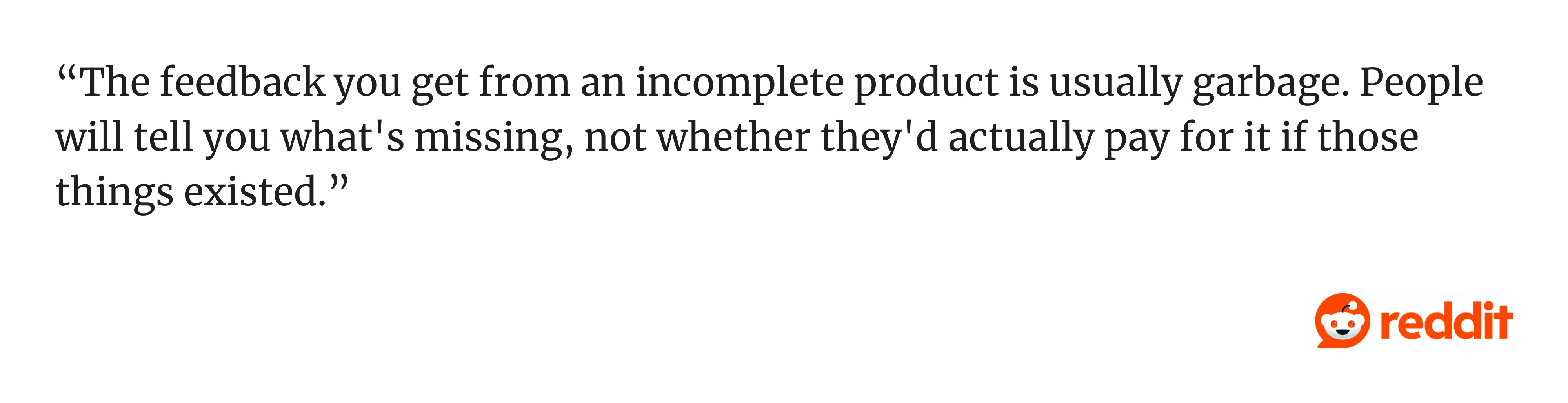
Write a one-sentence PoC hypothesis before building anything. If the feature doesn’t help answer that question, it doesn’t belong. A Redditor summed this up bluntly: “The feedback you get from an incomplete product is usually garbage. People will tell you what’s missing, not whether they’d actually pay for it.”
- Moving the goalposts mid-way
What it looks like:
“We’ll consider it a win if we hit 500ms latency.”
Later: “Well, 1s is probably fine too. Maybe 2s if it’s stable?”
Why it happens:
Desperation. You want the PoC to “work,” so you soften the target until it does.
How to prevent it:
Lock your success criteria up front and review results against those. If the test fails, that’s data, not defeat.
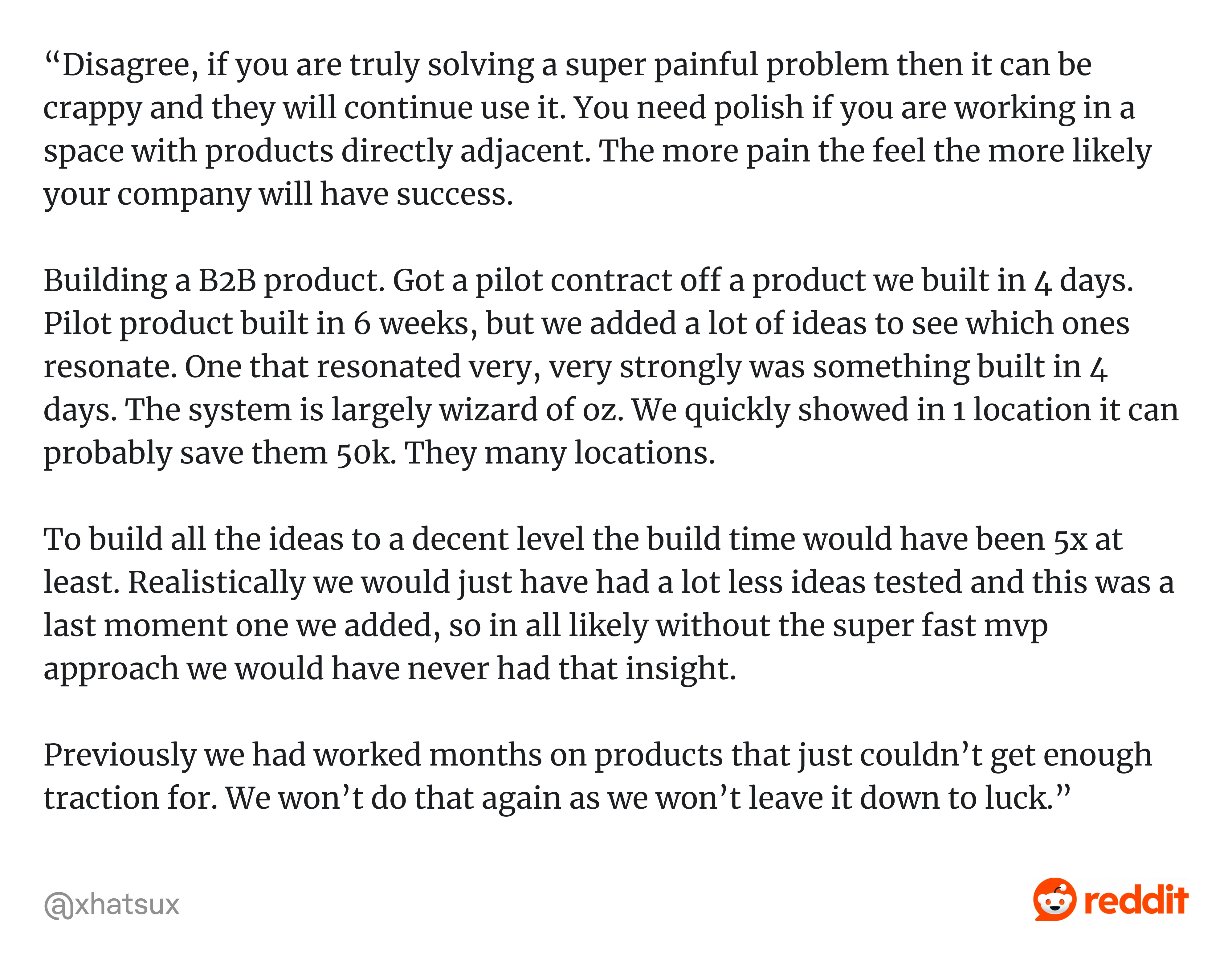
This Reddit commenter summed up: “...The more pain the feel the more likely your company will have success…”
- Treating stakeholder enthusiasm as validation
What it looks like:
“It looks amazing!”
“Investors loved the demo!”
“So… it’s validated, right?”
Why it happens:
Humans love praise. But praise ≠ proof.
How to prevent it:
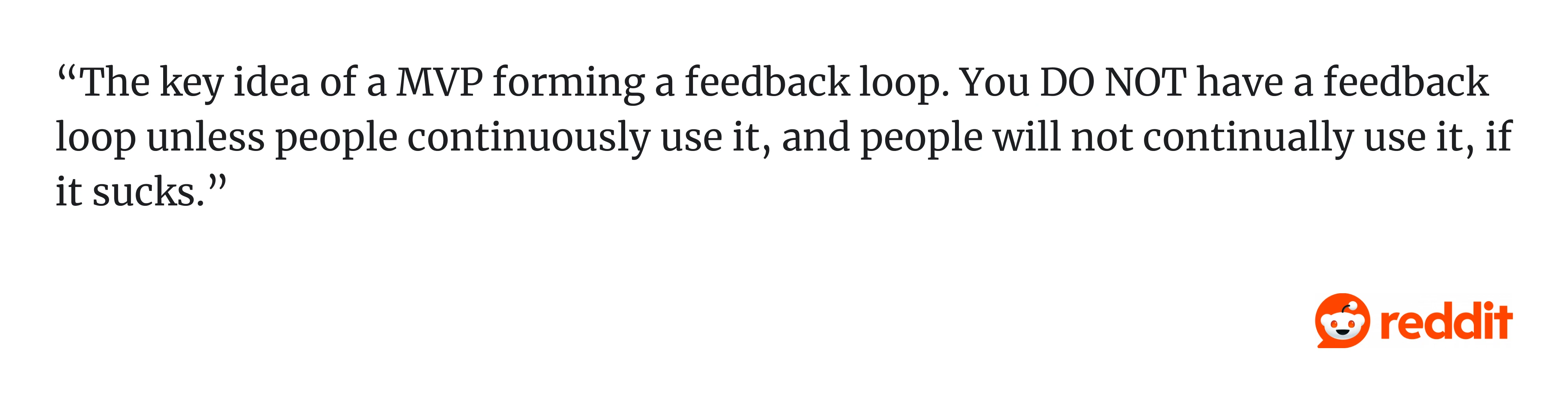
Stick to real signals: metrics, constraints, results. Save the dopamine hits for after you’ve decided to move forward (or not). One commenter added the real‑world caveat: “...You DO NOT have a feedback loop unless people continuously use it, and people will not continually use it, if it sucks.”
Conclusion: A proof of concept is a decision, not a deliverable
A successful proof of concept is the one that lets you say, with confidence: “We tested the risky part, and here’s what we learned. Now we know what to do next.”
That next step might be:
- Greenlighting the project development process.
- Iterating on the concept.
- Or walking away, saving months and thousands of dollars.
And all of those outcomes are wins, because indecision is what kills momentum. The best PoCs are small, specific, and slightly uncomfortable to run because they expose real risks.
At Eleken, we help SaaS teams shape raw ideas into testable, buildable concepts without overdesigning or losing focus. If you're gearing up for a proof of concept, we can help you make it lean, clear, and worth running.



%2520cover.png)


