

Design subscription agencies are everywhere, but not all of them deliver on their promises. Across communities like Reddit’s r/SaaS and r/Entrepreneur, founders and agency owners describe the same pattern: high churn, low differentiation, and constant pricing pressure.
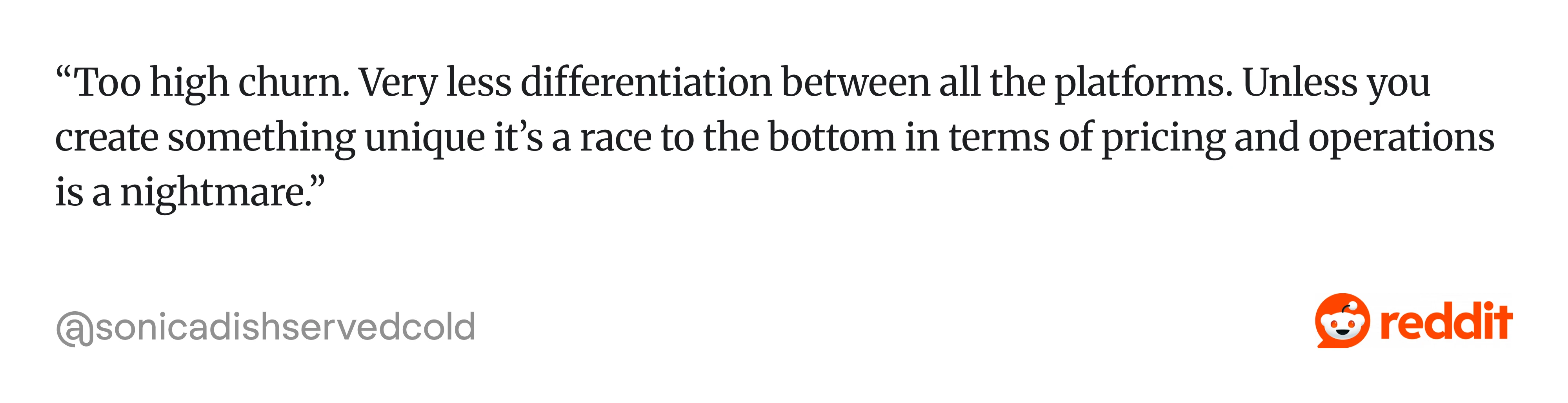
As one Reddit user put it, “Too high churn. Very little differentiation between platforms. Unless you create something unique, it’s a race to the bottom in terms of pricing and operations is a nightmare.”
That gap between expectation and reality becomes even sharper in SaaS, where product complexity demands more than quick, surface-level design support.
In this guide, we break down 10 of the best SaaS design subscription agencies, compare them based on Clutch or DesignRush ratings and real client feedback, and help you figure out which one fits your product, team, and workflow.
What is a SaaS design subscription agency?
Simple concept: you pay a flat monthly fee and get ongoing design work without hiring headaches, project-by-project invoices, or awkward freelancer negotiations.
Most agencies run on an async, queue-based model. You submit design tasks. They're worked through one at a time (or sometimes a few). The word "unlimited" gets used everywhere in this space, but it never means truly unlimited simultaneous execution. It means unlimited task submissions. That distinction matters more than most people realize before they sign.
The model works well for teams with continuous design needs. It's not designed for deep, one-time redesigns or heavy UX strategy. Keep that distinction in mind as we go through the list.
Best SaaS design subscription agencies in 2026
Each agency is reviewed with the same structure: who it's best for, pricing, strengths, and limitations based on data from Clutch, DesignRush, Reddit, and agencies' websites.
1. Eleken: best for SaaS product design (UI/UX depth)
Pricing: ~$6,599/month
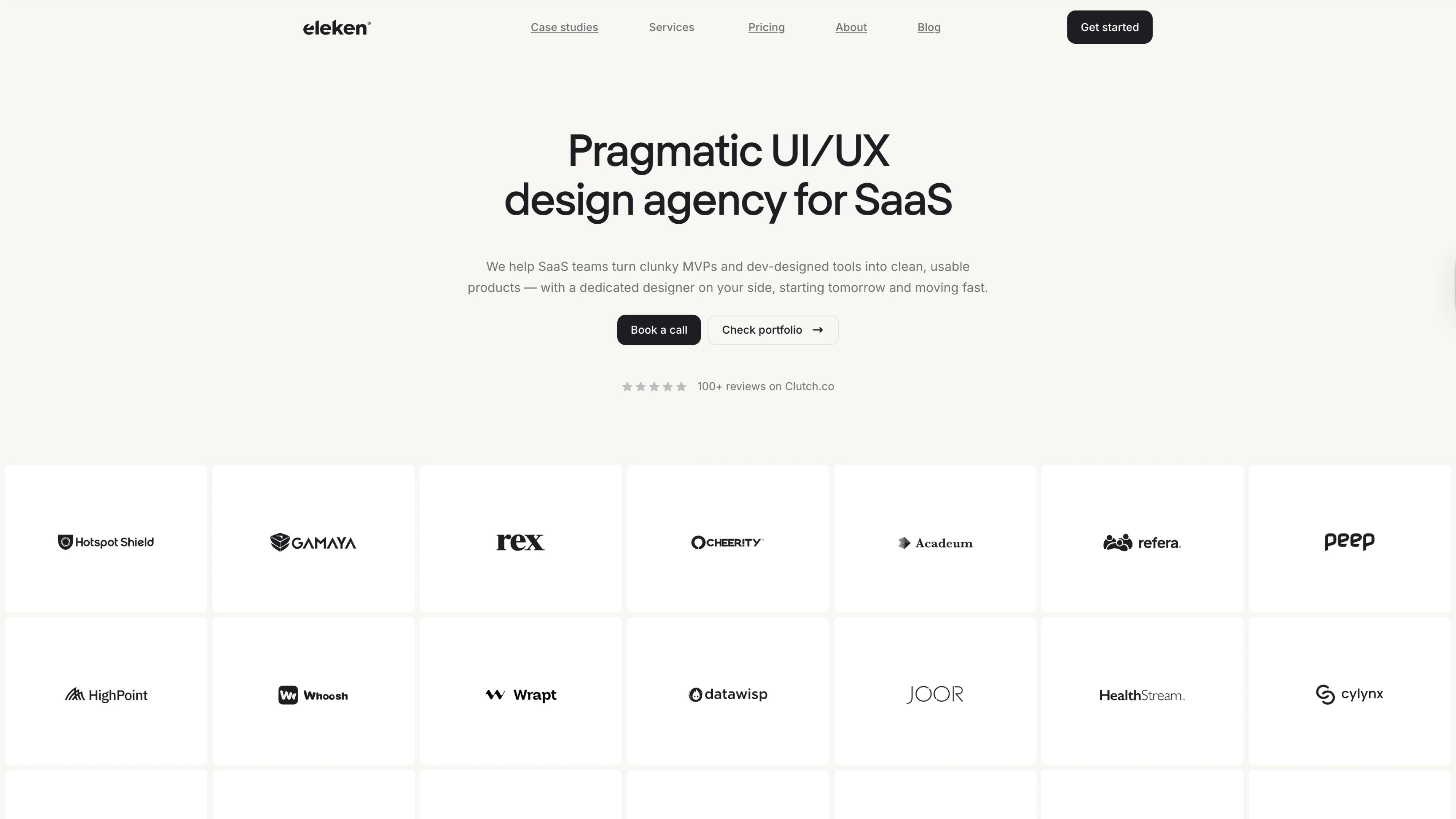
If your product has complex user flows, layered dashboards, or a genuine need for UX thinking beyond visual polish, Eleken is built for that work, offering top monthly design services for SaaS.
Unlike most agencies on this list, Eleken focuses almost exclusively on SaaS companies. Their experienced designers understand product logic, not just how things look.
Think onboarding flows, data-heavy dashboards, complex feature rollouts, and SaaS design that holds up under real user pressure. They've worked with funded startups, scale-ups, and design-led startups across a wide range of verticals. Designers are dedicated and embedded in your team, rather than rotating across multiple clients.
That focus shows up in client feedback. Eleken holds a 4.9 rating on Clutch and 4.8 on DesignRush.
One reviewer noted: “It’s impressive how little time Eleken takes to understand a new product and get into the details.”
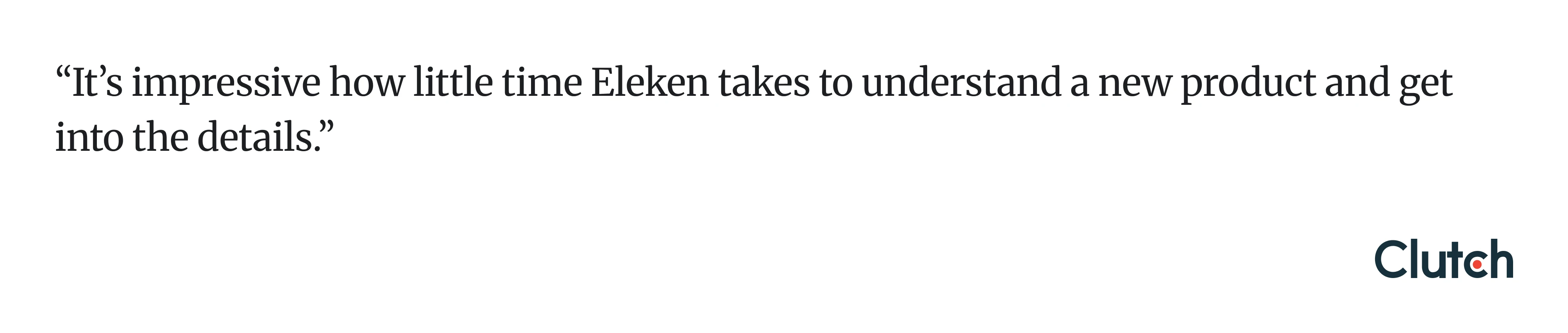
Their pricing model is transparent, which is refreshingly rare in this space. And they offer a free trial so you can evaluate fit before committing to a full engagement.
If you want to learn more about Eleken’s SaaS design approach, consider watching this video:
Strengths:
- Deep SaaS and UX expertise, not just visual execution.
- Dedicated designers who integrate with your team.
- Strong track record with funded startups and growth-stage SaaS products.
- Transparent pricing, no hidden fees.
- Covers complex features, UX audits, and strategic design work.
A recent DesignRush review highlights this strength in practice: “We asked Eleken to help us identify places where we could do better for our users. Eleken was incredibly helpful, diving right in to understand our niche and suggesting high-impact changes that transformed our product. We are very grateful for their partnership and would not hesitate to work with them again in the future.”
Limitations:
- No development services.
- Not suited for basic marketing graphic work.
2. Superside: best for enterprise teams needing scale
Pricing: ~$1,000--$10,000+/month (based on data from DesignRush)
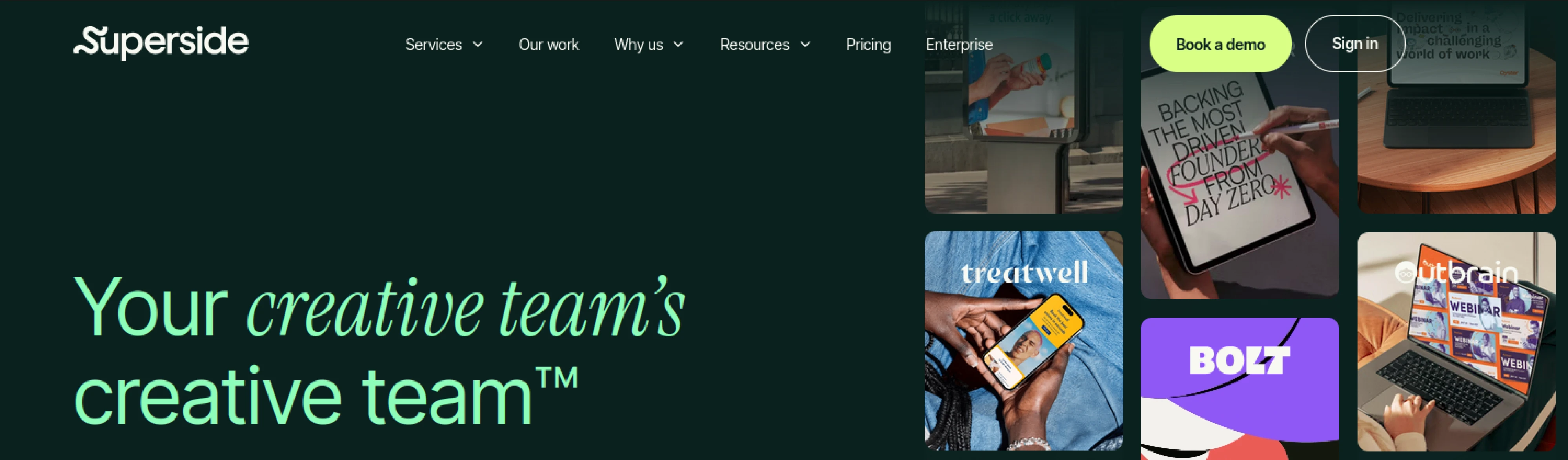
Superside is the enterprise play: large global team, fast output, broad creative capabilities covering brand, motion, web, and more. If you're a big business running multiple simultaneous campaigns and need a high-volume creative engine, Superside delivers. They've worked with major brands and have the infrastructure to match.
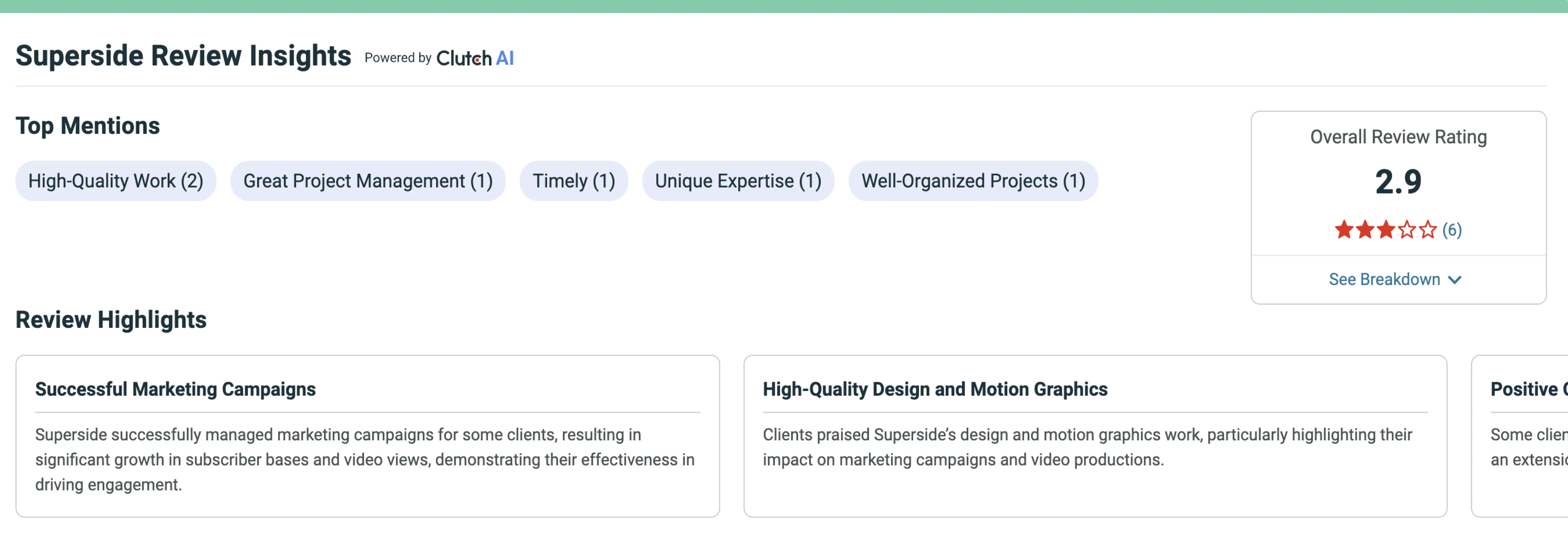
At the same time, client feedback is more mixed. Superside holds a 2.9 rating on Clutch and 2.3 on DesignRush, reflecting a range of experiences.
One Clutch reviewer noted, “Their wide range of offerings and capabilities and unique project management application were impressive.”
Where they tend to fall short is depth. For SaaS teams with genuinely complex product design needs, Superside can feel more like a production line: the throughput is there, but the UX thinking is often less pronounced.
Strengths:
- Large, globally distributed team.
- Fast delivery at volume.
- Wide creative service offering beyond just design.
Limitations:
- Expensive, among the priciest on this list.
- Less personalized than a dedicated designer model.
- The estimation process may overscope relatively straightforward work.
One DesignRush reviewer shared that a relatively simple task, such as creating and tweaking a set of icons, was estimated at a full month’s budget, highlighting potential inefficiencies in scoping smaller active projects.
3. Designjoy: best for startups needing fast, clean output
Pricing: from $4,995/month (monthly club, based on the company’s website)
Designjoy is one of the most talked-about agencies in the subscription design space. Built by a solo designer who turned a personal brand into a phenomenon, it's become the go-to reference point whenever someone asks, "Is this model legit?" The appeal is simplicity: one subscription, one queue, fast turnaround.
It works well for early-stage startups that need landing pages, pitch decks, and marketing assets without too much overthinking. The process is clean. The output is visually solid.
At the same time, it’s worth noting that Designjoy doesn’t have verified reviews on platforms like Clutch or DesignRush. Much of the discussion around it happens in communities like Reddit, where opinions are more mixed.
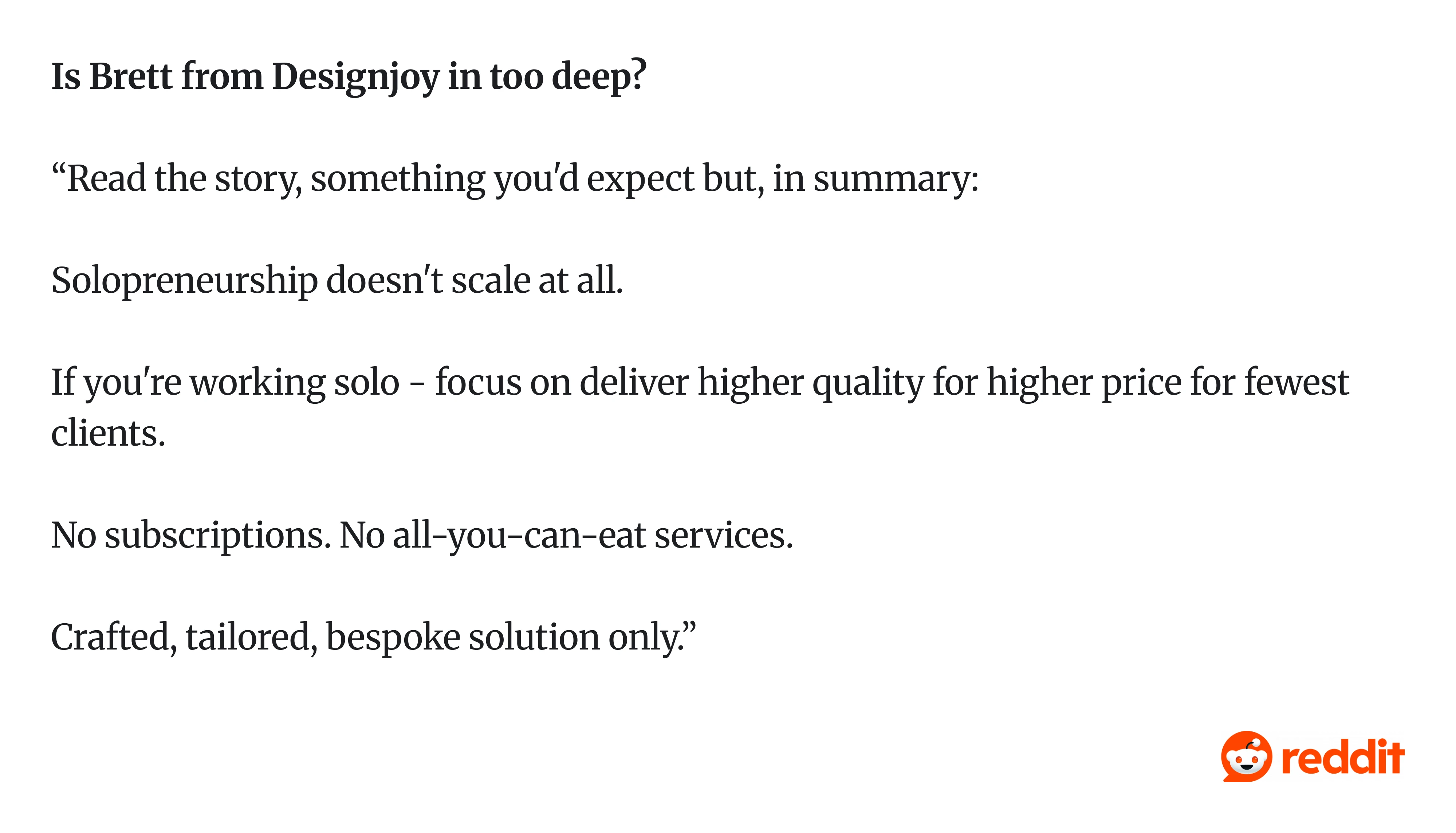
In one widely shared Reddit thread discussing the sustainability of this model, a common takeaway was that “solopreneurship doesn’t scale… subscriptions and ‘all-you-can-eat’ services quickly hit limits,” especially as complexity grows.
The catch: it’s one designer at a time. Complex SaaS product design, multi-flow UX work, or anything requiring systems thinking tends to strain the model.
Strengths:
- Affordable and straightforward workflow.
- Strong visual quality for standard outputs.
- Good option for early-stage teams with limited budgets.
Limitations:
- One active designer limits throughput significantly.
- Not suited for complex UX or SaaS product work.
- Waitlist periods can delay getting started.
4. Awesomic: best for flexible subscription + variety of tasks
Pricing: ~$2,000--$5,000/month (based on Awesomic’s pricing page)
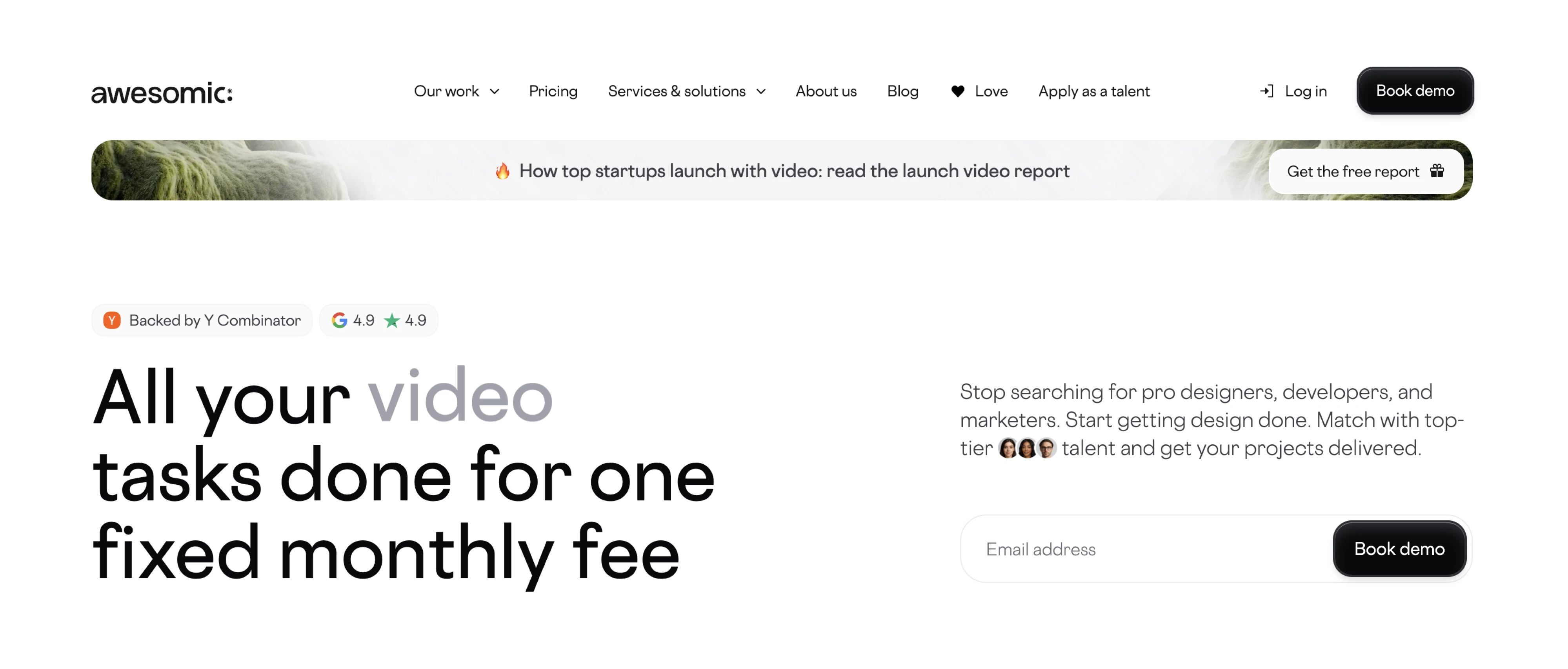
Awesomic uses a talent-matching approach. You submit a brief, and they assign a designer from their vetted pool based on fit. It's more flexible than a fixed-designer model, which is useful if your design needs shift week to week.
Good for teams that need a mix, such as some consistent branding, some UI design, some web assets, without committing to a single generalist.
The flexibility is genuine, and it’s reflected in client feedback: Awesomic holds a 4.9 rating on Clutch.
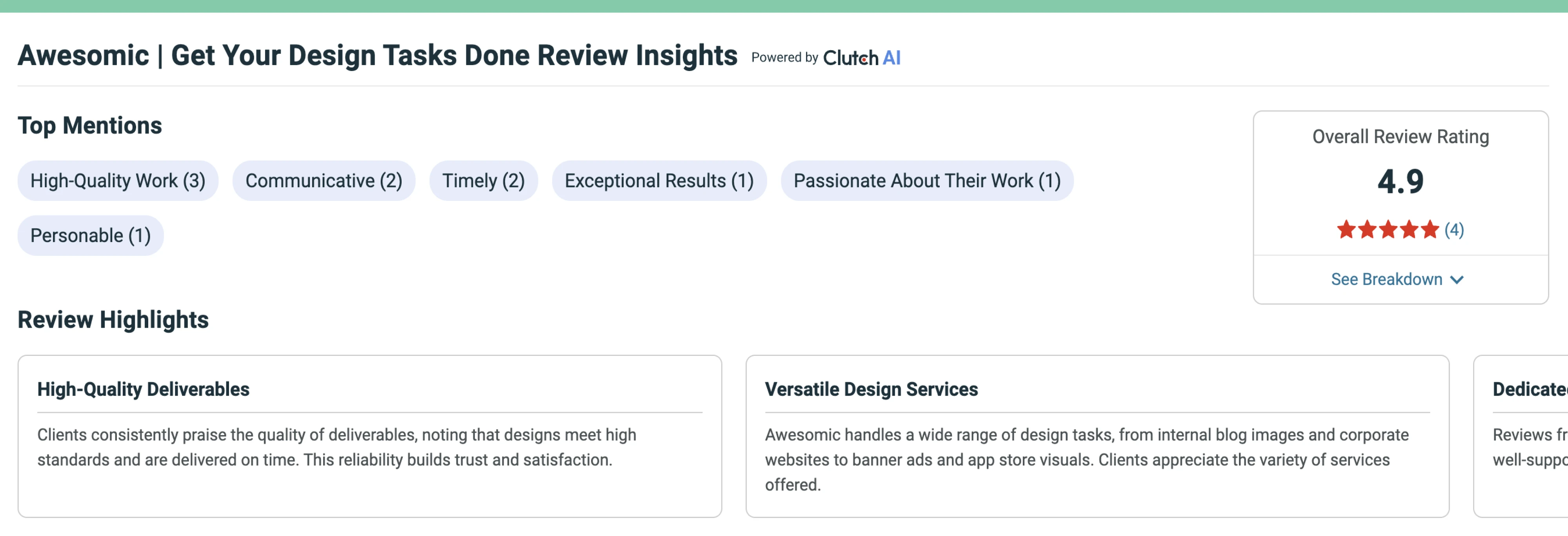
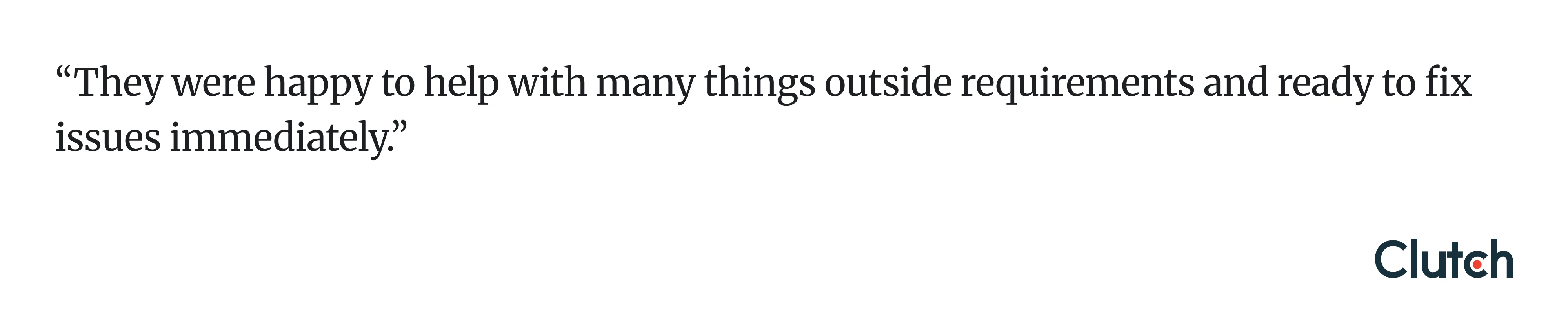
With one reviewer noting: “They were happy to help with many things outside requirements and ready to fix issues immediately.”
Strengths:
- Flexible task variety across design disciplines.
- Designer matching based on task type rather than a fixed rotation.
- Reasonable pricing for mid-range budgets.
Limitations:
- Quality can vary depending on which designer is assigned.
- Less continuity than a dedicated designer model.
- Limited depth on complex SaaS-specific work.
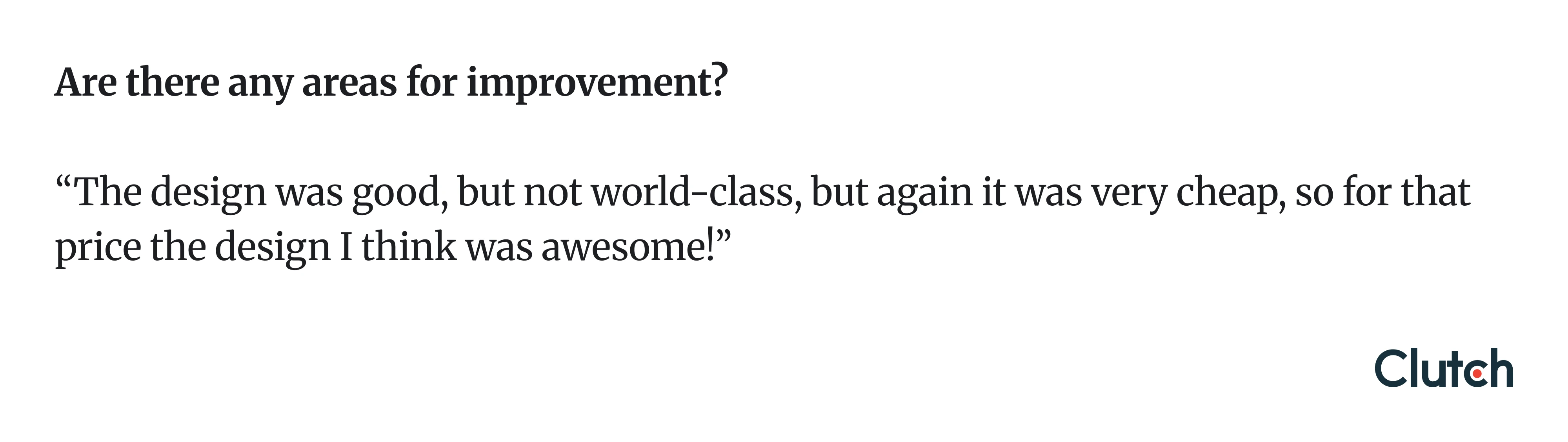
One reviewer shared on Clutch that the “design was good, but not world-class…”
5. Penji: best for marketing-heavy design needs
Pricing: from $995/month (based on Penji’s pricing page)
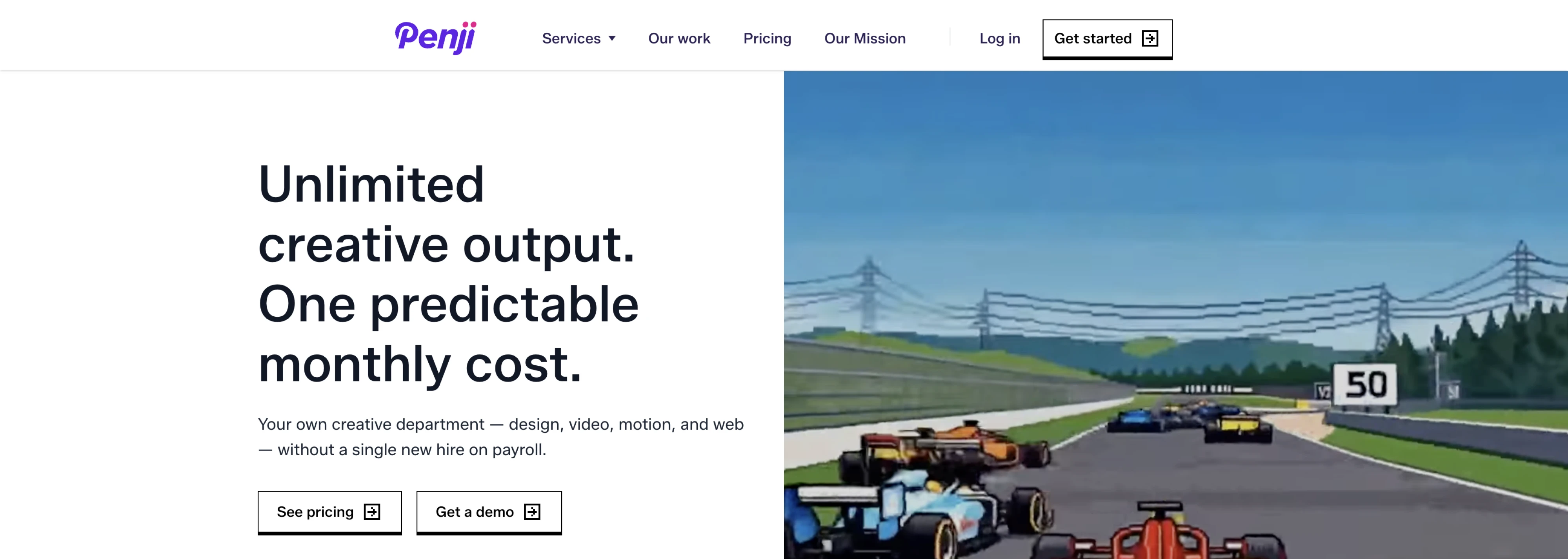
Penji is purpose-built for volume marketing design. Social media graphics, banner ads, email templates, and presentation decks. If your bottleneck is marketing assets and you need a lot of them consistently, Penji covers that well. The price point is accessible. The turnaround is fast for simple tasks.
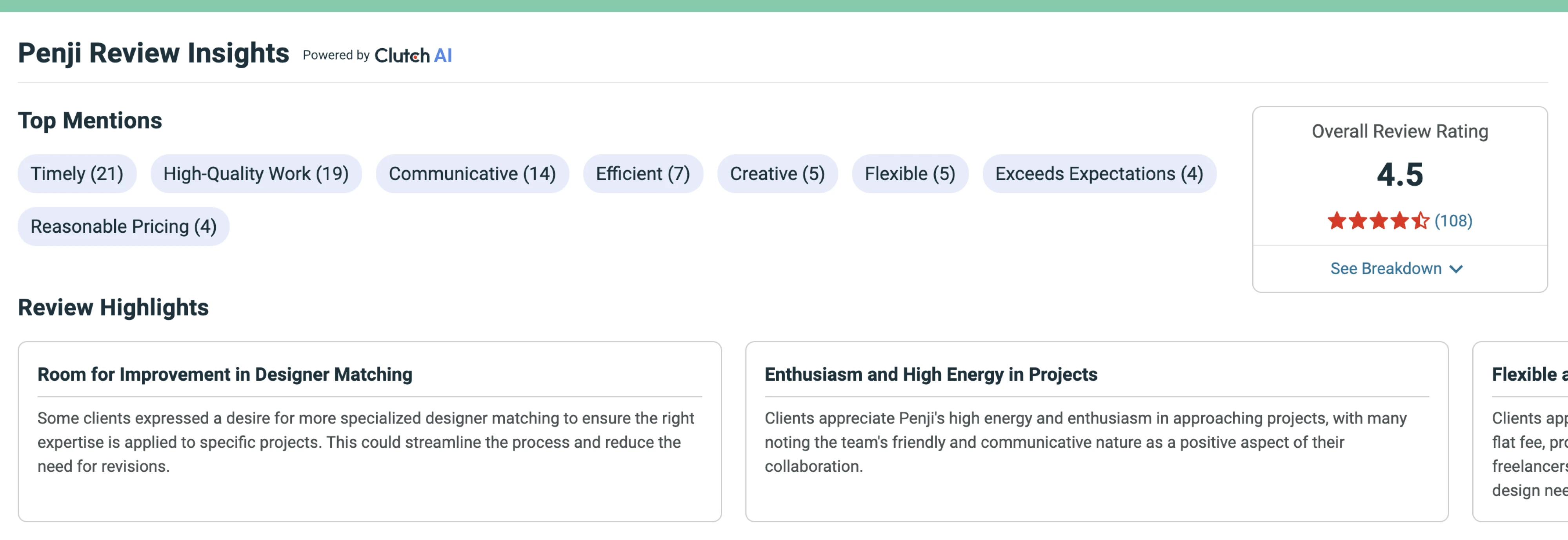
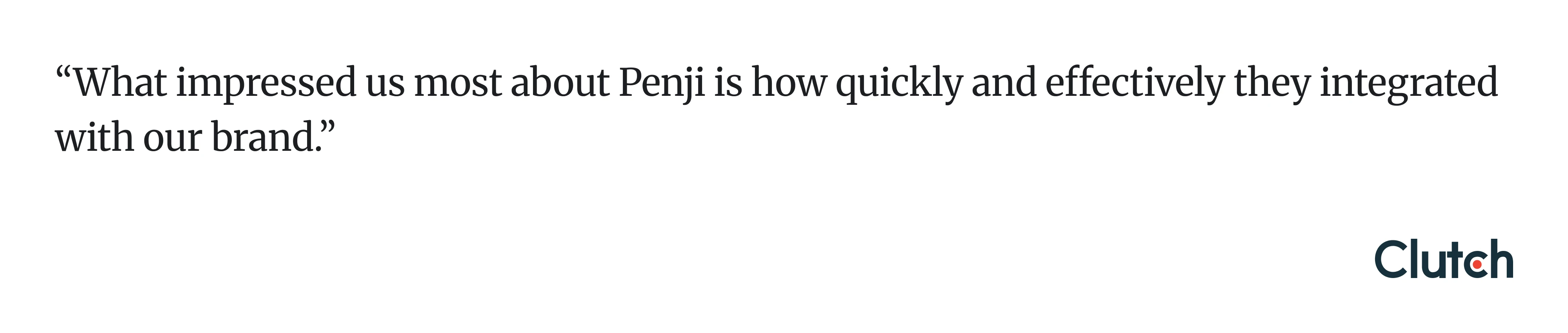
That efficiency is reflected in client feedback. Penji holds a 4.5 rating on Clutch, with one client noting, “What impressed us most about Penji is how quickly and effectively they integrated with our brand.”
Don't come here expecting product design or UX strategy. That's not what Penji is.
Strengths:
- Very affordable entry price.
- Fast turnaround on simple, repeatable tasks.
- High-volume output for marketing teams.
Limitations:
- Not built for product or UX design
- Limited complexity on anything beyond standard formats.
- Quality can be inconsistent for more nuanced briefs.
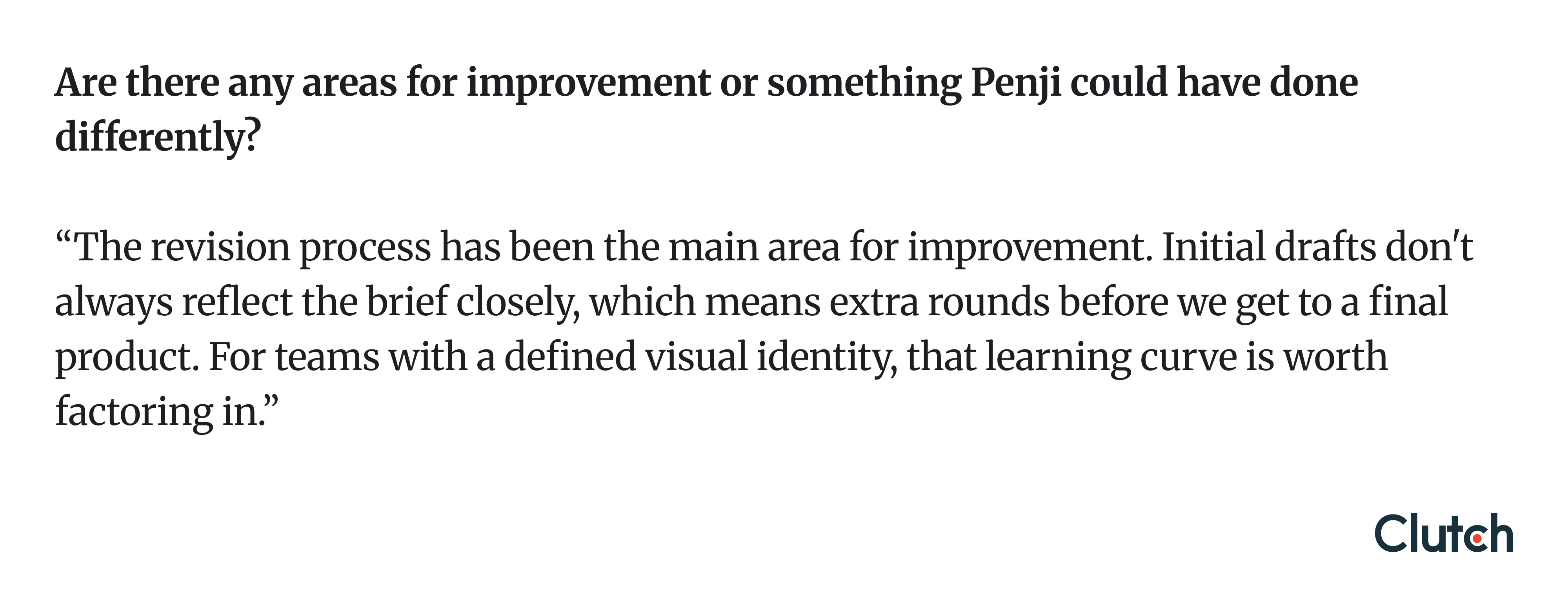
Some clients also point to “the revision process as an area for improvement. Initial drafts don’t always fully reflect the brief, which can lead to extra rounds before reaching a final version. For teams with a well-defined visual identity, that learning curve is worth factoring in.”
6. Kimp: best for high-volume design tasks
Pricing: from ~$599--$1,399/month (based on Kimp’s pricing page)
Similar in positioning to Penji, Kimp is designed for teams that need a lot of assets quickly. They offer separate subscriptions for graphics and video, which is a useful differentiator. If you're running paid social campaigns at high frequency and need a reliable content production machine, Kimp handles that.
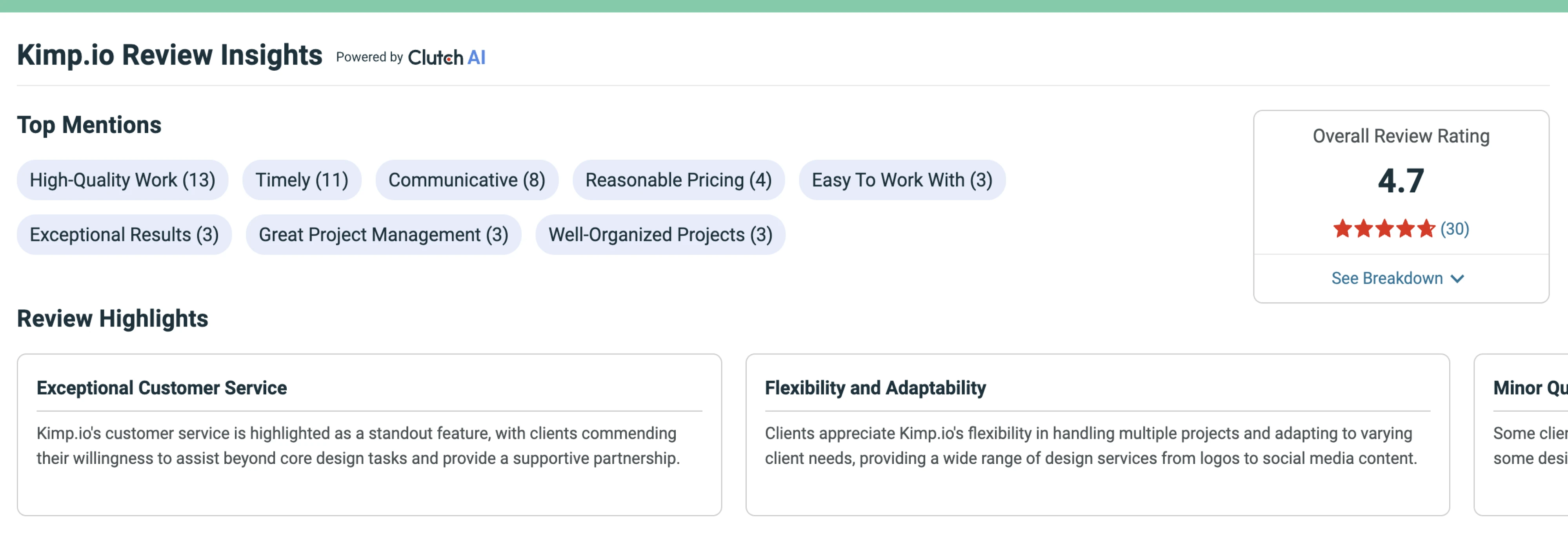
Kimp holds a 4.7 rating on Clutch, with one reviewer noting: “I've worked with other businesses, but their artwork wasn’t as good as Kimp.io’s.”

Strengths:
- Strong for volume output.
- Video design available as a separate subscription tier.
- Clear, predictable pricing structure.
Limitations:
- Purely production-focused, no UX or strategy layer.
- Not a fit for SaaS product work.
- Limited creative range.
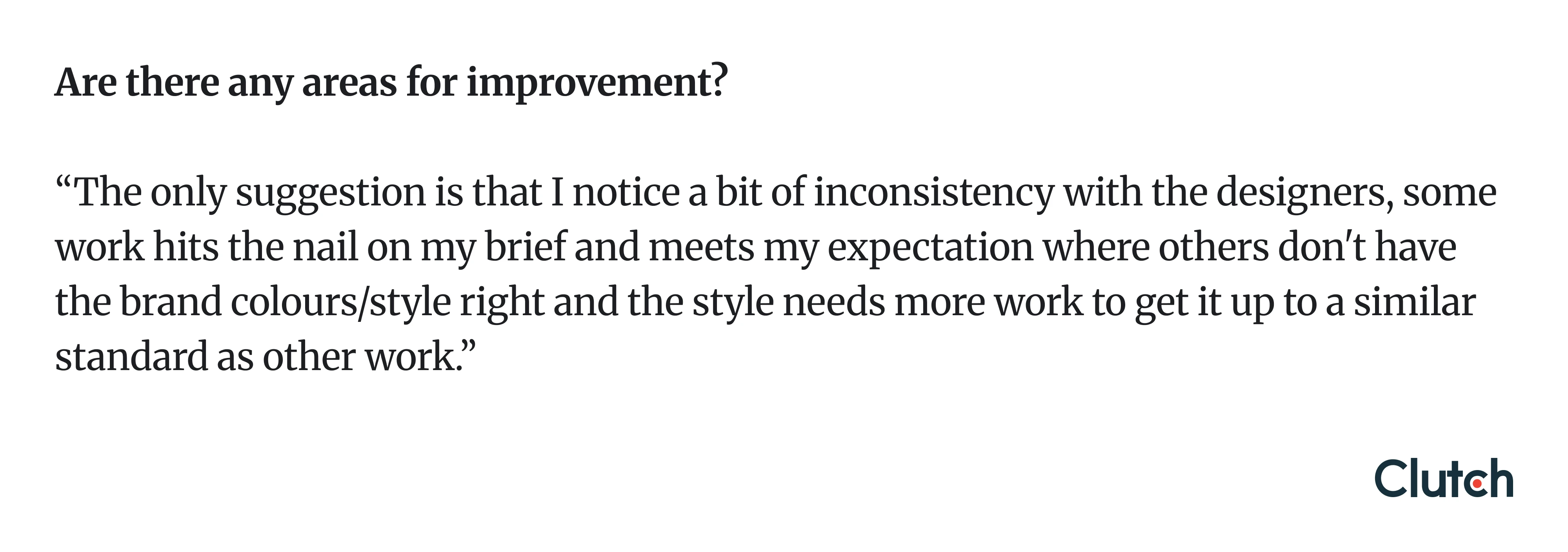
As for areas for improvement, one client admitted that “the only suggestion is that I notice a bit of inconsistency with the designers, some work hits the nail on my brief and meets my expectation where others don't have the brand colours/style right and the style needs more work to get it up to a similar standard as other work.”
7. ManyPixels: best for general-purpose design subscription
Pricing: From $699/month (based on ManyPixels’ pricing page)
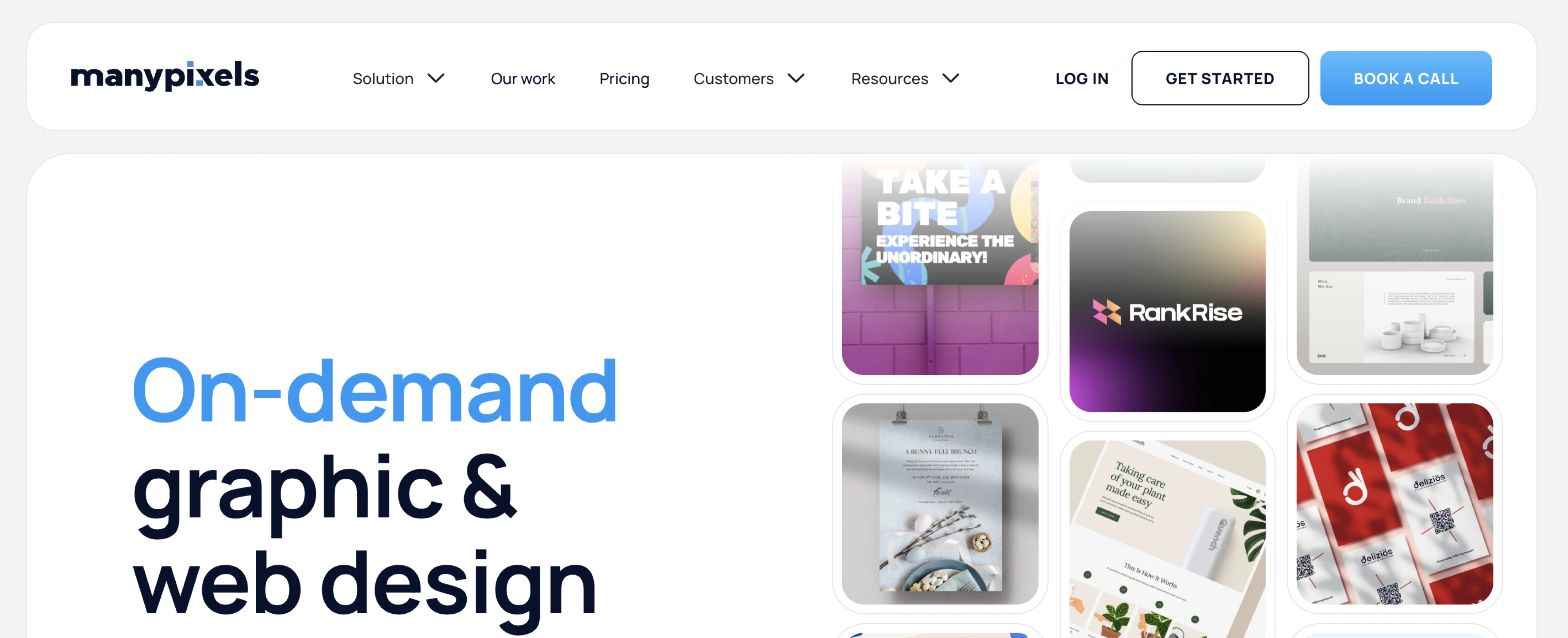
ManyPixels is one of the original subscription design services. Broad coverage, reliable quality, reasonable pricing. It works well for teams that need a consistent catch-all subscription and don't have a specific need for SaaS product depth.
The company doesn’t have verified ratings on platforms like Clutch or DesignRush, so most feedback comes from community discussions.
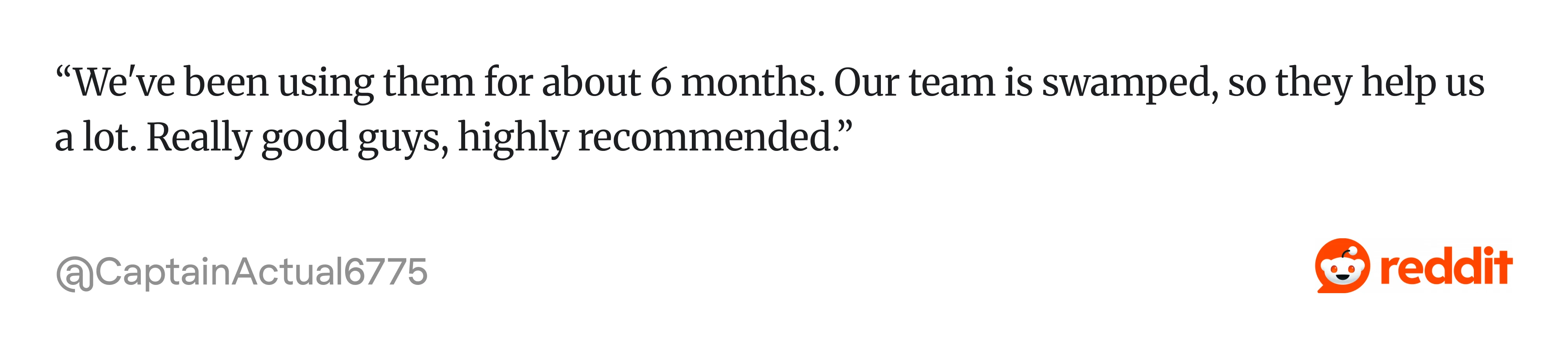
On Reddit, experiences vary. One long-term user shared: “We’ve been using them for about 6 months… our team is swamped, so they help us a lot. Really good guys, highly recommended.”
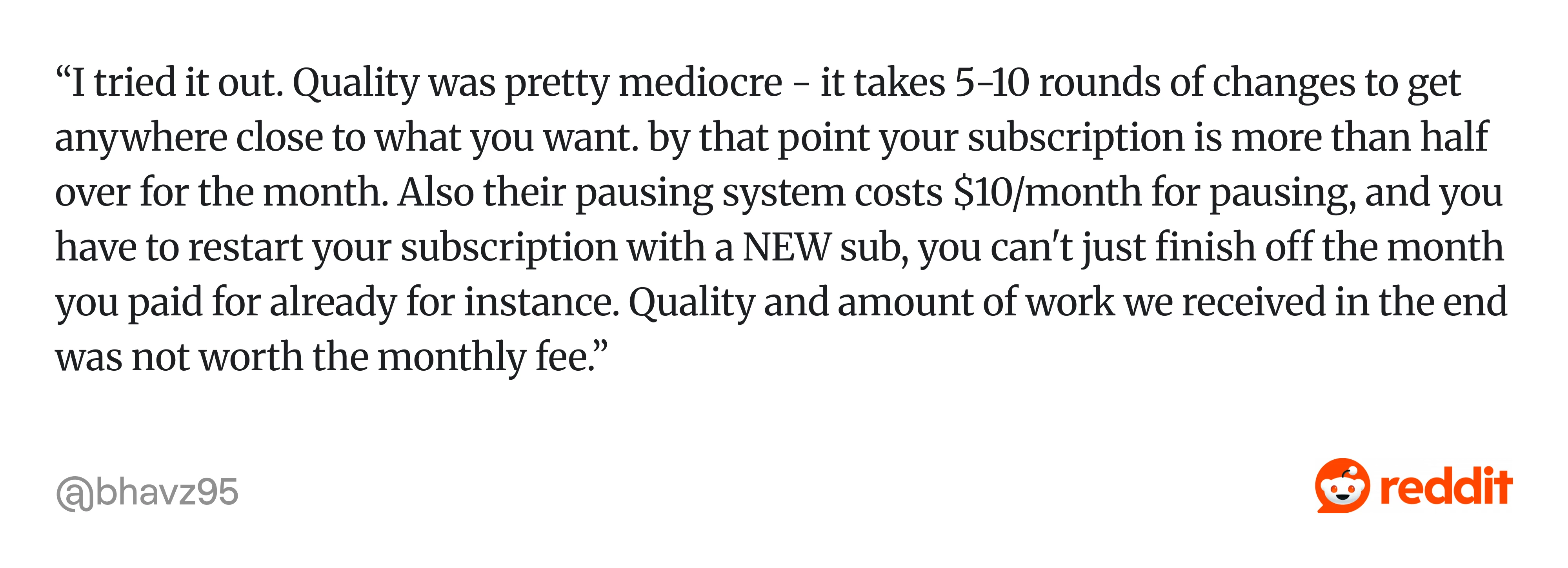
Others point to challenges with quality, consistency, and efficiency, noting that multiple revision rounds may be needed to reach the desired result.
Strengths:
- Wide design coverage across common formats.
- Well-established with a track record.
- Good for teams with varied, non-specialist needs.
Limitations:
- No meaningful SaaS product design capability.
- Can feel generic on more demanding briefs.
- Limited UX thinking.
8. UnicornGO: best for quick turnaround tasks
Pricing: From $499/month (based on UnicornGO’s pricing page)
UnicornGO positions itself on speed. If your main priority is getting basic design work back quickly, they're a solid, affordable option. Not much depth or complexity, but fast.
The company doesn’t have verified ratings on platforms like Clutch or DesignRush, so most feedback comes from community discussions.
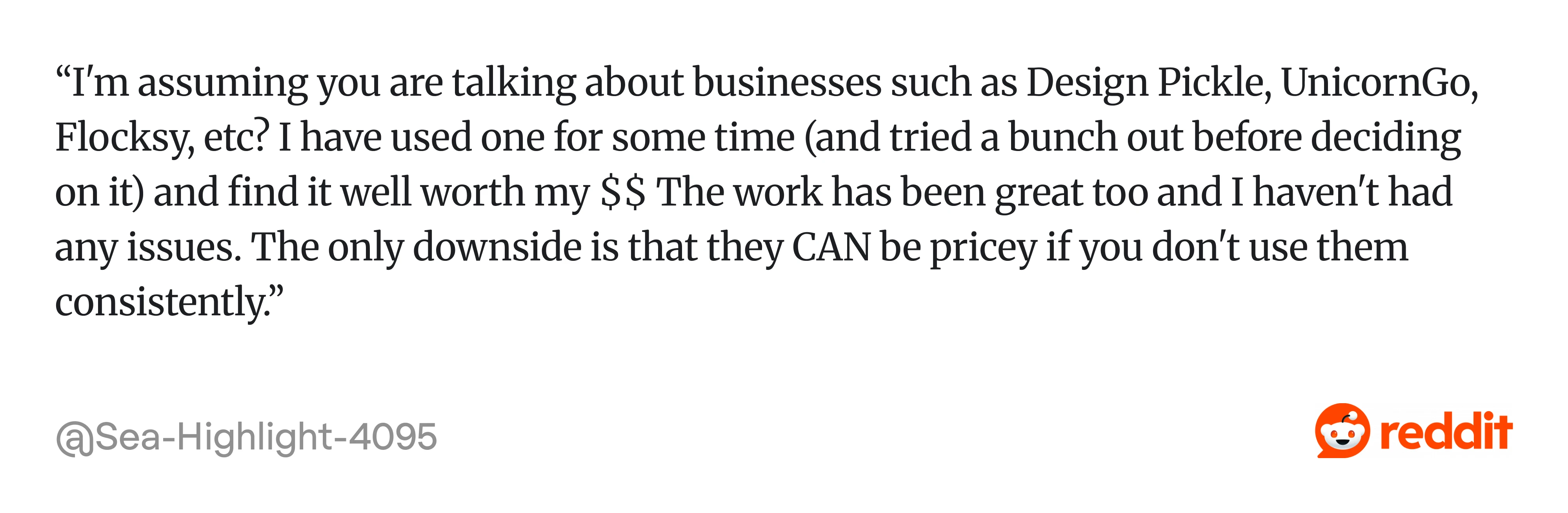
In Reddit threads comparing services like Design Pickle, Flocksy, and UnicornGO, one user noted they found these types of subscriptions “well worth the money… the work has been great,” while also pointing out that costs can add up if the service isn’t used consistently.
Strengths:
- Fast delivery times.
- Affordable monthly cost.
- Low friction to get started.
Limitations:
- Limited scope of work.
- Not suited for complex or strategic design projects.
- Smaller portfolio and less brand recognition.
9. Flocksy: best for all-in-one creative services
Pricing: From $1,500/month (based on the Flocksy pricing page)
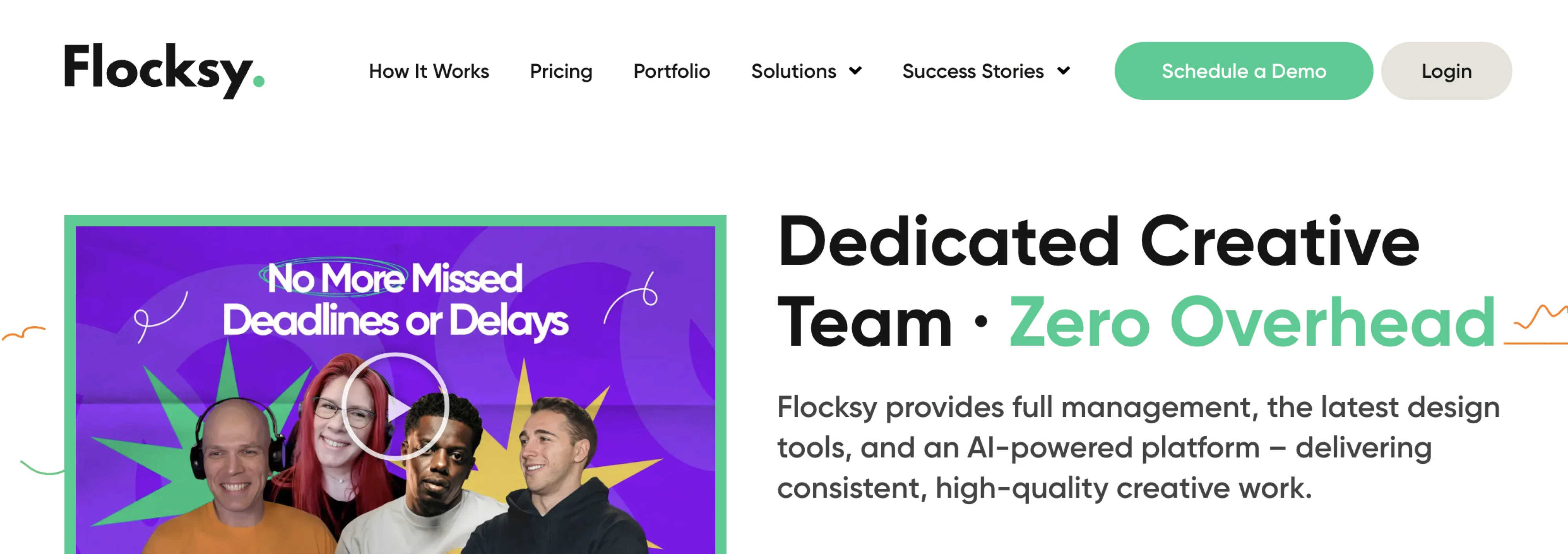
Flocksy stands out by bundling more than just design. One subscription covers copywriting, short video production, and basic web development alongside graphic design. If you're a small team that needs many creative disciplines covered without hiring separate vendors, Flocksy offers decent value.
The tradeoff is depth. Spreading across that many disciplines means no single service is particularly strong.
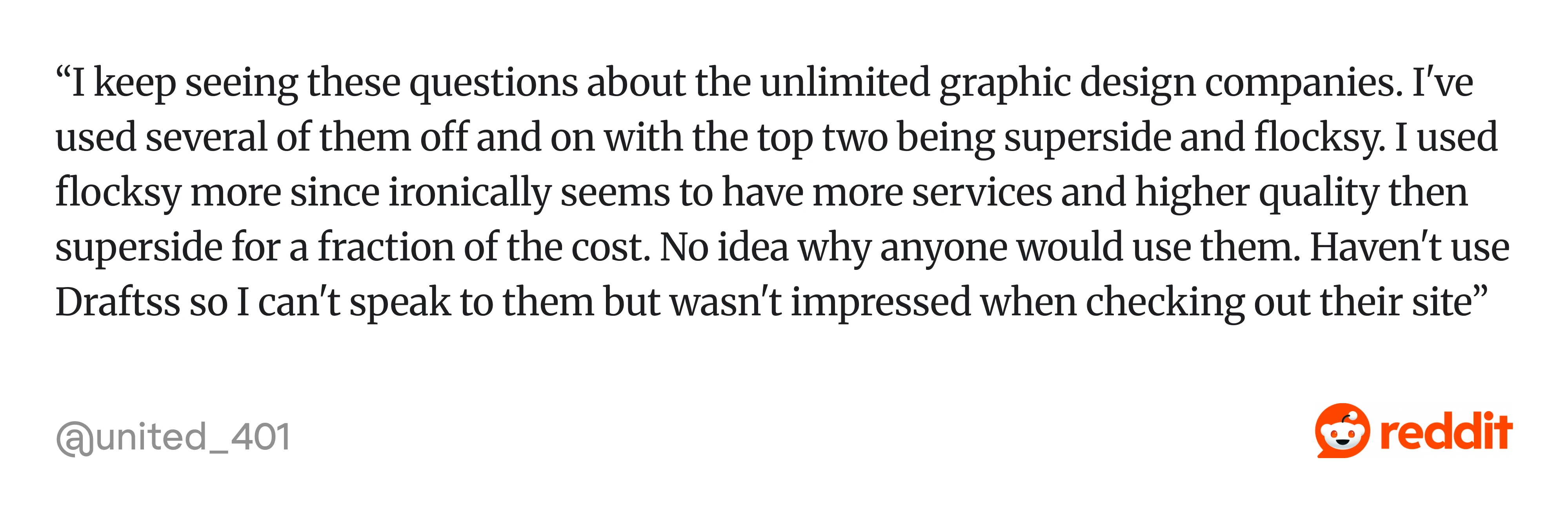
Most of the conversation around Flocksy happens in community spaces like Reddit, where users compare different “unlimited design” services. In those discussions, some users highlight that Flocksy can deliver broader services and better perceived value than higher-priced alternatives, especially for smaller teams juggling multiple needs.
Strengths:
- Wide creative disciplines in one subscription.
- Good value for multi-disciplinary small teams.
- Flat pricing covers a broad scope.
Limitations:
- Quality varies across disciplines.
- Design is not the core strength.
- Not a serious option for complex SaaS UX work.
10. Duck.design: best for mid-market SaaS teams
Pricing: From $1,199/month
Duck.design occupies a useful middle ground. More SaaS-aware than Penji or Kimp, but more affordable than Eleken or Superside. For mid-market SaaS teams that need consistent product and marketing design without enterprise budgets, it's a credible option.
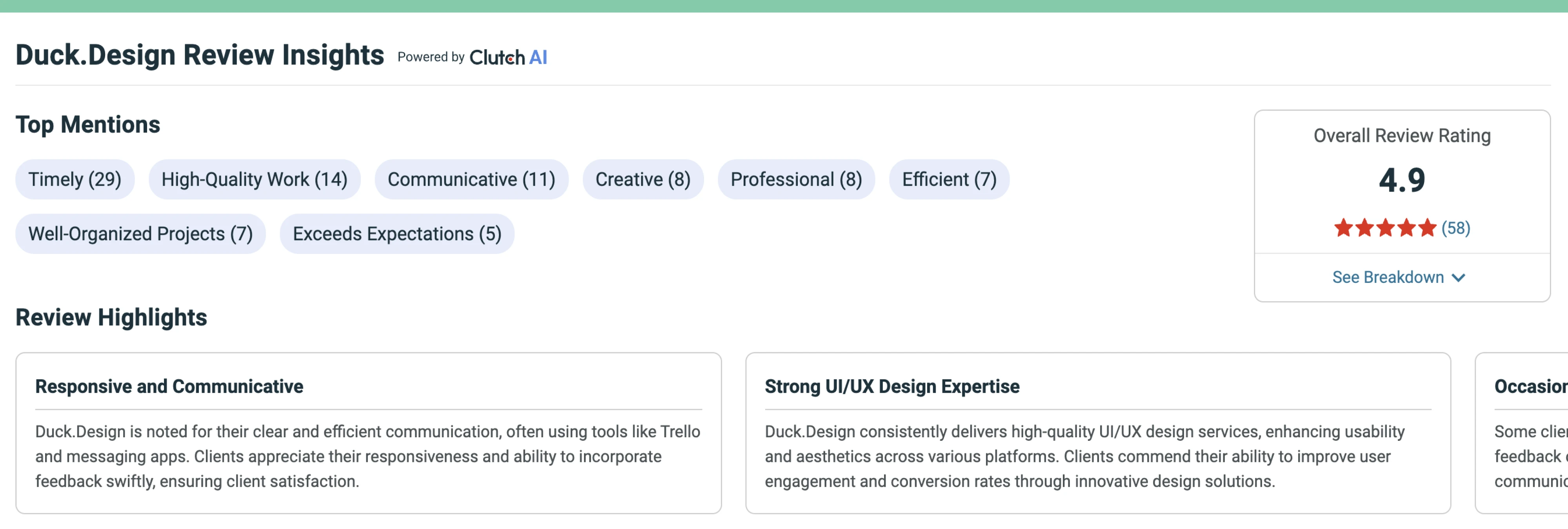
Duck.design maintains a 4.9 rating on Clutch, reflecting consistently strong client satisfaction.
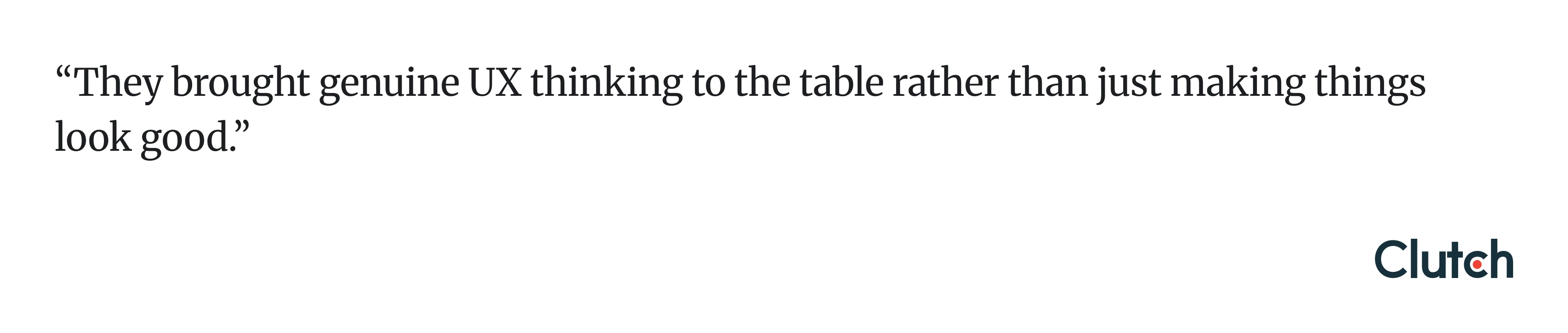
One reviewer highlighted that “they brought genuine UX thinking to the table rather than just making things look good.”
Strengths:
- More SaaS-aware approach than generic SaaS UI UX subscription services.
- Good balance of quality and affordability.
- Reasonable turnaround times.
Limitations:
- Not as deep on UX strategy as Eleken.
- Smaller team than enterprise alternatives.
- Fewer publicly available case studies to evaluate.
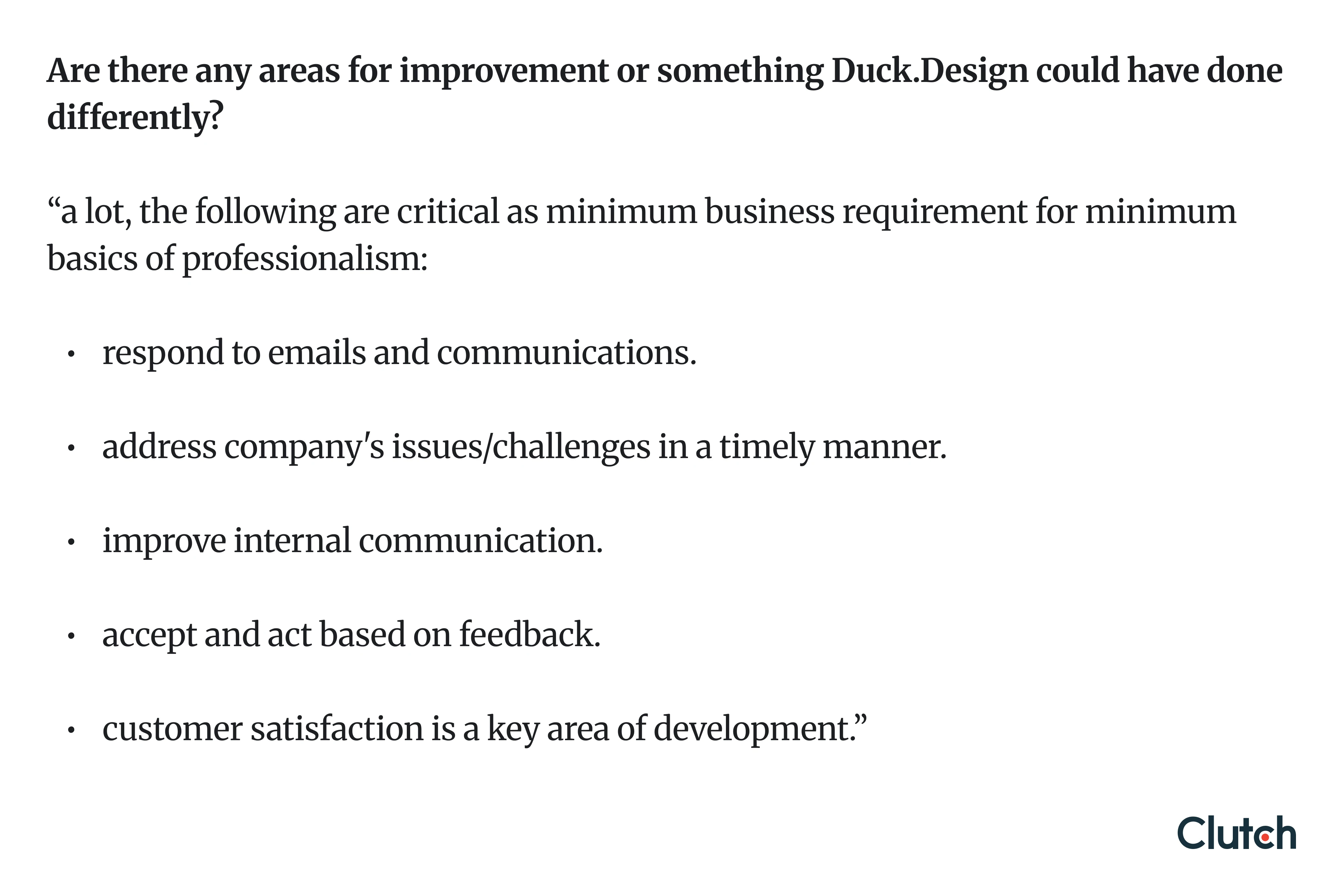
Some client feedback also points to operational areas for improvement. In particular, responsiveness, internal communication, and how feedback is handled were mentioned as gaps. For teams that rely on tight collaboration loops, this is something worth considering.
Quick comparison table: SaaS design subscription agencies list
Here's how all these agencies stack up side by side.
How to choose the right SaaS design subscription
Most people pick based on price, but that's usually a mistake. The right agency depends on your actual situation, not just your budget.
Here's a practical way to think through it.
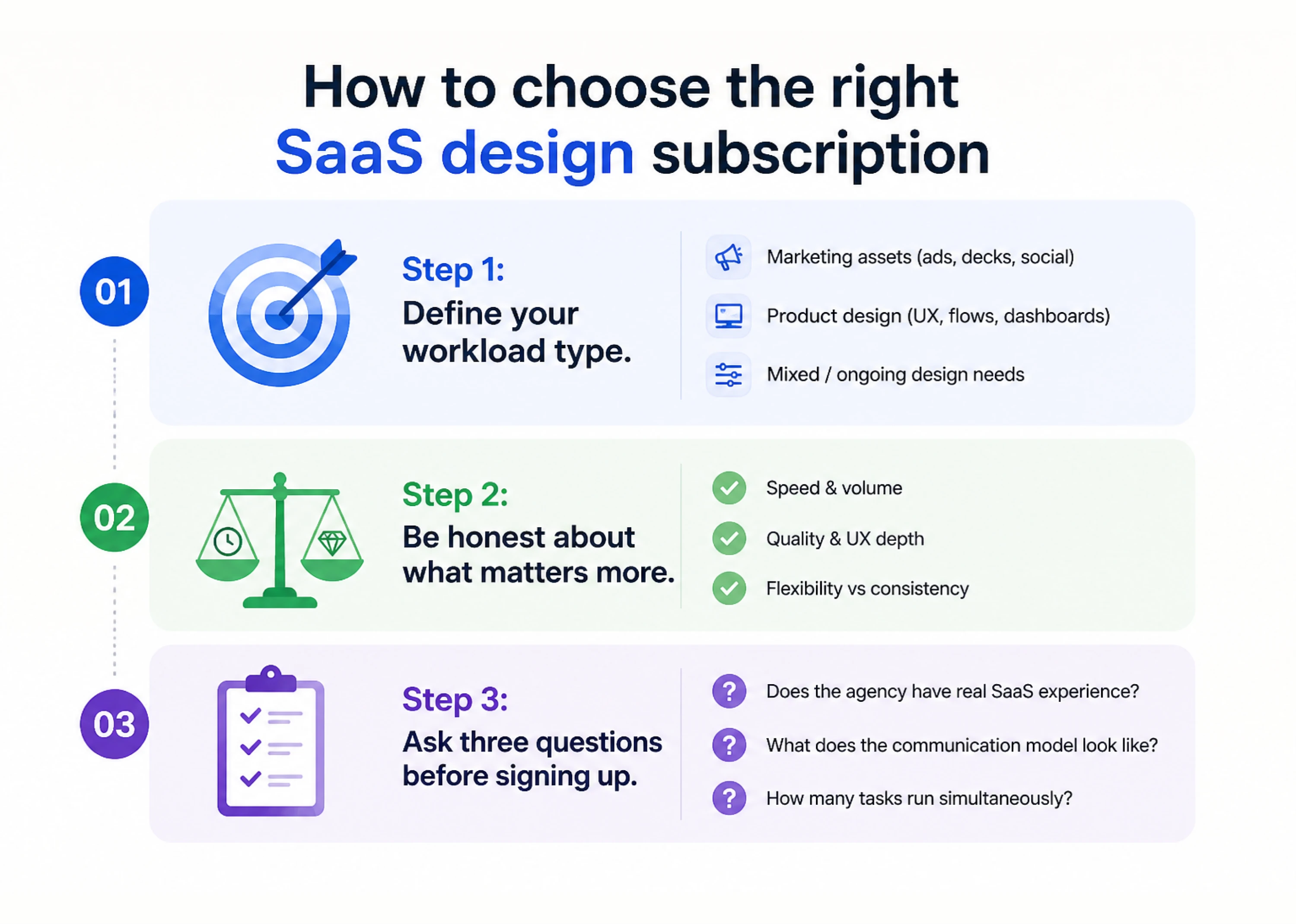
Step 1: Define your workload type.
Is this a continuous, ongoing need or a short sprint? Subscriptions are built for continuous work. If you only need six to eight weeks of design output, which is more common than agencies want to admit, a subscription might not be your best model. Consider design outsourcing or a project-based engagement instead.
Step 2: Be honest about what matters more.
Speed or quality? SaaS cost or depth? These tradeoffs are real. A $500/month subscription won't give you the UX thinking that a $5,000/month specialist does. That's not a criticism; it's just how the market is structured. One more thing to consider: agencies should provide developer-friendly deliverables for seamless implementation.
Step 3: Ask three questions before signing up, which are as follows:
- Does the agency have real SaaS experience? A portfolio of landing pages and social graphics is not the same as a history of building SaaS products. Check the case studies.
- What does the communication model look like? Async-only? Slack? Email? Zoom check-ins? Know what you're getting before you start, especially if your team moves fast and needs real-time feedback loops.
- How many tasks run simultaneously? This is the question most people skip, and it's the one that defines your real throughput. Ask it directly before you sign anything.
When a design subscription is worth it
A subscription model earns its cost when design is a consistent part of your roadmap, which means:
- New features are shipping regularly.
- Marketing experiments are running in parallel.
- Product iterations that need visual execution every week.
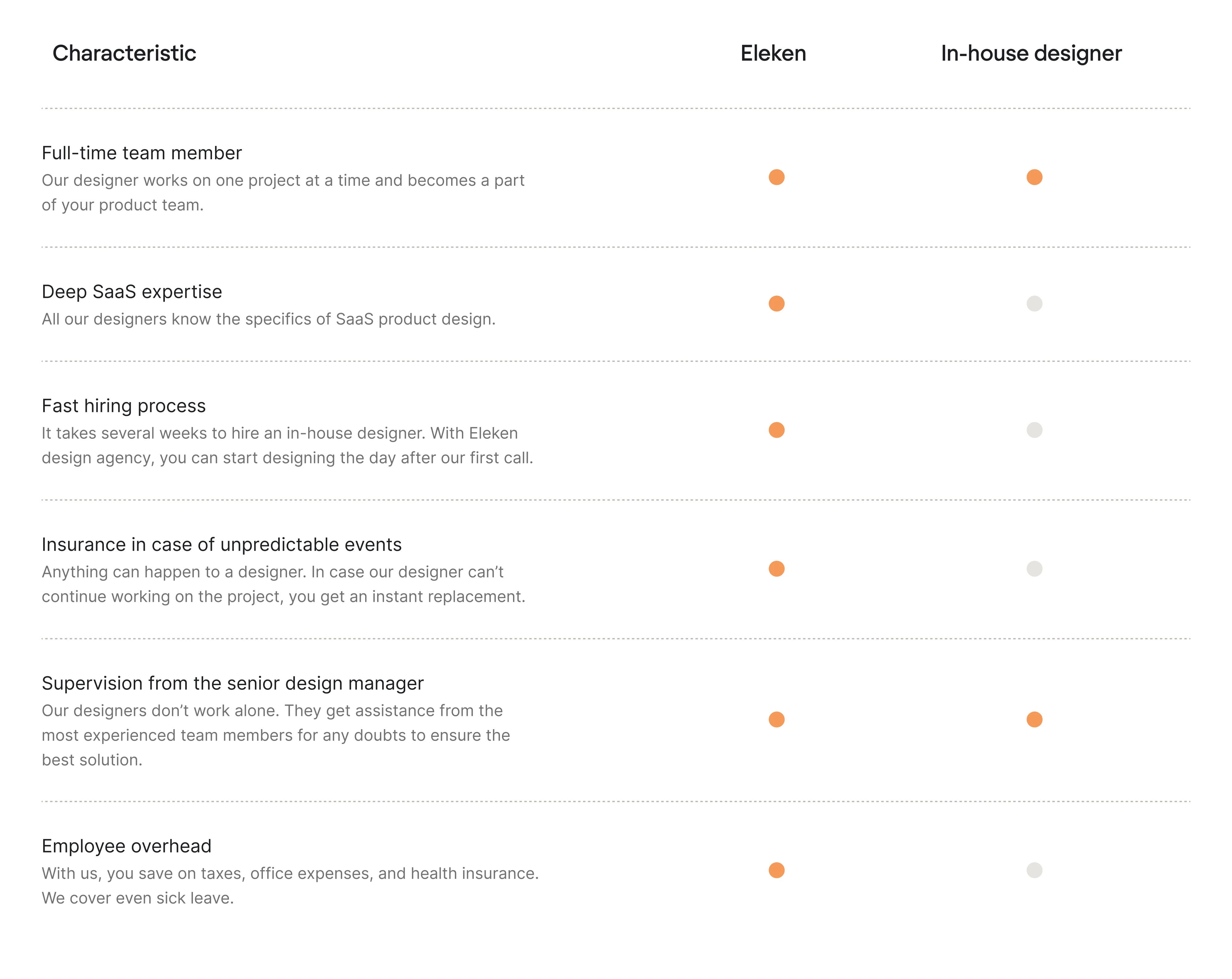
It's also a smart choice if you don't have an internal design team and aren't quite ready to navigate the complexity of hiring full-time designers. The subscription bridges that gap well. Plus, predictable costs allow businesses to budget design expenses more easily.
If you're still weighing the in-house designer vs agency decision, a subscription can be a useful way to pressure-test your design needs before committing to a full hire. Teams can scale design output up or down based on demand.
When you should not choose a subscription
Reddit has this one right. Plenty of SaaS teams sign up, knock out what they need in six weeks, and then sit on an unused subscription for months because canceling feels like admitting defeat. Don't do that.
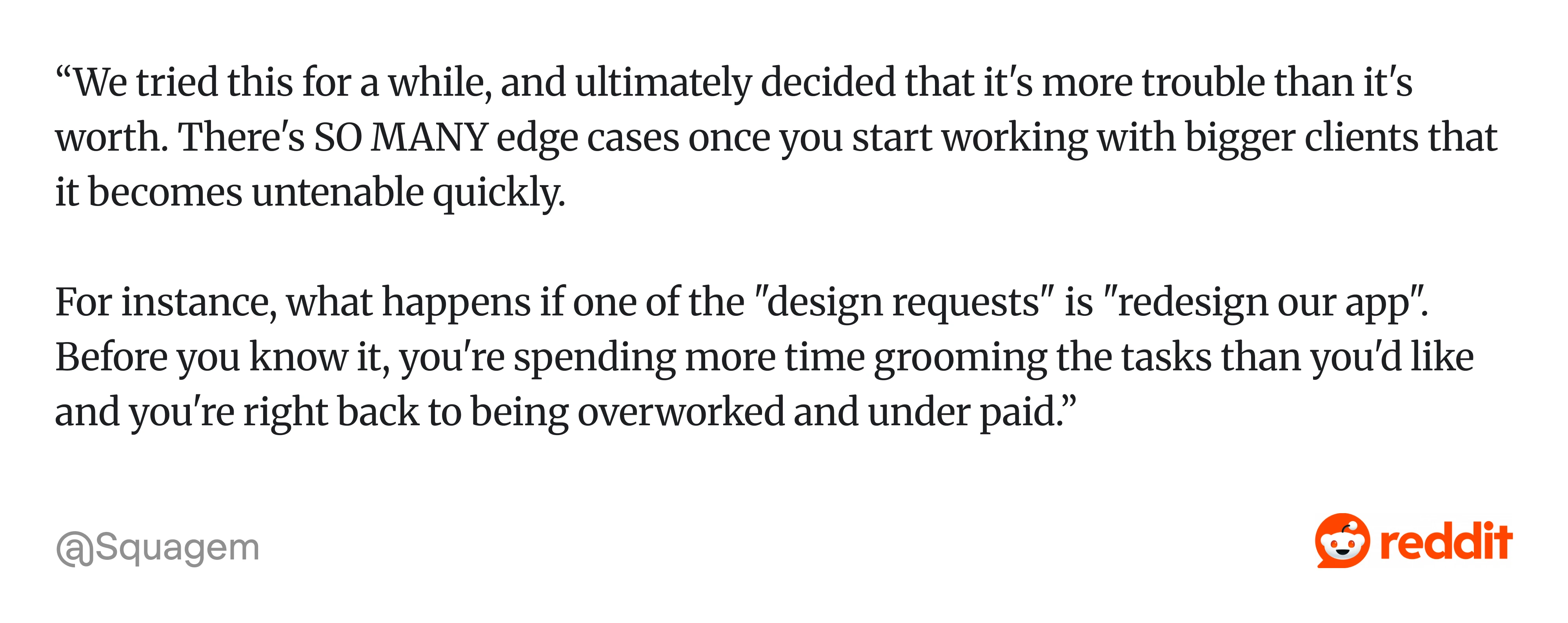
In longer Reddit discussions, founders also point out a deeper issue with the model as complexity grows. As one user put it: “... There are so many edge cases once you start working with bigger clients… one ‘design request’ turns into something like ‘redesign our app,’ and suddenly you're spending more time managing tasks than actually getting value.”
Avoid subscriptions if:
- You have a short-term or one-off project with a clear end date.
- You need a deep UX strategy, a comprehensive redesign, or complex discovery work.
- You haven't yet decided whether to build in-house or go external.
Transparent pricing breakdown: what to expect
The market spans from roughly $499 to $10,000+/month. Here's what each tier buys.
- $499-$1,500/month: Production-level output. Marketing assets, social graphics, basic web work. You're getting execution, not strategy. Fast, affordable, fine for repeatable tasks.
- $1,500-$4,500/month: Mid-range territory. More design variety, often better visual quality, sometimes some product design capability. Dig into their portfolio before committing.
- $4,500-$10,000+/month: This is where you access real SaaS expertise. Dedicated designers. UX thinking. The capacity to handle complex features, onboarding flows, and product-level UX audits. If you're a growth-stage or enterprise SaaS company, this is where the value sits.
Here’s how the pricing typically breaks down and what you can realistically expect at each level:
Three factors drive pricing across the board: delivery speed, the number of active designers on your account, and the complexity of work the agency is built to handle.
For a broader view of how agency pricing works and which model fits your business, it helps to understand the different design agencies available in the market.
Final thoughts: Which agency is right for you?
After all the comparisons, it really comes down to one question: what kind of design work are you actually trying to solve? Most of these top saas design subscription services look similar on the surface, but they’re built for very different jobs.
Here's the short version by situation:
- Early-stage startup needing fast, clean marketing output: the best startup saas design agencies are Designjoy or Awesomic.
- Marketing-heavy team with ongoing asset needs: Penji or Kimp.
- Scaling SaaS that needs real UX depth: Eleken, the best design subscription for SaaS.
- Enterprise with complex creative volume: Superside.
- Mid-market SaaS working with a tighter budget: Duck.design.
The honest summary: most subscription agencies are built for visual production. That's fine if that's what you need. But if you're building a SaaS product that needs design to drive business outcomes and maintain consistency without sacrificing usability, you need SaaS design partners with real UX thinking. Eleken is that option on this list.
SaaS UX for startups and growth-stage products don't need more assets. They need better design decisions.
That's the gap Eleken is built to fill, and it's the distinction worth keeping in mind as you make your choice. Ready to improve your product UX? Talk to Eleken and see how they’d approach your SaaS.