

Looking to hire a dedicated UX/UI design team? The challenge isn't finding options – it's figuring out which team fits your precise needs, understanding the cost of hiring a UI/UX design team, and knowing how to avoid costly mistakes.
This guide walks you through the hiring process step-by-step: defining requirements, evaluating agencies, and much more included.
Whether this is your first design hire or a replacement, here's how to make a decision that works.
Benefits of Hiring Dedicated Designers
Hiring dedicated UX/UI designers means you work with the right designer (small or full team) who is focused on your product consistently rather than jumping between unrelated client projects. That continuity shows up in speed, quality, and fewer expensive redesign cycles.
- Better product consistency (and fewer design “fractures”): Dedicated designers keep UI patterns, components, and interaction decisions consistent across features and releases. Over time, this reduces usability issues caused by mismatched screens and “patched” visuals and makes your product feel more trustworthy.
- Faster progress after the first sprint: Once designers conduct basic user research, learn your users, domain, and constraints, you stop paying the “ramp-up tax” repeatedly. That means quicker iteration, smoother handoffs, and less time re-explaining basics, all without hiring hassle.
- Stronger collaboration with project management + engineering: A dedicated designer can align tightly with your project managers and engineers, join recurring rituals (planning, reviews, retros), and refine solutions alongside technical constraints. The result is fewer late-stage surprises and fewer redesigns triggered by feasibility issues.
- More proactive design thinking (not just execution): Freelancers are often hired to “deliver screens.” With the right talent, dedicated designers bring both strong UX expertise and essential soft skills. They spot product gaps, challenge unclear requirements, and propose improvements based on user journeys, target audience insights, data, and support tickets. The result is better product outcomes, not just more output.
- Lower risk in critical phases: During launches, redesigns, onboarding changes, or feature expansion, consistency and quick decision-making matter. Dedicated designers help you maintain consistent quality when priorities shift without the volatility of repeated onboarding or changing styles.
- A scalable system, not a one-off layout: Dedicated designers can build and maintain design systems, UI libraries, and documentation that make future work cheaper and faster. This pays off especially when you add new designers or developers later.
When dedicated designers make the most senseYou’ll benefit most from dedicated designers in the following scenarios:
- You have a roadmap with ongoing releases (not a single landing page).
- You need consistent UX across multiple features.
- You want design to influence product decisions, not only visuals.
- You’re tired of “screens that look nice but don’t ship well.”
Tip: If you’re considering freelancers for short-term needs, keep them focused on well-defined project based tasks (e.g., a single flow, UI audit, or landing page). For ongoing product work, dedicated designers usually produce better continuity and fewer rework loops.Getting these advantages starts with a clear hiring process. Here are the exact steps that help you do it right.
How to hire a dedicated UX/UI design team
Overall, we can break the hiring process into five clear stages. Here's how to hire a UX/UI design team, step-by-step:
Step 1: Align on outcomes, scope, and constraints
“UX/UI support” can mean anything from improving onboarding flows to redesigning an entire SaaS interface. Hence, the clearer you are upfront, the faster you’ll find the right fit (and avoid paying for the wrong one). Be specific about:
- Results you want to achieve
Specify which metrics design should impact – conversion optimization, activation, churn reduction, fewer support tickets, etc.
- Design scope and timelines
Outline product areas and user flows in scope, platforms involved, and whether the work is short-term or ongoing. This prevents misalignment and scope creep. For specific projects with variable scope, we at Eleken even developed part-time designer options specifically to match capacity with actual needs as they evolve.
- Constraints that affect design decisions
Clarify technical limitations, branding guidelines, and how your internal team works. Clear constraints help dedicated UI/UX designers become seamlessly integrated faster and work more effectively from day one.
Step 2: Prepare a minimum brief for your design project (or be ready to talk to designers)
To hire dedicated UX UI design team, you do need to clearly communicate the essentials. Apart from the points listed in Step 1, a good brief typically also includes:
- Product context and users
Explain what your product does, which problems it solves, who it’s built for, and what stage you're at (MVP, scaling, mature product).
- What exists today
Share current screens, user flows, UX research insights, or analytics that show where users struggle, even when you develop wireframes or make quick notes, can be of help.
- What you're trying to solve
Explain the problem behind this design project – mounting drop-offs at key steps, high support ticket volume, etc. The clearer the issue, the easier it is for dedicated designers to prioritize and deliver solutions that work.
- Team setup
Specify who your product designers will work with – product managers, developers, and external stakeholders – and explain how feedback and decisions are handled.
- Timeline and engagement length
Clarify when you need to start, how long the work will take, and whether this is a fixed project scope or ongoing support – this helps agencies allocate the right team and plan capacity.
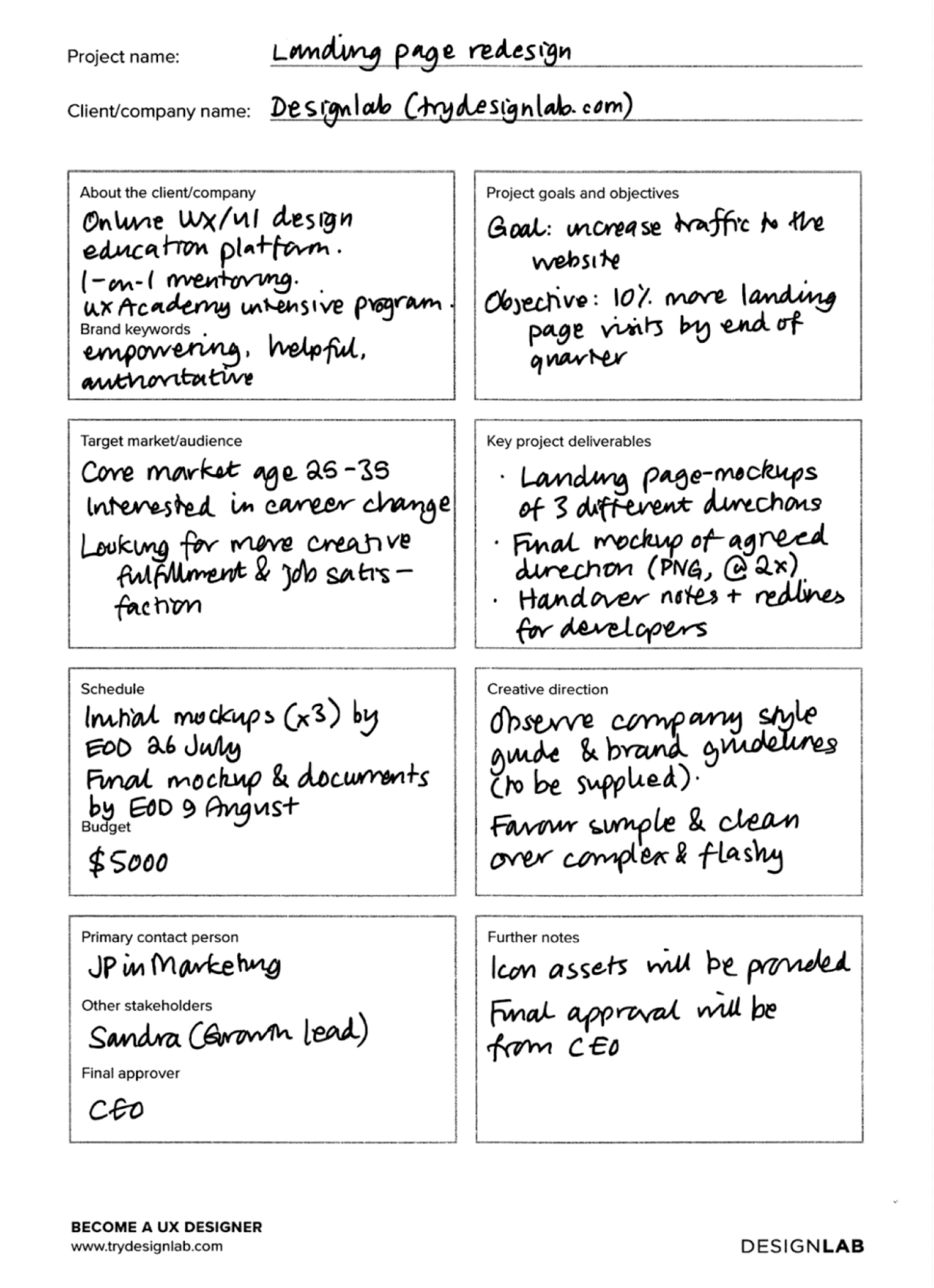
As for us at Eleken, we don’t require a formal design brief. Instead, clients can talk directly to designers from day one. We've witnessed that direct, seamless communication is often more effective than writing a perfect brief – clear conversations lead to better project understanding and stronger outcomes.
Step 3: Build a shortlist (where to look)
Once you know what you need, the next step is finding agencies worth evaluating. When searching, focus on these channels:
Reputable directories
Platforms like Clutch or DesignRush can help you discover agencies, but treat them as starting points only. Use them to build an initial list, then dig deeper into design reviews, case studies, and processes.
Founder and product communities
Ask for referrals in communities where founders and product leaders share honest feedback – niche platforms, SaaS-focused Slack groups, or LinkedIn circles. Networking gives you valuable context that reviews often miss.
Below are some channels you can check out for starters:
- Founders Network: a private peer community offering an exclusive network of 600+ experienced tech founders, long-term mentorship, and strategic support; available via paid membership.
- Indiehackers: vibrant community with 45K active users (founders, aspiring entrepreneurs, creatives, and devs), great for advice and inspiration, and absolutely free to join.
- Startupsauce: a private community for SaaS founders only, offering multiple ways to connect and learn with peers; available via paid membership.
- /r/startups: a founder-focused subreddit for discussion and idea-sharing, known for generally high-quality conversations and minimal promotion.
Case-study-based search
Use targeted queries to find agencies that have solved similar problems. For example, if you're building a data analytics tool, search for teams that have designed dashboards and complex interfaces. Or if you're in fintech, then look for compliance-heavy product experiences.
For example, we’ve built a library of 64+ case studies that showcase our industry expertise and give potential clients a transparent view of what we’re capable of.


Step 4: Evaluate agencies (use criteria, not gut feeling)
Once you have a shortlist, evaluate each agency systematically. This helps you move past surface-level impressions and assess how well they align with your exact needs.
Here are key factors to guide your decision:
Relevant experience
You've shortlisted agencies with relevant experience – now evaluate the depth behind them in case studies. Do they explain the user problems they solved, the UX research that informed decisions, and the outcomes achieved? Or do they just showcase polished mockups? Teams that document challenges, trade-offs, and results are more likely to bring that rigor to your project.
Process transparency
Understand how they approach projects end-to-end. Strong partners are transparent about how they work and can adapt their approach to your specific needs – whether that means adjusting user research depth, design stages, collaboration format, or feedback loops – rather than simply presenting a predefined design process.
At Eleken, this is one of the reasons we offer a free trial: it gives you a hands-on way to experience how your dedicated UI/UX design team member works in practice and see how the process fits your product and team dynamics before committing.
Team composition clarity
Make sure you understand who will be working on your project and how the team is structured. Knowing the roles involved, the level of oversight, and how the team collaborates helps set clear expectations from the start.
Visibility into the team setup also helps you understand how decisions are made and how quality is maintained throughout the project scope when you hire UX designers.
Developer collaboration approach
Understand how the agency works with your development team. Strong teams don't just hand off Figma files – they provide detailed specs covering interaction states, edge cases, responsive behavior, and stay involved during the development process to catch quality issues before they ship.
At Eleken, we place strong emphasis on this collaboration, deep understanding how essential it is to delivering high-quality products in production.
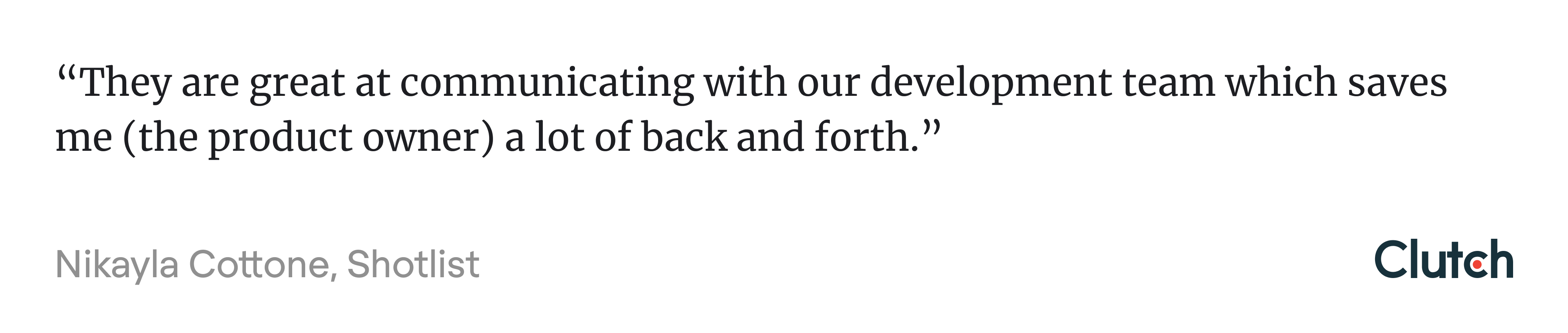
Without such collaborative work with a developer, there’s always a "looks great in Figma, mediocre in production" risk.
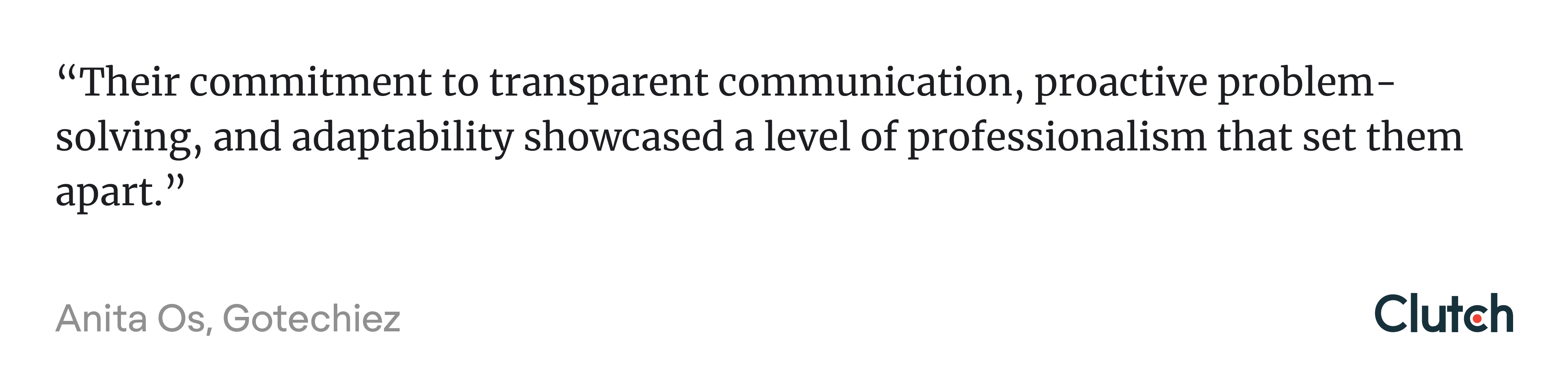
Communication style and tools
Make sure the team's communication approach aligns with how you work. Clarify the team’s rhythm – daily standups, weekly reviews, or async updates – and which design tools and software they use (Slack, Figma comments, Loom). And do check whether the time zone coverage and feedback process fit your setup – a dedicated team shouldn't feel like an external vendor you have to chase down.
Ability to scale up/down without disruption
When comparing in-house vs a dedicated UX team, flexibility emerges as one of the main benefits of dedicated design teams. And it matters a lot when priorities shift, timelines compress, or budgets change mid-project.
Strong agencies can add dedicated UX/UI designers quickly without lengthy onboarding, reduce capacity when budgets tighten, or pause and resume without losing context. Understanding how a particular dedicated team handles that flexibility is key to choosing a partner that won’t break under pressure.
At Eleken, for example, we’ve built our delivery model around this flexibility, allowing teams to scale up or down smoothly as project needs evolve.
Step 5: Talk to the team, then run a paid trial
Don't hire UI/UX designers based on the sales pitch alone. Before committing to a long-term engagement, have a brief conversation with the actual team, then evaluate UI/UX designers with a trial.
The best agencies are confident enough in their work to offer trial periods – whether that's a paid 2-3 week sprint or a shorter free trial. Eleken, for example, offers a free 3-day trial where you work with the actual designer assigned to your project, giving you a real sense of collaboration quality without financial commitment upfront.
Regardless of trial length, treat it like real work:
Set clear deliverables:
- one user flow with wireframes to map out the structure
- 1-2 polished screens showing visual direction
- interaction notes documenting states and behavior for developer handoff
Define evaluation criteria:
- Clarity: Are the existing designs easy to understand and implement?
- Ownership: Do they proactively identify problems and suggest solutions?
- Speed: Can they deliver quality work within the timeframe?
- Collaboration: How well do they communicate with your team?
- Reasoning: Can they explain why they made specific design choices?
If the trial goes well, you've found your team. If it doesn't, you've avoided a costly long-term mistake.
Top agencies to hire a dedicated UI/UX design team
Yep, finding the right agency takes time, but it's worth getting right – Forrester research shows every $1 invested in UX can return up to $100. So, here's a shortlist to speed up your research with some vetted agencies.
1. Eleken

Eleken is a subscription-based product design agency that works as an embedded design partner for SaaS companies. Backed by a solid 4.9 Clutch rating based on 111+ client reviews, they are known for consistency and their product-savvy thinking that goes beyond surface-level UI.
Focus: SaaS, research-driven UX, web and mobile app interfaces
Engagement model: subscription-based, monthly flat rate
Pricing: $4,599/month – part-time designer, $6,599/month – full-time designer
Strengths: free 3-day trial, async collaboration, deep design thinking, and smooth dev handoff
Industry expertise: fintech, healthcare, data, geoservice, AI, real estate, marketing, etc.
Best for: SaaS companies that value ultimate flexibility and reliable product design support at startup-like speed

2. Orizon Design
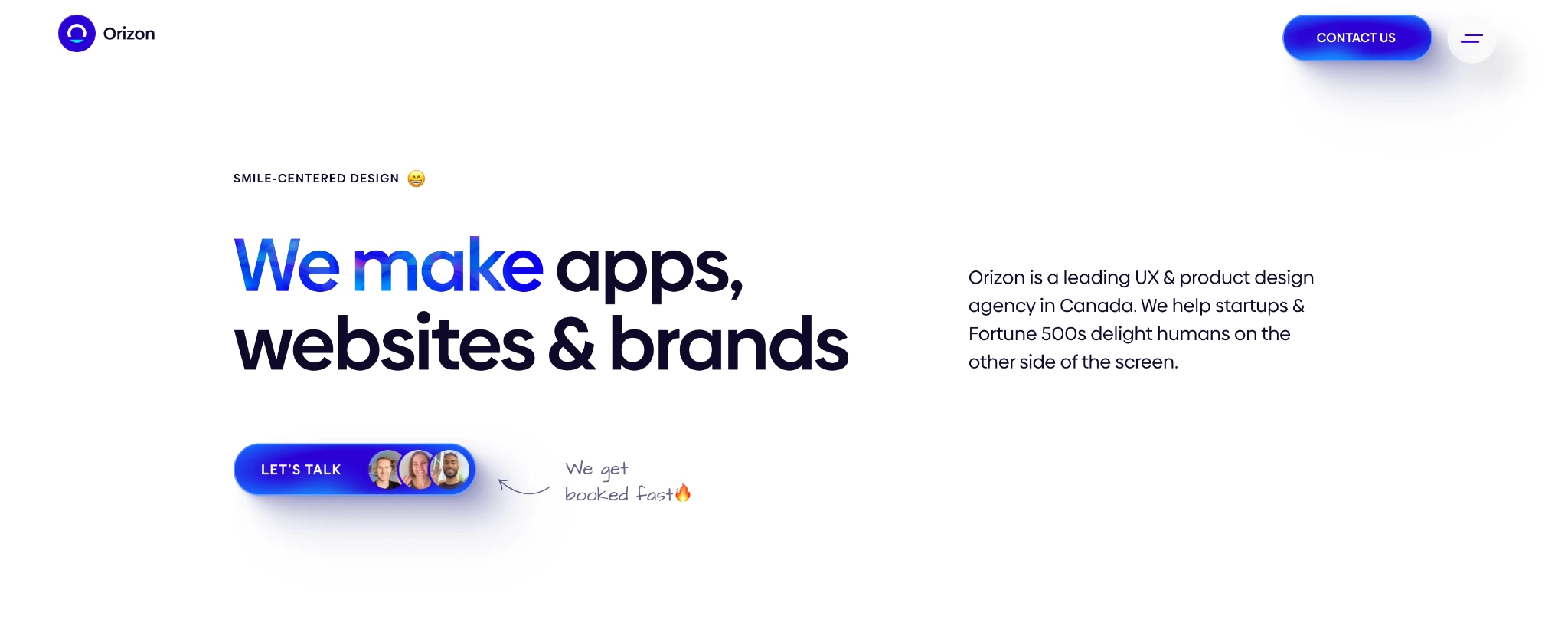
Orizon Design is a UI/UX design agency known for creating polished, modern interfaces for SaaS companies and technology startups. Their work emphasizes visual clarity, intuitive user experiences, and high-quality product design across web and mobile applications.
Focus: SaaS product design, UI/UX design, web and mobile applications
Engagement model: Fixed fee and project-based engagements
Pricing: Projects starting from $25K+ (per Clutch data)
Strengths: Modern visual design, fast execution, startup-friendly approach, strong UI craftsmanship
Best for: Startups and growing SaaS companies looking for visually refined digital products
3. Work & Co
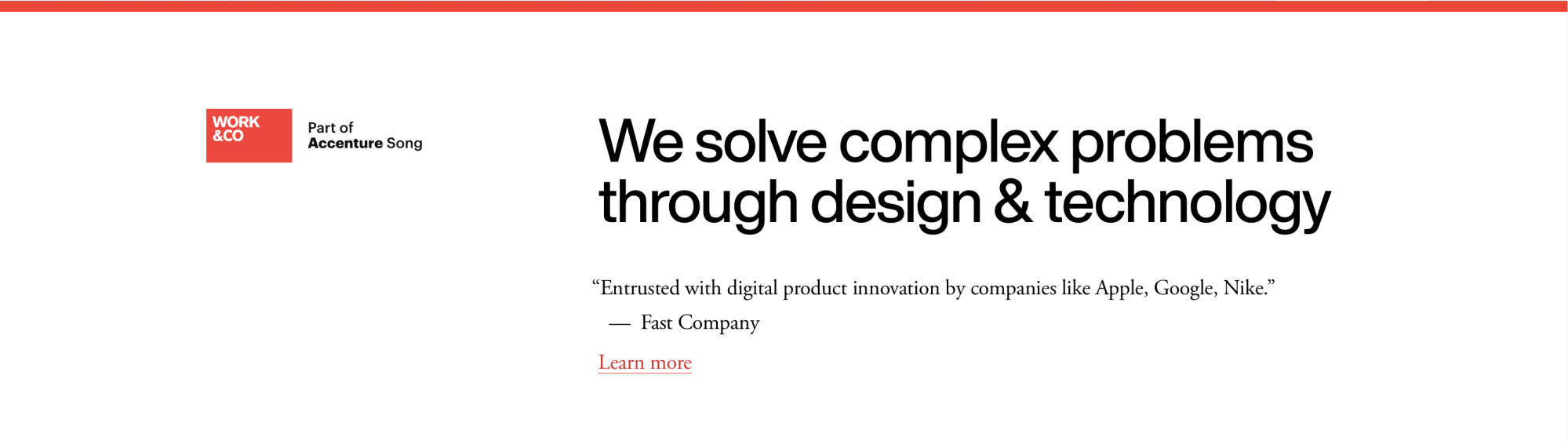
Work & Co is a strategy-first digital product agency that partners with global brands and public institutions to craft designs for large-scale, mission-critical digital tools.
Focus: Product design strategy, UX/UI, and full-cycle digital development
Engagement model: Cross-functional product teams
Pricing: High-end enterprise retainers ($100 - $149 per hour, based on Clutch data)
Strengths: Strategic depth, cross-functional teams, and strong execution on complex products
Best for: Large-scale enterprise or public-sector platforms seeking end-to-end delivery
4. Fuzzy Math
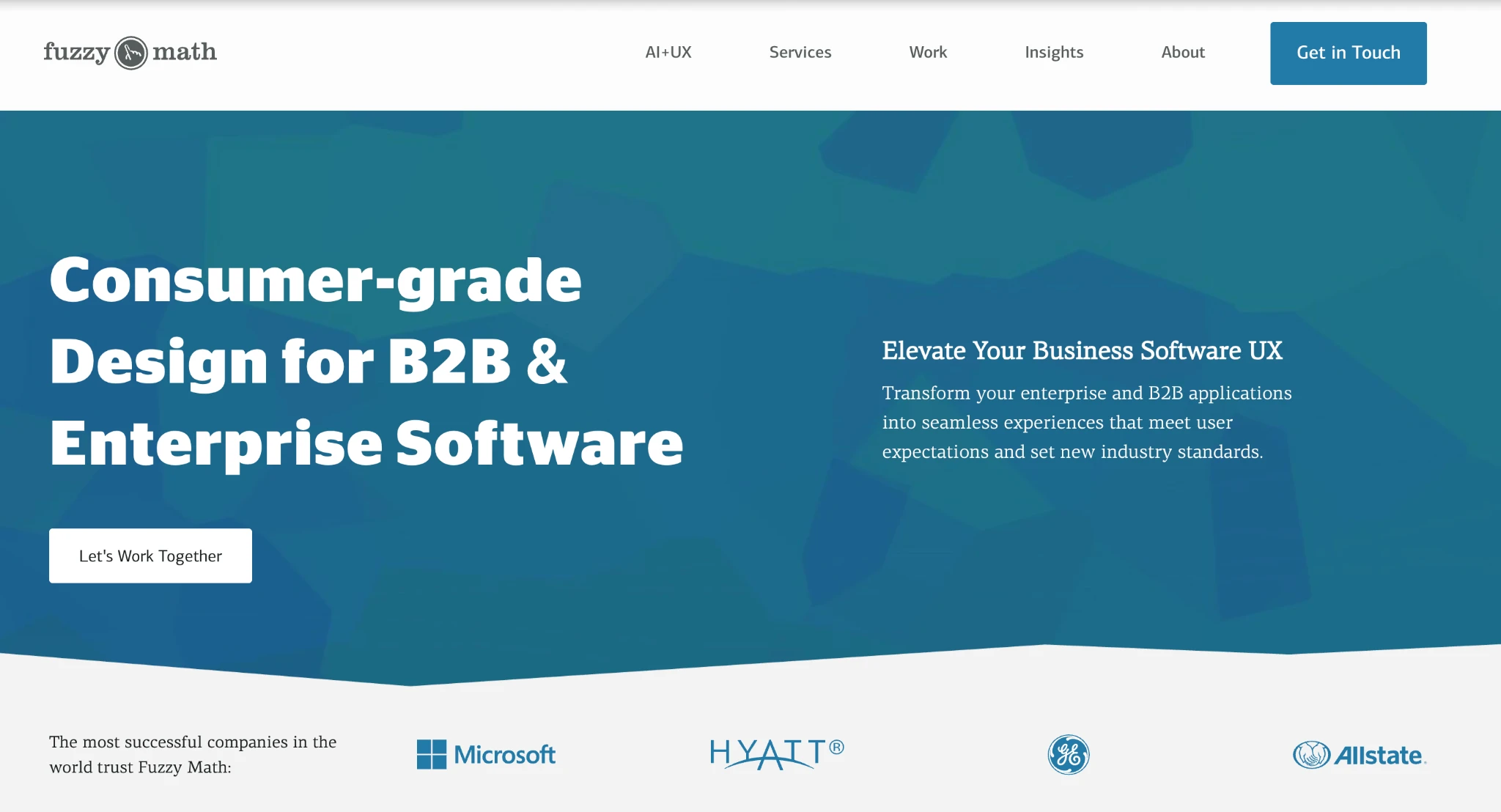
Fuzzy Math is a UX design agency specializing in user research, product strategy, and human-centered design. The agency is known for helping organizations solve complex usability challenges through research-driven design rather than visual trends alone.
Focus: UX research, product strategy, UX/UI design, usability testing
Pricing: Mid-to-high tier project-based pricing, starting at $25K+ (per Clutch data)
Strengths: Research-first methodology, deep user insights, collaborative workshops, experience with complex enterprise products
Best for: B2B companies seeking to solve complex UX challenges through strtegic user research
5. Fantasy

Fantasy is a global design studio renowned for bold, future-facing visuals and cinematic digital experiences that shape the next generation of intelligent products.
Focus: UX/UI design, motion, creative direction, and concept development
Pricing: Premium tier only, figures undisclosed
Strengths: High-end aesthetics, cinematic design quality, and strong conceptual execution.
Best for: large-scale ideas, cinematic UI, and high-concept digital experiences
Hiring UI/UX top talent: final takeaways
All in all, hiring a dedicated UX/UI design team comes down to three things:
1. knowing what you actually need
2. evaluating an external design team against clear criteria
3. testing collaboration before any long-term commitment
The agencies above serve different needs – fast SaaS execution, enterprise scale, or visual innovation. And the perfect match depends on your product, budget, and internal workflow.
And if you're looking for a reliable, SaaS-focused partner that integrates directly into your workflow – Eleken is built for that.
A dedicated designer works directly with your team under design lead oversight, with 60+ other designers available to consult. You get focused work on your product backed by collective expertise when needed – plus clear scaling and smooth developer handoff.
Start a free 3-day trial with Eleken and see if it's the right fit – zero risk and no upfront commitment.





.webp)
