You’ve got limited time, limited budget, and exactly zero chances to get it wrong. And yet, the internet is flooded with glowing lists of “top design agencies” that read like luxury catalogues. But most of those agencies are built for Fortune 500s, not for SaaS startups figuring out their onboarding flow in a coworking space at 2 AM.
That’s where this guide comes in.
We’re not here to give you 100 options. We’re here to help you avoid wasting money on pixel-perfect Figma that never ships.
We’ll walk you through what makes an agency startup-friendly, how to avoid the $100k mistake, and share a curated list of 12 agencies that actually get it.
Let’s start with the list.
12 best design agencies for startups in 2026
This list is curated for real startup needs: SaaS focus, speed, flexibility, collaboration, and pricing that doesn’t assume you just raised a $50M Series B.
1. Eleken: UX/UI design partner for SaaS startups
Best for: early-stage to growth SaaS companies that need UX that ships fast, moves real numbers, and scales without breaking.
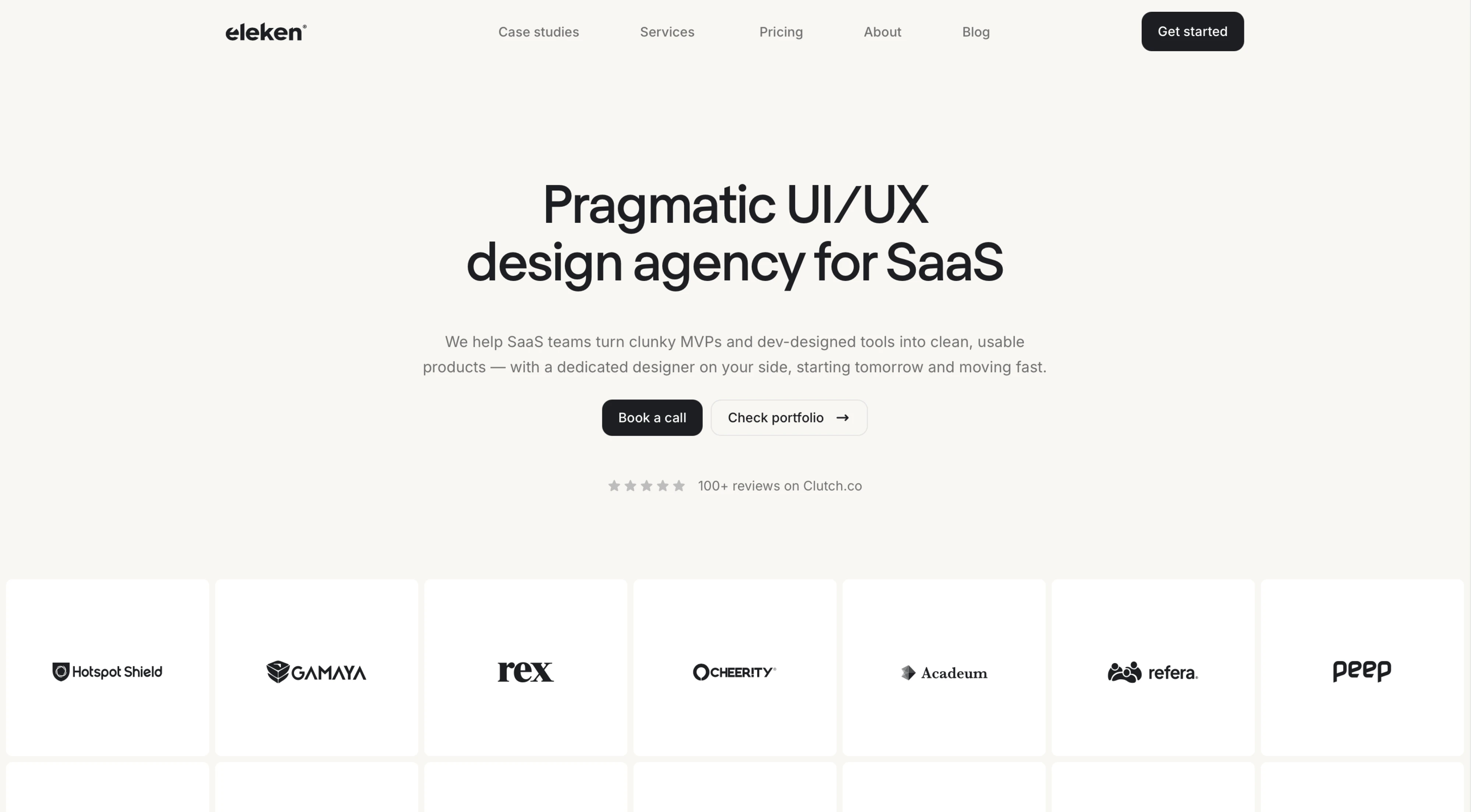
Eleken is a remote-first UI/UX design agency for SaaS. It is not here to make your product "look pretty." It's here to help you ship something fast with AI but make it usable, consistent, and actually thought-through. That's what makes it ideal for founders who built fast and stalled, and for product leaders inheriting a complex, dev-heavy app that's quietly losing conversions.
Overview
- Founded: 2015.
- 100% SaaS focus.
- Subscription pricing ($6,599/month for a full-time designer, with the flexibility to cancel anytime).
- Services: Pre-launch and from-scratch design, redesigns, design system, embedded team extension, UI/UX design, data-heavy app design, data visualisation, and UX audits.
- Team extension that works like an in-house hire: ~2 weeks to start, part-time if you need it, pause when your devs catch up.
- Designers are trained in-house, speak fluent “developer,” and start fast.
Startups like Aampe, Floret, and Datawisp used Eleken to launch, raise funding, and achieve product-market fit.
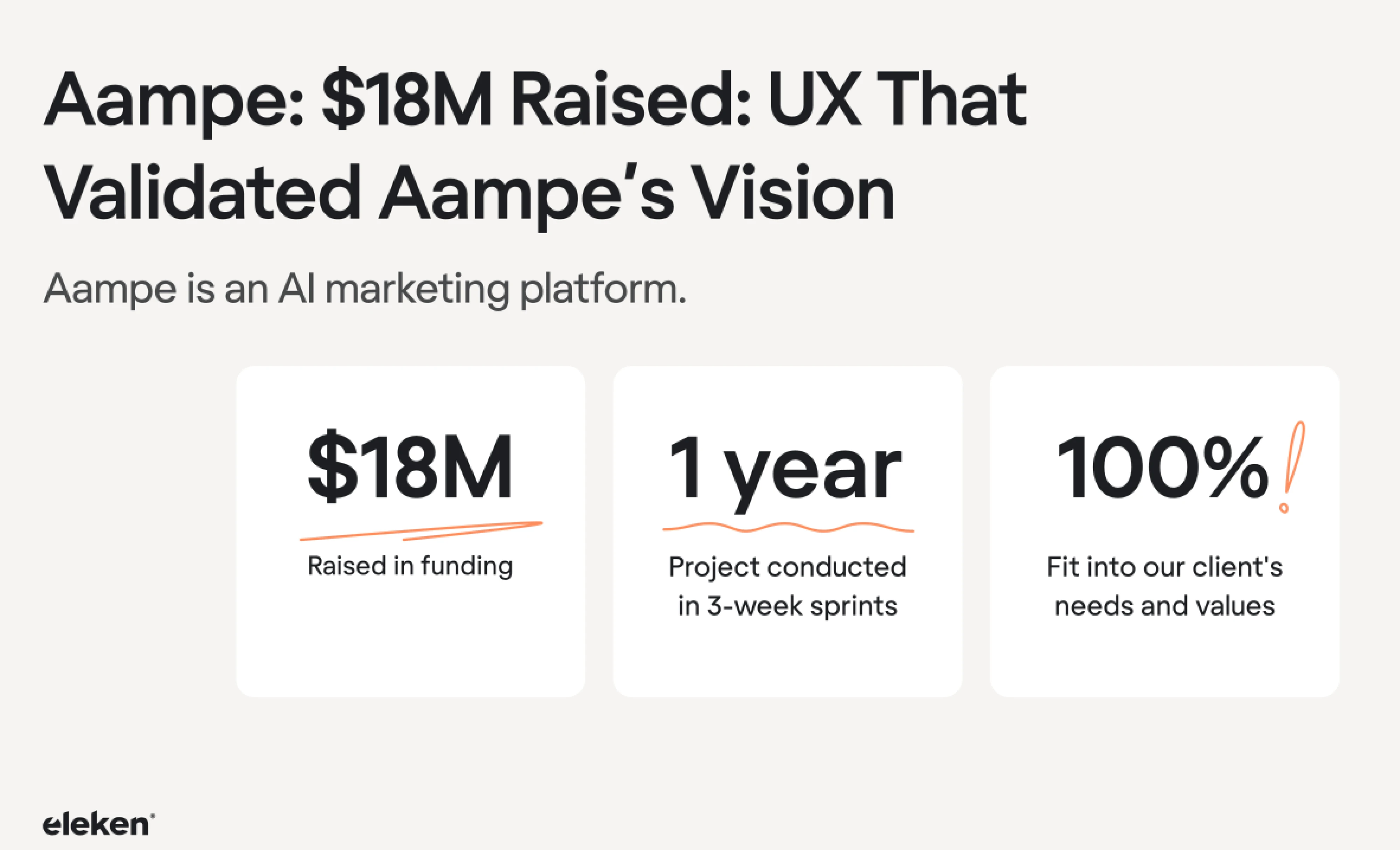
If you're looking for the startup design agency version of a senior designer who thinks, someone who challenges the assumptions behind a screen, ties design to your metrics (activation, trial-to-paid, adoption), works fast, and never ghosts you, that's Eleken.
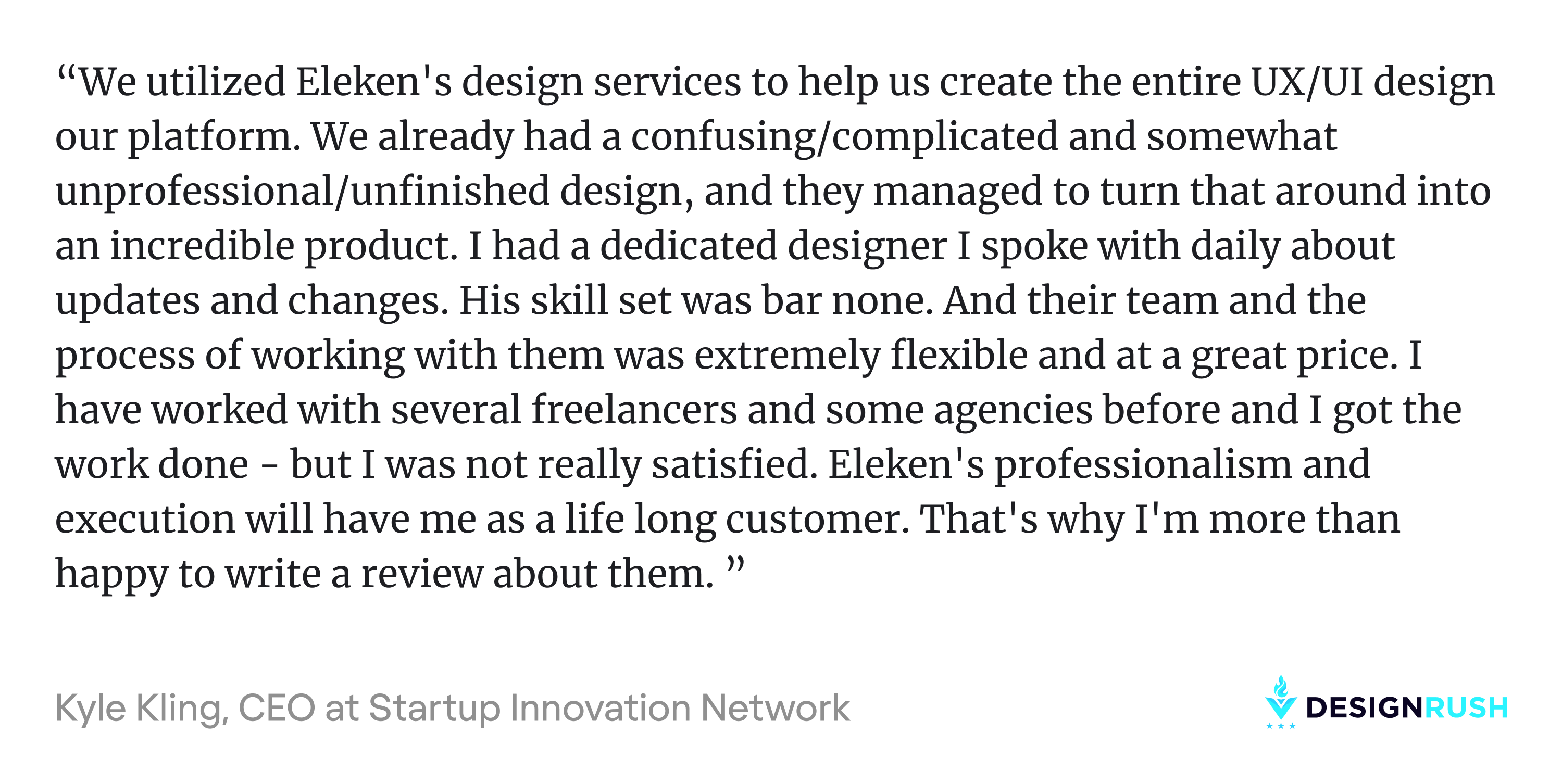
With a 4.9 rating on Clutch and glowing reviews on DesignRush, founders consistently praise Eleken for its flexibility, speed, and professionalism.
One reviewer on DesignRush wrote: “... We already had a confusing/complicated and somewhat unprofessional/unfinished design, and they managed to turn that around into an incredible product. I had a dedicated designer I spoke with daily about updates and changes. His skill set was bar none. And their team and the process of working with them was extremely flexible and at a great price...”
Not a fit for:
- Companies needing end-to-end product development (engineering, QA, post-launch support).
- Teams looking for a website-only design.
- Non-SaaS businesses (DTC, ecommerce, etc.).
And if you want to learn more about UX design for startups, consider watching this video:
2. Red Antler as a branding agency for consumer startups
Best for: early-stage consumer startups aiming to become household names.
Red Antler is synonymous with startup branding. Based in Brooklyn, they’ve helped launch some of today’s most iconic direct-to-consumer (D2C) brands, and they do it with a level of storytelling precision that few agencies can match.
Overview
- Founded: 2007.
- Pricing: Min project size $10,000+ (based on the Clutch snapshot).
- Services: Brand strategy, naming, visual identity, packaging, website design, and marketing collateral.
- Focus: Consumer products, D2C startups, early-stage ventures.
- Clients: Allbirds, Casper, Figure, Prose, and more.
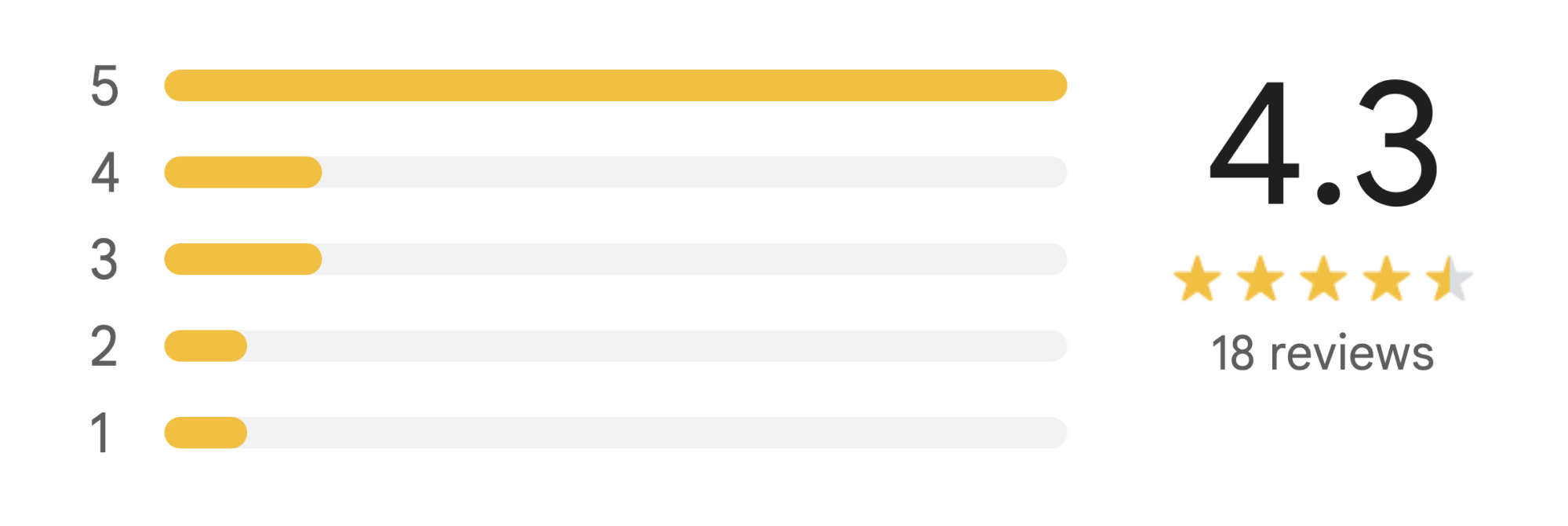
TechCrunch named Red Antler “the leading brand company for startups and new ventures”, and it shows. The company holds a 4.3-star rating on Google, reflecting its good reputation among early-stage founders and brand-led startups.
If you're building the next breakout consumer brand and want to spark obsession from first glance, Red Antler is the move.
Not a fit for:
- B2B SaaS products with complex UX needs.
- Startups needing ongoing product iteration.
- Teams that prioritize speed and iterative delivery over deep storytelling.
3. Adam Fard UX Studio for research-backed UX
Best for: startups building complex SaaS, AI, or fintech products.
Adam Fard UX Studio is a boutique, founder-led studio that treats research as the foundation. Its process is grounded in behavioral psychology, and the whole model is built around product growth: fixing low activation, weak retention, and churn before you throw more money at marketing.
Overview
- Founded: 2016.
- Pricing: Min. project size $10,000+ (Clutch snapshot)
- Research-first process rooted in behavioral psychology: discovery, user research, validation.
- Services: UX research, UX/UI design, MVP sprint & build, UX/tech audits, and AI development.
- Works with early-stage and Series C startups.
- Clients: Samsung, T-Mobile, Qolo, Sciforma, Kinteract, and series-A startups.
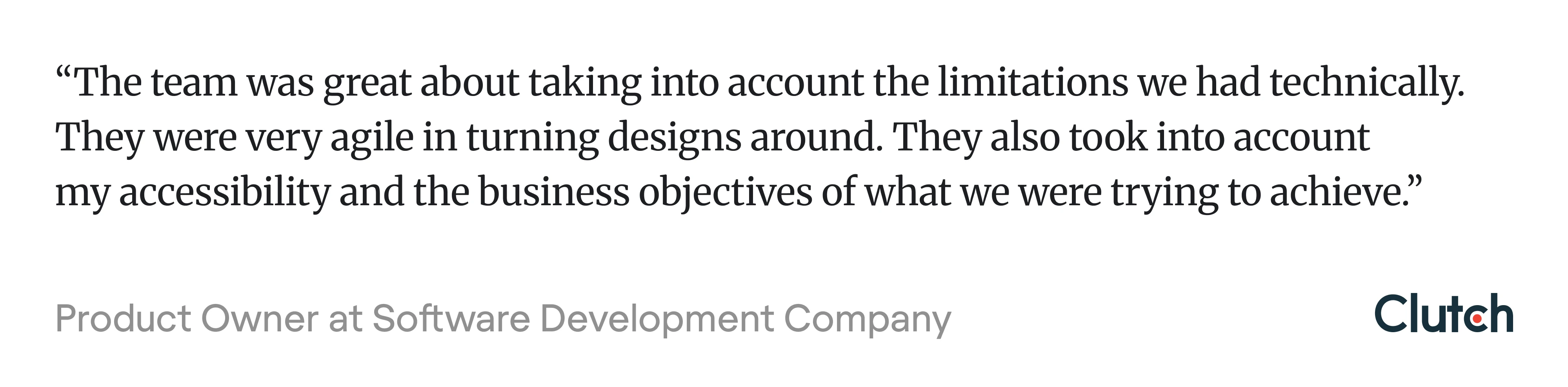
Adam Fard is a great fit for startups that want senior, research-led product thinking without the overhead (or price tag) of a big agency. It holds a 5.0 rating across 34 reviews on Clutch, with clients repeatedly praising its meticulousness and detail.
As one founder put it, "the team was great about taking into account the limitations," and highlighted that they took into account my accessibility and the business objectives.
Not a fit for:
- Teams that want pure branding or visual identity.
- Founders needing a large, full-service agency.
- Projects looking for fast, low-cost, UI-only work.
4. Outcrowd for bold, scroll-stopping design
Best for: startups that want to stand out fast.
Outcrowd is a creative agency for startups, loud, fun, and not afraid of color. They specialize in brand identity and UI/UX with visual punch, great for landing pages, MVP launches, and pitch decks that pop.
Overview
- Founded: 2017
- Clear pricing and scope, min project size $5,000+ (based on the Clutch snapshot).
- Services: Branding, brand naming, strong motion design, and visuals, Webflow, marketing assets.
- Fun, design agency, startup-friendly vibe.
- Clients: McDonald’s, IBM, Red Bull, etc.
Think less “compliance dashboards,” more “this looks cool AF.” Outcrowd brings bold, scroll-stopping design to early-stage startups that want to stand out fast.
With a 4.9 rating on Clutch, clients praise their creative firepower backed by strategic thinking. As one review puts it: “They stand out for their creative yet strategic approach to design.”

Not a fit for:
- Products with complex UX or technical constraints.
- Startups needing dev-ready design systems.
- Teams looking for subtle, conservative visual styles.
5. The Branx for brand and UX under one roof
Best for: founders who want to level up both their product and brand without juggling multiple agencies.
The Branx is a boutique branding partner and design agency built specifically for tech startups and early-stage companies. Based in Spain and serving global clients, they specialize in turning technical products into friendly, professional brands that resonate, especially at the top of the funnel.
Overview
- Founded: 2019.
- Pricing: Projects typically start at $10,000 (the Clutch snapshot).
- Services: Brand identity design (go-to-market strategy, logo, visual systems), website design and development, UX/UI for SaaS products, pitch decks, motion graphics.
- Focus: SaaS, fintech, AI, and healthcare startups.
- Clients: Sastrify, TaxScouts, Caya, and Layerise.
The Branx storytelling chops help translate complex value props into accessible designs that boost conversion and investor confidence.
With a 4.9-star rating on Clutch, clients consistently highlight The Branx’s clarity, consistency, and steady hand. As one review put it: “What stood out was their reliability and patient collaboration throughout the build.”
Not a fit for:
- Startups that need deep UX research or data-heavy product flows.
- Teams looking for ongoing product iteration without branding.
- Founders who want rapid sprints over structured, strategy-first execution.
6. Roud Studio for landing pages and web UX
Best for: SaaS startups who want a website that converts.
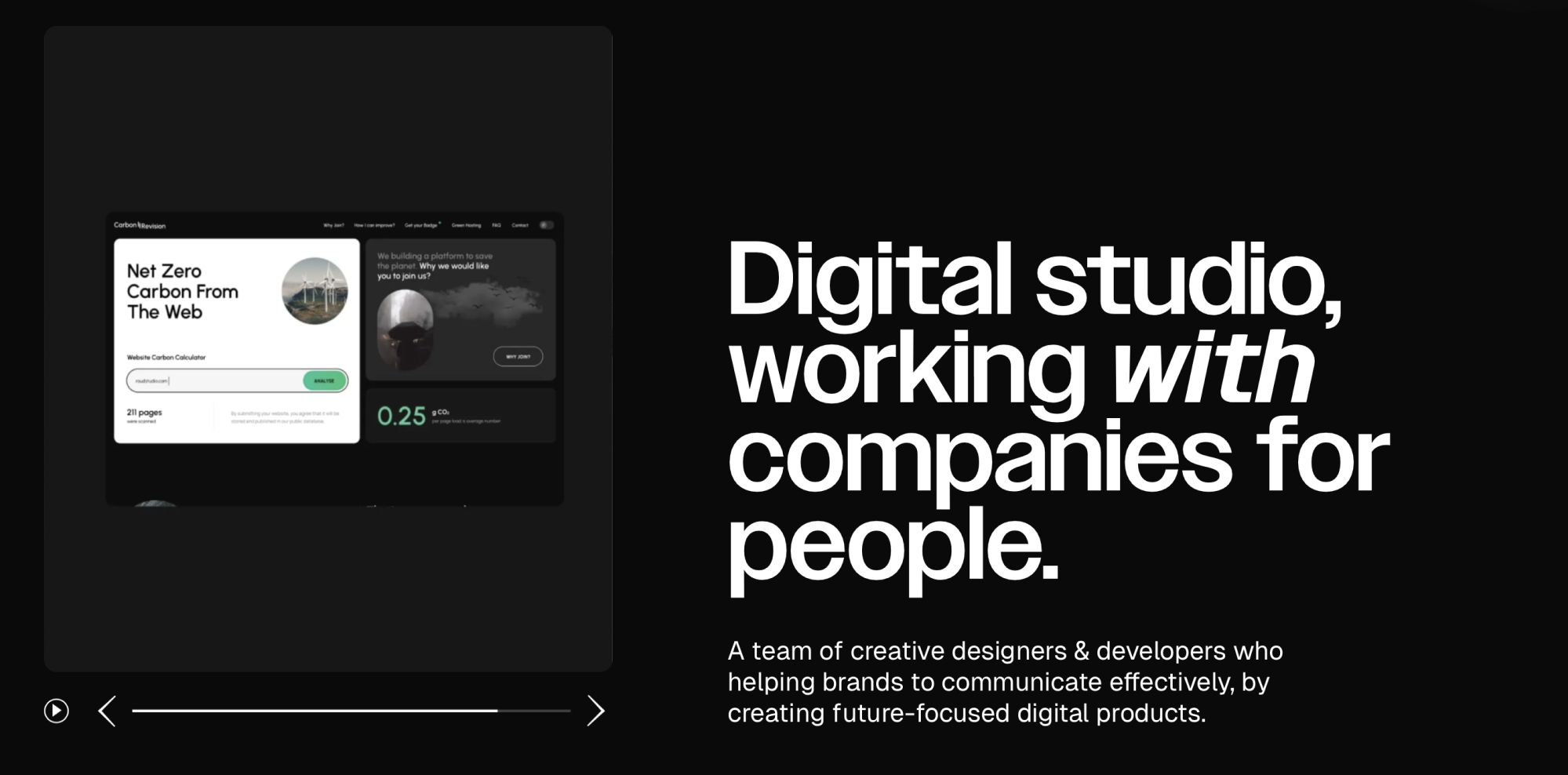
Roud Studio builds clean, performant websites with conversion-focused UX. They’re great for early-stage companies launching a new site, product, or landing page.
Overview
- Founded: 2018.
- Pricing: Min project size $5,000+ (the Clutch snapshot).
- Services: Branding, website development, strong front-end knowledge, and content production.
- Crisp, modern design, white-label partnership.
- Knows what matters for SaaS: headlines, structure, trust signals.
- Clients: Key Solutions, Eturnity, Elvio, etc.
If your site is “just okay” and isn’t converting, talk to them. They specialize in modern websites that perform, especially for tech companies launching new products or updates.
With a perfect 5-star rating on Clutch, clients praise their ability to nail the brief fast. As one founder shared: “Roud Studio quickly grasped our brand identity, and all their design suggestions fit perfectly, like a glove.”
Not a fit for:
- Teams looking for deep product UX or application design.
- Startups that need brand strategy from scratch.
- Projects requiring complex back-end dev or integrations.
7. 500 Designs for branding and product at scale
Best for: startups heading into growth mode.
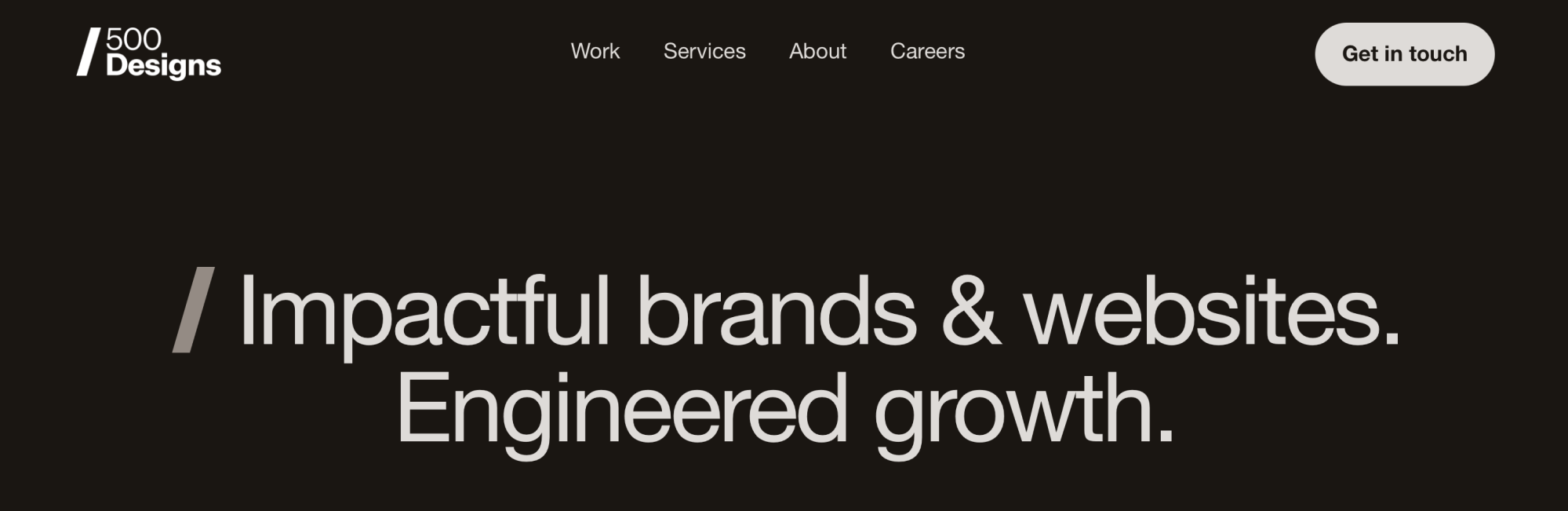
500 Designs offers both branding solutions and product design, with the structure to handle larger projects. If you've raised and need a serious rebrand or polished platform, they're worth checking.
Overview
- Founded: 2017.
- Pricing: Min project size
- $25,000+ (the Clutch snapshot).
- Services: Branding and strategy, website development, UI/UX design, SEO strategy, etc.
- Clients: Trusted by YC and funded startups, including Google, FedEx, 3M, and Cisco.
Overkill for early MVPs, but a great upgrade partner once you've gained traction. 500 Designs combines strategy, branding services, and product design to help startups scale fast and look the part while doing it.
With a 5-star rating on Clutch, clients highlight their creativity and collaboration. As one shared: “Their team brought fresh ideas, listened to our input, and made it all feel easy and collaborative.”
Not a fit for:
- Bootstrapped startups still in build-measure-learn mode.
- Teams needing week-to-week flexibility or low-budget sprints.
- Founders looking for minimal, functional UX over full-scale rebrands.
8. Underdog for founder-led, hands-on collaboration
Best for: small teams who want to co-create.
Underdog keeps things personal. You work directly with designers (not an account manager), and the style is clean, tech-friendly, and conversion-aware.
Overview
- Founded: 2019.
- Pricing: Min project size $1,000+ (the Clutch snapshot).
- Services: Branding, research, strategy, and market positioning.
- Collaborative process.
- Understands lean, iterative teams.
- Clients: Arla, Dole, Mapio, and more.
Less polished than big agencies, but more personal and responsive. Underdog is a small, founder-friendly team that works closely with startups to build new brands and create successful strategies.
With a 5-star Clutch rating, they’re praised for close collaboration and hands-on execution. One client shared: “We are absolutely delighted with the photography that we've had back — it's looking great on the site.”
Not a fit for:
- Startups needing deep product UX or complex systems design.
- Teams looking for end-to-end product development.
- Projects requiring large-scale, multi-department coordination.
9. Baunfire for polished marketing websites
Best for: SaaS companies ready to refresh their brand presence.
Baunfire makes beautiful, modern websites. They’re ideal if you’re past MVP, your product works, and now you want a site that shows that.
Overview
- Founded: 2001.
- Pricing: Min project size $75,000+ (the Clutch snapshot).
- Services: Website design and development, strong visual design, content strategy, and SEO services.
- Focus on conversion + storytelling.
- Great with marketing and brand teams.
- Clients: Google, Optimal Dynamics, Karat, Cellares, Lumana, etc.
If your homepage still says “Coming Soon,” Baunfire will help you fix that. They specialize in sleek, high-conversion marketing websites for companies ready to look like the real deal.
With a 4.9 Clutch rating, clients highlight their professionalism and mature process. As one put it: “They’re confident about themselves and have the professionalism and the right processes in place.”
Not a fit for:
- Startups needing web development.
- Teams looking for brand identity from scratch.
10. Moken for startups that need it all
Best for: founders building their first product from scratch.
Moken has an incubator-style offering. They help with consistent branding, MVP design, pitch decks, and go-to-market, making them a solid option if you're starting from scratch and need strategic help.
Overview
- Founded: 2016.
- Pricing: Min project size $5,000+ (the Clutch snapshot).
- Services: Brand + product + GTM design.
- Focus on early-stage founders.
- Offers programs and playbooks.
- Clients: Gander, Avon, Juno, Crafty, etc.
If you’re new to startups, Moken will guide you through the early mess. They offer structured support for founders building their first product, from brand identity to MVP app design and pitch decks.
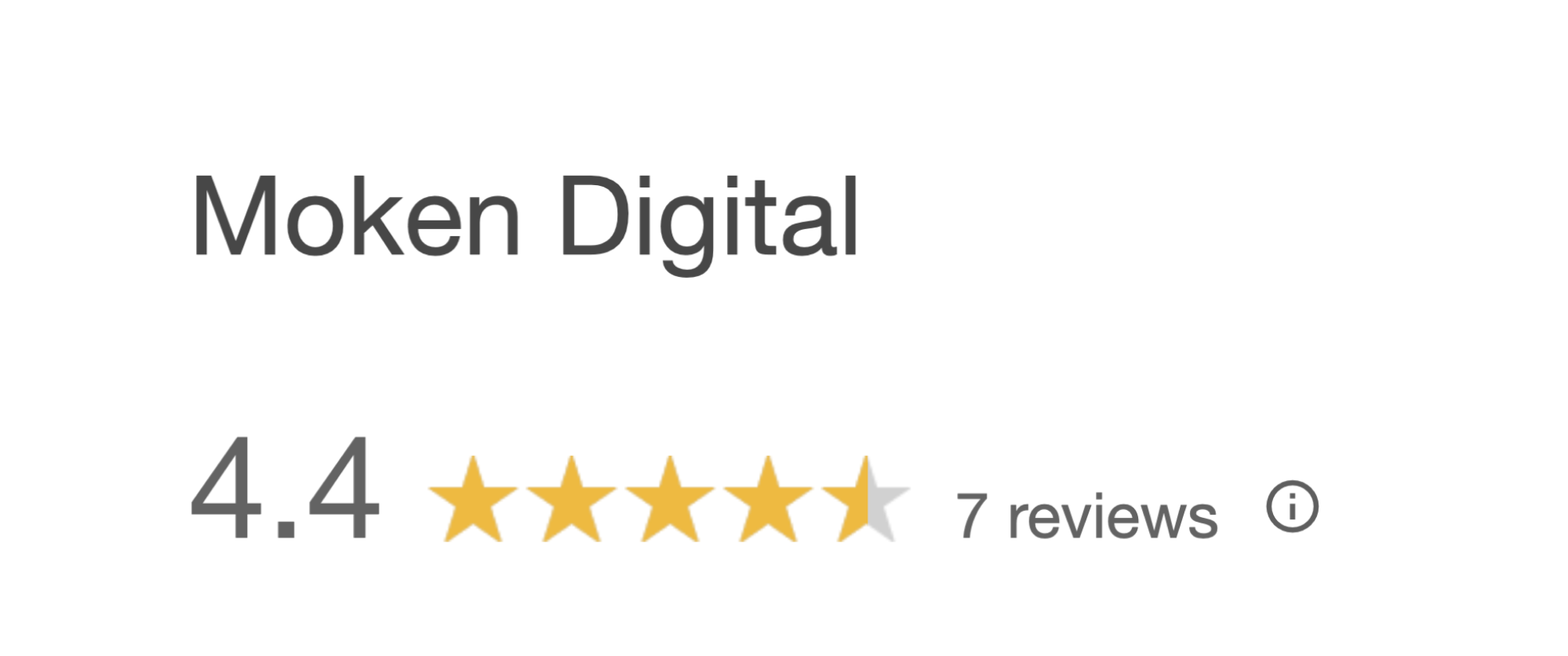
With a 4.4-star rating on Google, clients appreciate their modern design sensibility and fast execution.
As one reviewer shared: “Fantastic group of designers producing modern, digital and web-friendly designs at scale & speed. Would recommend for any graphic design or web design related projects :)”
Not a fit for:
- Startups past product-market fit needing deep UX work.
- Teams with an in-house strategy who just need execution.
- SaaS products requiring complex interaction or data modeling.
11. Zajno for beautiful, animated product sites
Best for: visually bold founders launching a product or feature.
Zajno is a startup creative agency, heavy on visuals and motion design. Their landing pages and product visuals are memorable, but not just for show. They’re conversion-focused, too.
Overview
- Founded: 2015.
- Pricing: Min project size $10,000+ (the Clutch snapshot).
- Services: website design and development, beautiful motion and interactions, 2D illustrations, and visual identity.
- Knows how to build hype visually, great for launches.
- Clients: Origami, Ooki, Grid, 8Finance, etc.
A bit artsy for some founders, but excellent for standing out. Zajno blends bold visuals, motion, and storytelling to help startups launch memorable digital experiences.
With a 5-star Clutch rating, they’re known for pushing creative boundaries without losing clarity. As one client put it: “Their ability to use animation, illustration, and graphic design to solve communication challenges set them apart.”
Not a fit for:
- Startups looking for nice graphics, motion design, videos, and animations.
- Teams that need fast, utilitarian UX work.
12. HYPE4 for clean mobile and dashboard UX
Best for: High-conversion websites or mobile workflows.
HYPE4 excels at functional UX; think onboarding flows, mobile apps, and dashboards. They’re a good fit if your product is useful but clunky, and you need smoother flows.
Overview
- Founded: 2013.
- Pricing: A single design sprint is around $10,000.
- Services: UI/UX design, front-end development, mobile + data product experience.
- Offers audits + redesigns.
- Clients: Samsung, Viacom, PayPo, mBank, etc.
Not a brand design agency, but great if your UI/UX needs cleanup. HYPE4 focuses on functional, mobile-first product design, especially for startups in fintech, healthcare, and education.
With a 4.8 Clutch rating, clients consistently highlight their professionalism and fast turnaround. As one shared: “The team was knowledgeable, experienced, responsive, and prompt.”

Not a fit for:
- Startups looking for full-scale branding or storytelling
- Projects requiring motion design or high-end visuals
- Teams needing deep UX research or product strategy.
Comparison table: best design agencies for startups in 2026
Below is a quick comparison of the 12 curated design agencies we recommend, organized by what they’re best at, their service focus, pricing, and ratings from Clutch and Google.
Next up, we’ll break down how to choose a design agency for startup that fits your startup, based on your product stage, budget, and red flags to watch for.
What makes a UX/UI agency good for startups
How do you find an agency for startups that won’t break under that kind of pressure? Let’s start with what matters when you’re building under uncertainty.
Startup-specific traits to look for
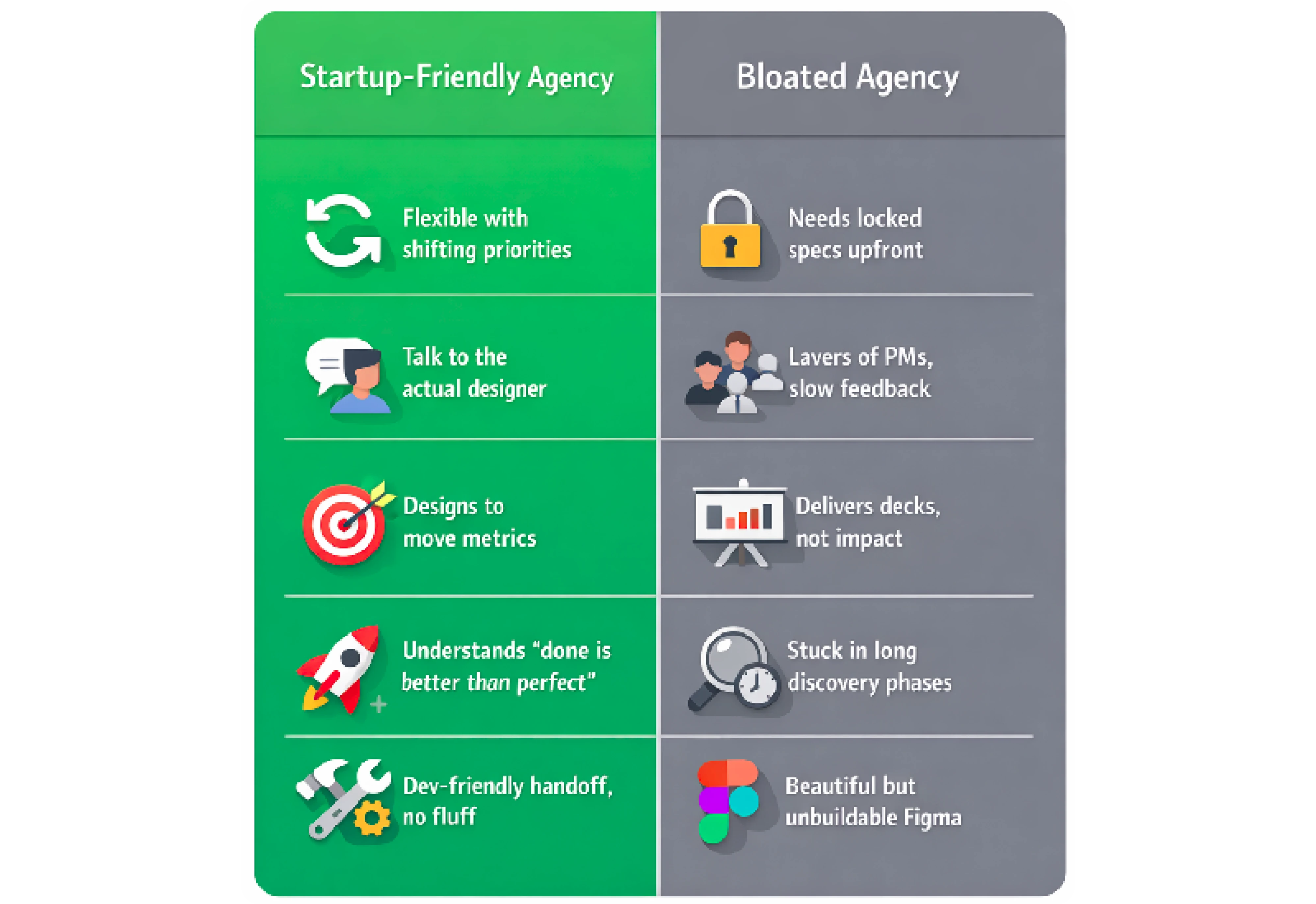
Here’s what separates a startup-friendly agency from a bloated one that’s more interested in winning awards than shipping screens:
- Comfort with ambiguity: Your requirements might change halfway through the sprint. A good agency will expect this and adapt, not panic.
- Lean collaboration model: You should know exactly who’s designing your product, how feedback loops work, and how quickly they respond.
- Focus on outcomes, not assets: You don’t need a 40-slide design presentation. You need a UI that helps users onboard faster. Look for teams that measure success in real impact.
- Experience with MVPs and scrappy workflows: Founders shouldn’t have to explain what an MVP is. The agency should understand fast iterations, “done, not perfect,” and dev handoff realities.
- Buildable designs: Figma that looks great but can’t be built within your stack is useless. Look for teams that hand off design systems, not just pretty pixels.
If you’re trying to build your perfect design team, these traits are non-negotiable because they’re what make design ship. But just as important as knowing what to look for is knowing what to avoid.
Red flags that scream “not for startups”
If you're planning to hire UI designers for your startup, spotting these red flags early can save you time, money, and a lot of rework.
- “We’ll figure out dev handoff later.”
No. That’s how designs get lost in translation, and engineering ends up rebuilding everything from scratch.
- Sales call with a senior… work done by juniors.
Classic bait-and-switch. If the portfolio wowed you, ask who did the actual work. Make sure they’ll be on your project.
- Long discovery phase, no tangible output.
“We need four weeks of research before we design anything.” Sure, if you’re a Fortune 100. Startups need speed and validated learning, not 60-page strategy decks.
- Rigid contracts, no trial period.
Founders need to test fit and ask questions before hiring a design agency. If you have to commit to a six-month deal with no output up front, keep looking.
Next, let’s talk about the confusing trio of branding, UX, and product design, and when you need each one.
Branding vs UX vs product design: what startups need and when
Most startup founders lump all design into one bucket. “We need design,” they say, and then spend $30K on a logo when their signup flow still makes users cry.
Let’s fix that. Here’s a quick breakdown of the three design types you’ll hear tossed around and when you should prioritize each.
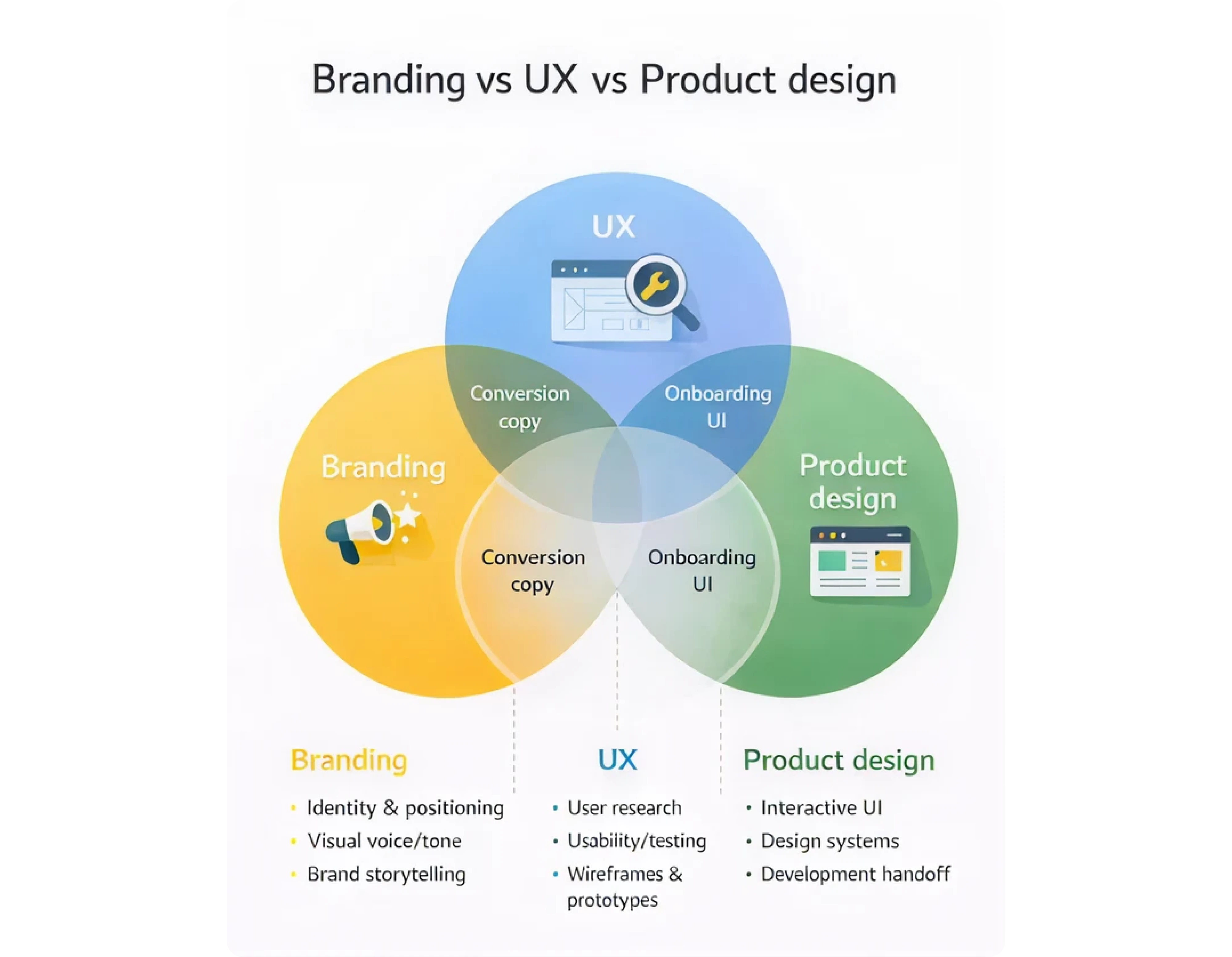
Branding = trust, recognition, and positioning
Branding is how people feel about your startup before they even try your product. It’s your story, visuals, tone of voice, and the emotional connection you build.
When to focus on it:
- You’re preparing for a public launch or fundraising round.
- You want to differentiate in a crowded space.
- You’ve found product-market fit and need a consistent story.
When to wait:
- You haven’t validated your core product yet.
- You’re still rewriting your homepage copy every two weeks.
- You’re pre-revenue and still figuring out your audience.
Mistake alert: Don’t spend $20K on a shiny brand before your users understand what your product even does.
UX/UI = usability, onboarding, and product clarity
UX (user experience) and UI (user interface) design focus on how your product works: the flows, buttons, screens, and micro-interactions that guide users.
When to focus on it:
- You're building your MVP.
- Your product works, but users are confused or drop off.
- You want to improve onboarding, reduce churn, or speed up activation.
UX is about reducing friction so your users can get value faster and stick around longer.
Product design = structure, flows, and product thinking
Product design sits at the intersection of UX, UI, and business goals. It’s less about visuals, more about how the product works as a system.
When to focus on it:
- You’re building something complex (B2B, SaaS, data-heavy).
- You want help prioritizing features or improving retention.
- You’re overwhelmed with requests and don’t know what to build next.
Great product designers don’t just ask “How should this screen look?” They ask, “Do we even need this screen?”
So, what do you need?
Here’s a quick cheat sheet based on your startup stage:
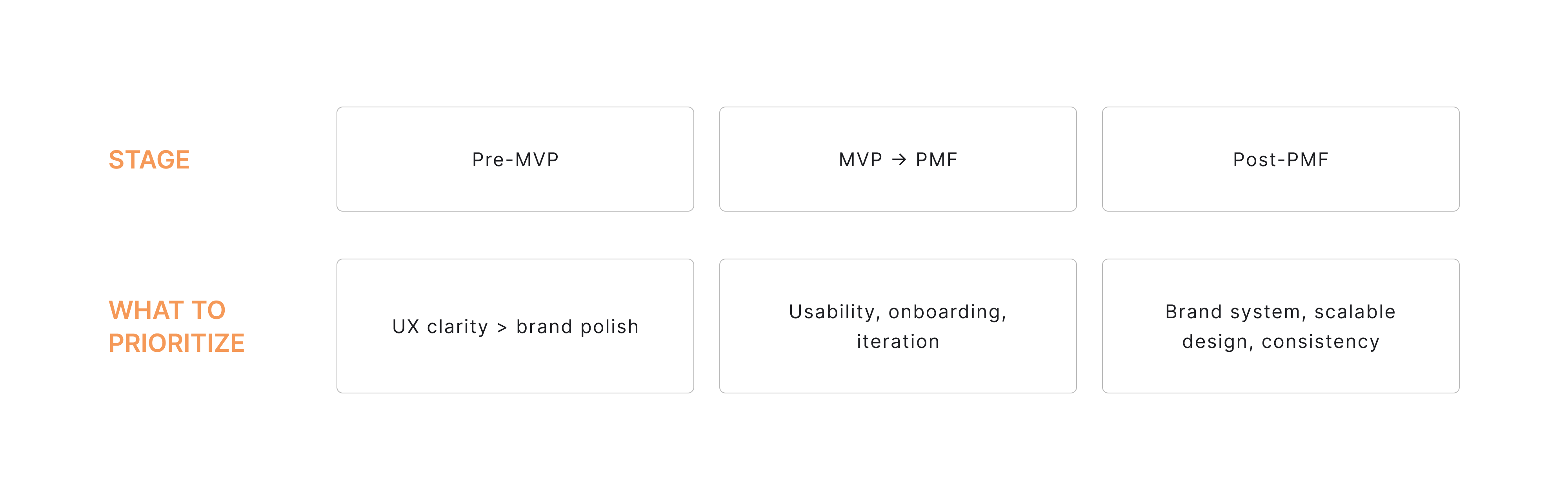
Your design priorities should evolve as your product does. Nail the user journey first. Worry about your typeface later.
Now, let’s break down the types of design agencies you’ll encounter and how to know which one fits your startup.
Agency models explained: which one fits your startup?
Most design services fall into four models. Here’s what each one means and when it makes sense or not.
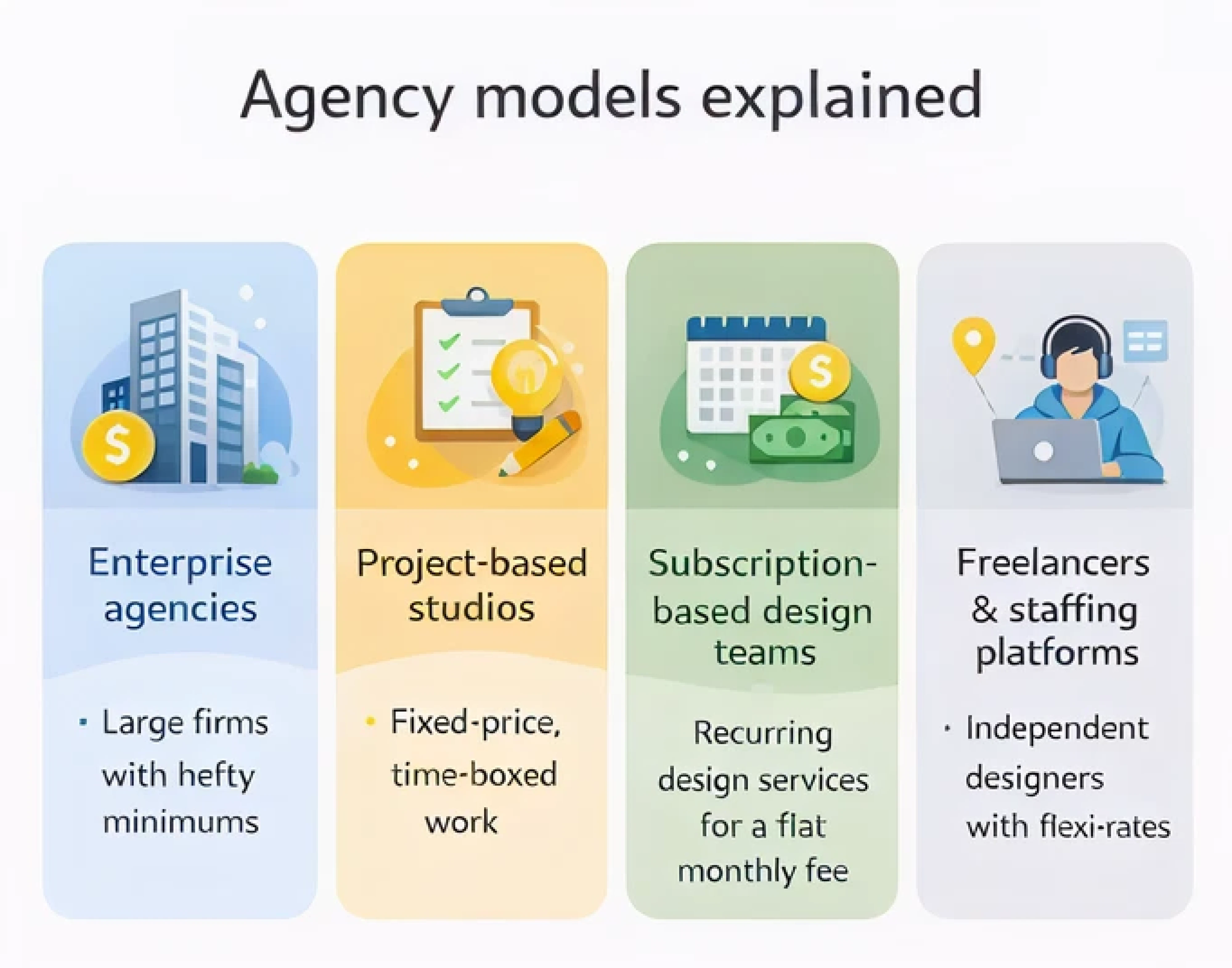
1. Enterprise agencies (IDEO, Frog, Accenture, etc.)
Best for: Fortune 500s, government projects, and companies with a long runway.
These agencies do strategy-heavy, research-first work. You’ll get brand books, user archetypes, and stunning visuals eventually.
- Pros: tons of expertise, polished outcomes.
- Cons: slow timelines, big budgets, no flexibility.
- Typical pricing: $150K–$500K+ per project.
If your team has fewer than 50 people and a burn rate to worry about, skip this.
2. Project-based design studio for startups
Best for: startups with a defined scope and stable roadmap.
These are smaller, more agile agencies that work on a project-by-project basis. You agree on deliverables, price, and timeline upfront.
- Pros: clear scope, high craft, good for v1 launches.
- Cons: pivots get painful, changes = change orders.
- Typical pricing: $10K–$100K per project.
Works well if you know what you need. If you're still figuring it out? Not so much.
3. Subscription-based design teams (like Eleken)
Best for: early-stage SaaS teams who need flexibility.
Instead of locking into a fixed scope, you pay monthly and get ongoing access to a designer or team. You can pause, scale, or pivot as needed.
- Pros: flexible, fast, works like in-house.
- Cons: not ideal for one-off brand projects.
- Typical pricing: $3,000–$6,000/month
This is why Eleken works so well for startups; it’s like hiring a senior designer, minus the HR overhead and hiring delays.
4. Freelancers and staffing platforms
Best for: quick fixes, small tasks, or teams with strong internal direction.
You hire an individual designer from a platform like Upwork or Toptal. This works when the task is clear, and the budget is tight.
- Pros: cheap, fast to start.
- Cons: inconsistent quality, requires strong oversight.
- Typical pricing: $30–$150/hour.
Great for quick landing pages. Not great for end-to-end product UX if you don’t have in-house design leadership.
Which model fits your startup? Here is what to consider:
Next, we’ll wrap it all up with some final advice on avoiding the biggest and most expensive UX mistake startups make and a low-risk way to get started.
Final advice: how to avoid the $100k UX mistake
Startups often spend big on design that looks great but doesn’t get built or doesn’t move metrics. That’s the $100,000 UX mistake, and it’s surprisingly common.
Here’s how to avoid becoming the next:
- Don’t chase famous names.
Big-name agencies are great at selling creative vision. But vision isn't enough. If you're a startup, you need someone who can execute in your reality, like tight deadlines, fast feedback, and real users.
- Don’t over-optimize for aesthetics.
Pretty doesn’t convert. A slick UI that no one understands is worse than an ugly one that works. Choose usability over polish, especially in early stages.
- Don’t buy more design than you can build.
Design is a means to an end, not the end itself. If your dev team looks at the final files and says “uhh…” — you’ve already lost.
Choose partners who:
- Understand startup chaos.
- Work within real-world constraints.
- Know how to ship, test, and iterate fast.
- Speak both design and dev.
That’s why there’s Eleken. We’re the team you call when you need usable UX. We help you launch quicker, convert better, and hand off designs your devs won’t curse at.
Want to see how it feels to work with us with no commitment? Start a free 3-day trial with Eleken, and get real work, fast.


.webp)