


AI is everywhere. AI model curates our playlists, powers customer support chatbots, and even helps doctors make diagnoses. But let’s be honest — most of us have no idea how it actually works. That’s where AI transparency comes in.
Transparency isn’t just a nice-to-have feature; it’s essential. Imagine relying on AI technologies to decide who gets approved for a loan or how often someone receives notifications in an app. If users don’t understand the “why” behind these decisions, trust disappears faster than a poorly designed onboarding flow.
But here’s the twist: AI transparency and explainability isn’t just about engineers or algorithms. It’s also about design. Good design can demystify complex systems, bridge the gap between technical intricacies and user comprehension, resulting in trustworthy AI.
This article dives into the real-life lessons our designer, Julia Haievska, learned while working on the Aampe artificial intelligence marketing platform. Her experience shows that AI transparency is as much about user experience as it is about technology. Let’s break it down into practical lessons you can use in your own projects. But, first of all, a bit of theoretical background here.
What is AI transparency, and why does it matter?
Transparent AI means building AI systems understandable by showing how they work, why they make decisions, and giving users control over those processes. This is the foundation of generative AI UX, where the output is often unpredictable and requires a high level of user trust. It’s essential for ethical AI because trust depends on clarity — users need to know what’s happening behind the scenes.
Transparency in AI depends on three crucial elements:
- Visibility: Revealing what the AI is doing.
- Explainability: Clearly communicating why decisions are made.
- Accountability: Allowing users to understand and influence outcomes.
Why is AI transparency important?
AI transparency is crucial for ethical, safe, and user-friendly technology. Without it, users can’t verify fairness, bias, or accuracy — which can lead to frustration or even harm. That's why, in product design, our task is to create such an AI user experience that ensures that people feel in control, informed, and respected when interacting with AI-driven features. This is especially true when designing a conversational UI, where the interaction should feel like a partnership rather than a mystery.
Aampe’s journey provides a great real-world example of balancing AI SaaS complexity and usability while maintaining user trust. Since 2023, Eleken designer Julia Haievska has been working as part of Aampe’s team, helping build trust and usability through thoughtful design. Her work demonstrates how AI in UX research can be applied to identify exactly where users feel "lost" in the automation process. She’s shared key lessons from this collaboration that show how design can make AI-powered products more transparent, reliable, and aligned with ethical guidelines.
Oh, and one more thing: Aampe’s success speaks for itself. In December 2024, they secured $18 million in Series A funding. So, there’s plenty we can learn from their approach. Let’s dive into these lessons.

Lesson 1. Make AI’s system work visible through design
Imagine trying to drive a car with a dashboard that hides your speedometer, fuel gauge, and warning lights. You wouldn’t trust the car because you’d have no idea what’s going on. That’s exactly how users feel when decisions of artificial intelligence happen behind the scenes without any explanation. AI decision-making process has to be clear.
Aampe faced this challenge with their message personalization engine. Customers wanted to understand how AI chose the right message frequency without spamming users or missing opportunities. The original solution was a simple table of data, but it left much to the imagination. It was functional — but far from transparent.

So, they reimagined it. Instead of raw data, Julia created a heatmap visualization for their Frequency Tracker. Now, users could instantly see how messages were distributed across their audience. This kind of intuitive data mapping is a prime example of how to implement AI in SaaS products to turn complex background processes into actionable insights for the user. Multiple views offered flexibility:
- “More than” view highlighted users receiving too many messages.
- “Exactly” view showed precise delivery patterns.
- “Less than” view flagged users getting fewer messages than intended.

Takeaway:
Transparent AI initiatives start with showing — not telling. Use data visualizations design to make complex AI processes intuitive, helping users trust and interact with your system confidently.
Lesson 2. Balance complexity with user guidance
Ever open a tool so overloaded with features that you have no idea where to start? It’s frustrating, overwhelming and a fast track to abandoning the product altogether. The more powerful an AI system gets, the harder it is to keep things simple. That’s where thoughtful design comes into play.
At Aampe, the message creation page had evolved organically. Each new feature made the interface more powerful but also more crowded. It reached a tipping point when the team needed to integrate even more tools into the already cluttered layout. AI adoption becomes challenging under such circumstances.

A complete redesign would have been disruptive and resource-intensive, so Julia proposed a smarter path forward:
She introduced a consolidated tool panel at the bottom of the screen. This panel grouped tools logically, making features easier to discover and reducing cognitive load. Clear icons and tooltips ensured both new and experienced users could navigate the interface effortlessly.

The result? A cleaner, more intuitive workspace that balanced complexity without compromising functionality. For an AI product manager, achieving this balance is the ultimate goal—ensuring the technology feels like an assistant rather than a burden.
Takeaway:
Transparent AI isn’t about stripping down features; it’s about guiding users through complexity and balancing simplicity and usability. When considering how to design integrations that users actually trust, smart organization, clear labels, and intuitive cues make even the most robust software systems feel approachable.
Lesson 3. Build trust with proactive communication
Trust isn’t just about showing users what’s happening — it’s about telling them why before they even need to ask. Imagine a bank sending alerts without explaining the reasons behind them. Users are left guessing and frustrated. This is why AI integration requires a "glass box" approach rather than a "black box" one. The same principle applies to AI tools: without clear, proactive communication, trust vanishes. Some critics ask, "will AI replace SaaS?" but the more likely outcome is that SaaS platforms which prioritize this level of clarity will be the ones that survive and thrive.
At Aampe, customers frequently asked how AI prevented spam and personalized message timing. They didn’t just want data; they wanted clear explanations. To address this, the team revamped their communication approach:
- The Scheduler now shows a day-by-day status breakdown with clear labels and color codes, making it easy to follow message delivery stages.

- The Week in Progress view overlays previous and current week data, offering context to set more realistic expectations.

The shift wasn’t just about visualization — it was about anticipating user questions and providing answers upfront. By showing natural variation in data, Aampe highlighted how personalization works, reinforcing trust in their AI’s adaptability and intent. This is a perfect example of how AI in UX shifts the focus from static displays to dynamic, explanatory experiences.
Takeaway:
Trust grows when users feel informed. Proactive explanations — not just data displays — help bridge the gap between AI decisions and user understanding. Think ahead, explain inner workings and answer questions before they arise. Use design to empower users with clarity and context, which are the cornerstones of effective UI/UX design for AI based products.
Lesson 4. Foster learning by doing
Nothing is more daunting than a blank page. Users facing complex tasks often struggle with where to start, leading to hesitation and lost time. That’s one example of how psychology in design works. Aampe tackled this challenge head-on by turning passive inspiration into hands-on guidance.
Originally, Aampe offered an inspiration library filled with examples of messages from top brands. While helpful, it wasn’t enough to guide users through the creation of personalized message groups. In many traditional setups, a simple chatbot UI might be used to answer basic FAQs, but for complex creative tasks, users need more structured support. Users still needed to craft hundreds of variations with defined value propositions, calls to action, and other components — a task that could feel overwhelming.

The solution? Aampe introduced interactive message templates. These templates weren’t just examples; they were fully customizable starting points with pre-filled alternatives, categorized by use case. The team also replaced the traditional table view with a card-based layout, making browsing easier and patterns more visually intuitive.

This shift eliminated “blank page syndrome” and empowered users to jump into action with confidence. Instead of being stuck at step one, they were equipped with practical tools to learn by doing.
Takeaway:
Transparency is about reducing barriers to action. Provide structured, interactive resources that let users engage directly with your system. When users create and explore in real time, they learn faster, feel in control, and trust your product more.
Lesson 5. Adapt transparency for evolving user needs
What works today might not be enough tomorrow. As users grow more sophisticated and their needs change, static solutions won’t cut it. Transparency fosters trust, but it must evolve along with how your startup scales.
Aampe faced this challenge when their customer base expanded and expectations shifted. Early visualizations and interfaces that worked for a smaller audience began to feel limiting. Instead of starting from scratch, the team refined their tools to keep pace with evolving user demands.
One example is the Alternates table. Originally functional but visually plain, it was redesigned to enhance both appearance and usability. The update didn’t just look better, it also improved accessibility and better reflected message quality through the AI's lens. New features like column copy-paste boosted productivity without adding complexity.

These iterative updates weren’t about flashy overhauls. They were about thoughtful, scalable improvements that aligned with user expectations. By focusing on adaptability, Aampe maintained transparency and usability as the platform grew.
Takeaway:
Transparency is a moving target. Products evolve, and so do user expectations. Regularly revisit and refine features to keep transparency aligned with user needs. Small, intentional updates often have the biggest impact.
We’ve got this idea well-covered in our YouTube video about the iterative design process.
Bonus lesson. Finding the right design partner to implement AI transparency
Design plays a crucial role in making AI understandable. Even the smartest algorithms won’t build trust if users can’t see how they work. That’s why choosing the right design partner is so important.
Why Eleken
At Eleken, we design SaaS, including AI products that balance complexity and usability.
- Founded: 2015
- Team: 100+ designers, distributed team from Kyiv, Ukraine
- Projects delivered: 200+ SaaS products
- Clutch rating: 4.9(based on 100+ reviews)
We’ve worked with AI startups like Aampe, Stratigi AI, and Zaplify, and more, helping them turn complex algorithms into transparent, user-friendly experiences.
We focus on AI design, not AI development. That means we can help you create trustworthy, intuitive, and secure AI experiences — but we don’t build machine learning models.
Our model
We work on a subscription basis. This means you pay a flat monthly rate and get a full-time dedicated product designer who works as part of your team. You can pause or scale the subscription anytime, without long-term contracts or hidden fees.
- Price: $6,599/month (full-time designer)
- Trial: Free 3 days, no commitment
- Design process:
- Trial — 1–2 screens to see how we work
- Research — user research, UX audit, competitor analysis
- Information architecture – product's structure
- Design — wireframes, prototypes, and final UI
- Handoff — UI kit and design system for your developers
- Support — new features, UX consulting, and smooth execution
Why teams choose us
- Quick start and fast delivery. You can get your designer onboard within days — no long hiring process.
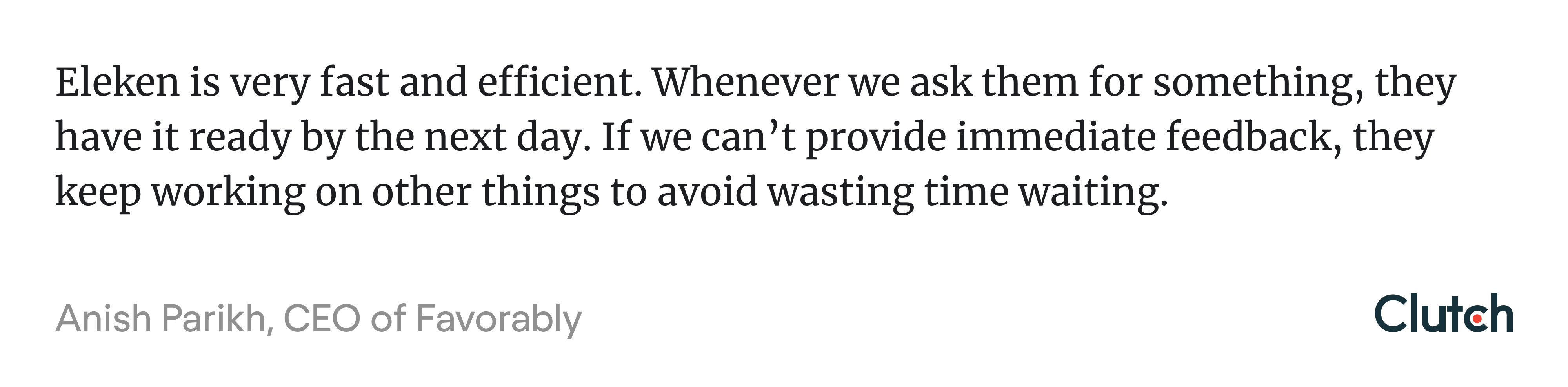
- Clear communication and adaptability. We stay flexible, respond quickly to feedback, and adjust as your product evolves.

- Iterative process with senior oversight. Each designer works independently but is supported by senior leads who review and refine the work.
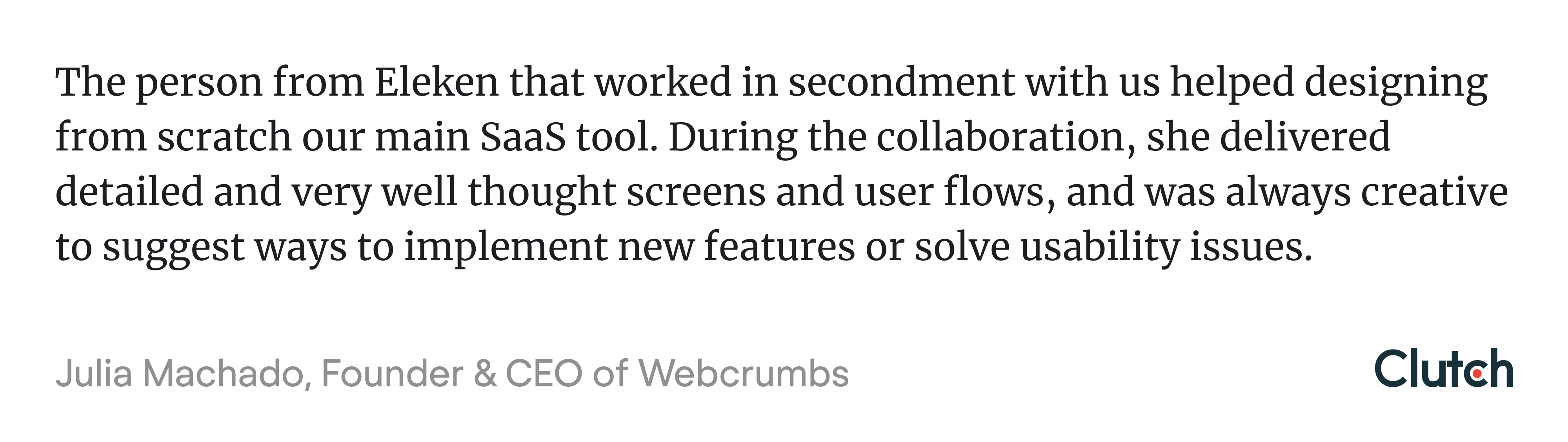
- Accessibility and gamification principles in design. We make products not only inclusive and easy to use but also engaging and motivating for users.
Takeaway:
AI transparency starts with good design — and good design starts with the right partner. Eleken helps SaaS and AI teams turn complex systems into clear, human-centered experiences users can trust.
Building the future of AI model transparency, one design at a time
Aampe’s story shows us that transparency is more than a technical concept — it’s a design opportunity. Through Julia’s five lessons, we’ve seen how thoughtful design can transform AI complexity into trust and usability:
- Make AI’s work visible: Use clear visuals to show users what’s happening behind the scenes.
- Guide users through complexity: Organize features logically to make advanced systems easy to navigate.
- Explain AI decisions proactively: Answer user questions before they arise with thoughtful design.
- Help users get started with action: Use interactive templates to turn inspiration into hands-on learning.
- Adapt to changing user needs: Continuously refine features to keep transparency relevant as your product evolves.
These lessons reveal a powerful truth: transparency and usability go hand in hand. Clear, user-centric design turns even the most complex AI systems into trustworthy, intuitive tools. By showing, explaining, and adapting, we empower users to understand and engage with AI instead of feeling overwhelmed by it.
Looking ahead, AI-driven industries will increasingly rely on transparency as a foundation for trust and ethical behavior. Designers, product managers, and AI leaders must prioritize and provide transparency — not as an afterthought, but as a core feature of user experience.
We at Eleken have the expertise to help you incorporate transparency through design into your AI project. Schedule a call today for a free consultation.


.webp)
.webp)

.webp)
.webp)