

The best AI-powered design agency isn’t the most “AI-first.” It’s the one that improves your product.
This guide compares top AI design agencies in 2026 based on such criteria as ratings and client reviews from DesignRush, Clutch, UX expertise, SaaS experience, design processes, and publicly available case studies. We also highlight specific strengths, limitations, and patterns across agencies to make comparisons more practical and transparent.
We start with Eleken because it’s the agency we know best through direct experience with its processes, workflows, and product design approach.
1. Eleken: best AI design agency for SaaS UX and product design
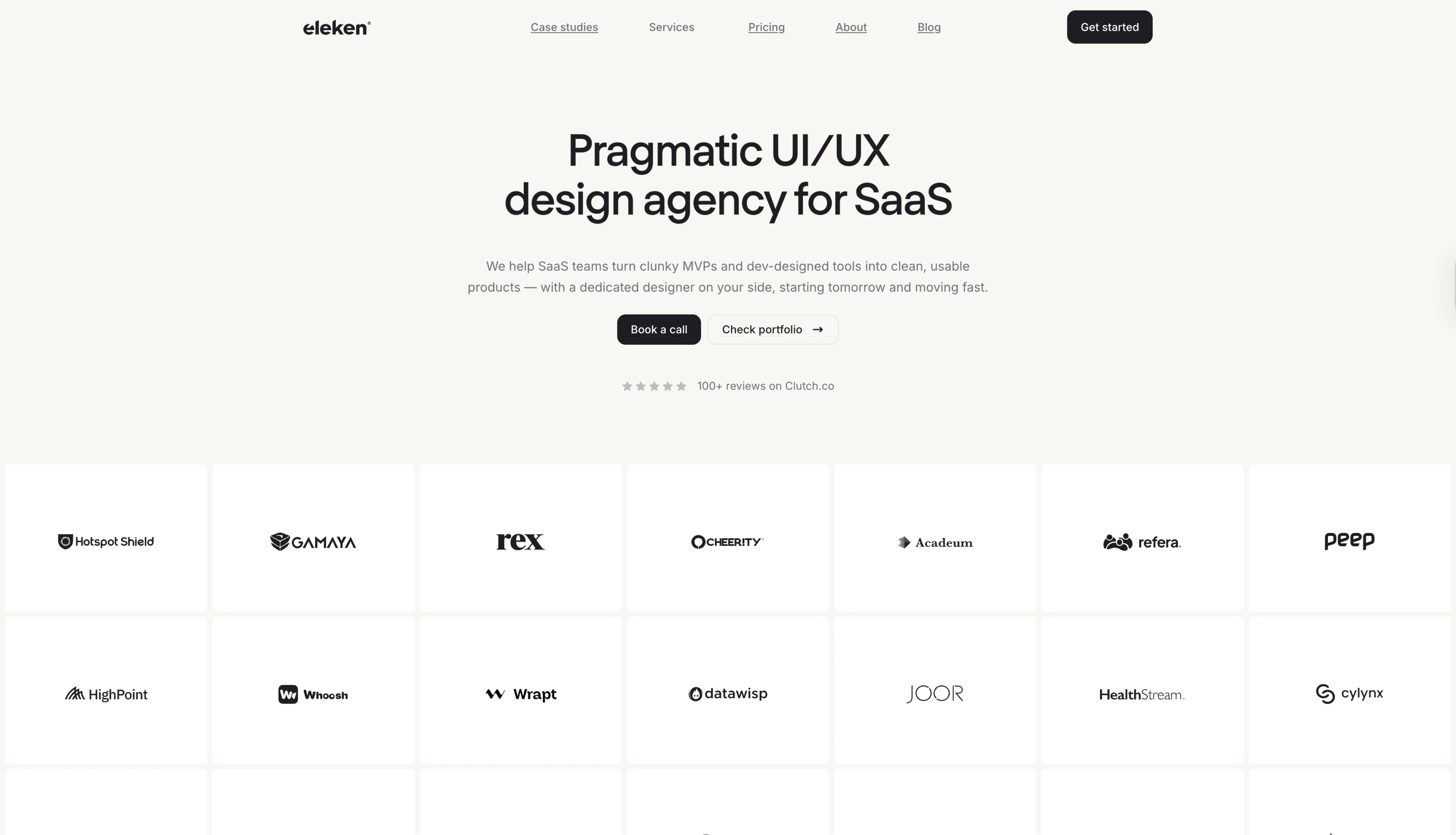
Eleken occupies a specific, hard-to-find category: a UX-focused AI design partner. They specialize in B2B SaaS product design, with particular depth in the kinds of interfaces that make most agencies quietly panic: dashboards with twelve user roles, workflow builders with branching logic, and AI-powered products that need to feel intuitive despite being technically complex under the hood.
What makes Eleken interesting in the AI context is that they've integrated AI into their design process itself. Rather than using AI to replace design thinking, the team uses it to accelerate iteration, improve prototyping, and support faster UX exploration. For example, in the following project, Eleken designers used Claude Code rapid prototyping to test and refine product interactions more efficiently.
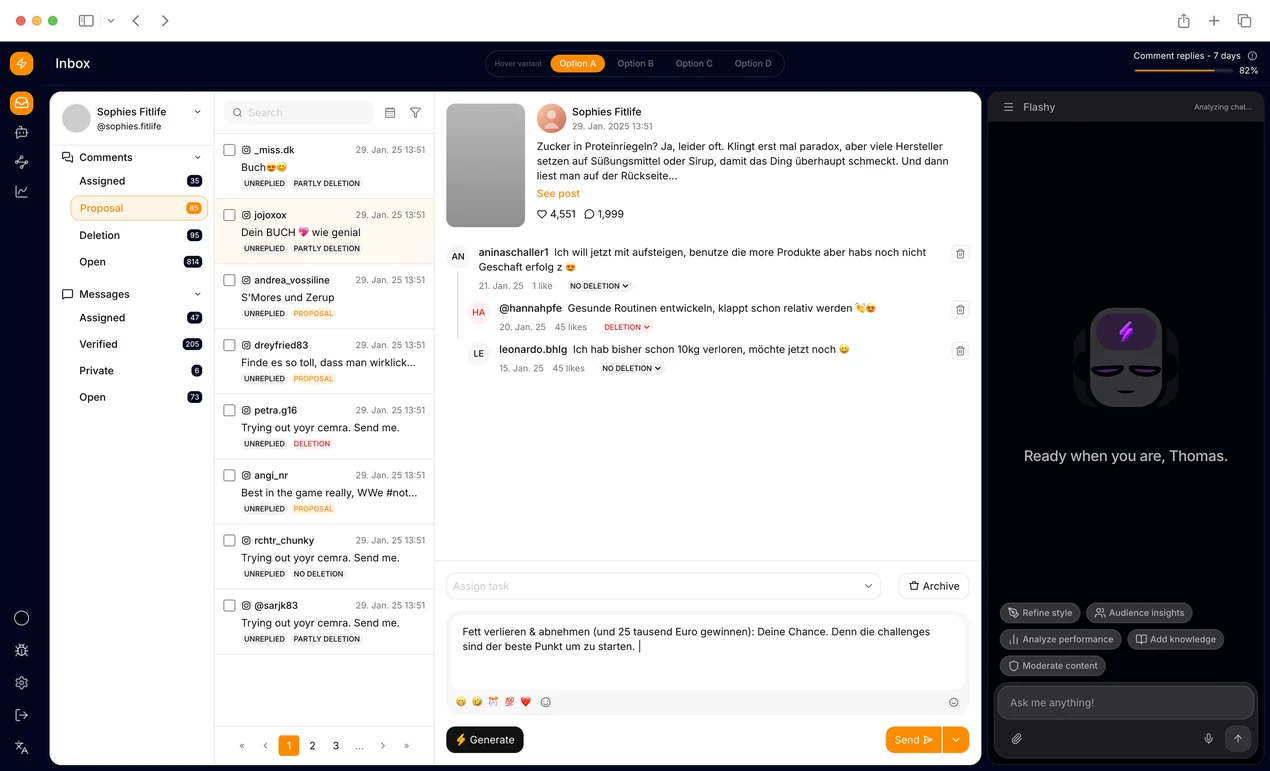
They also have a real track record working with AI SaaS products specifically. Designing UX for an artificial intelligence feature is a different problem than designing a standard interface. Users interact differently with probabilistic systems. Trust patterns change when outputs feel unpredictable. Error states carry higher stakes. Eleken understands this nuance, and that understanding shows up in how they approach the work.
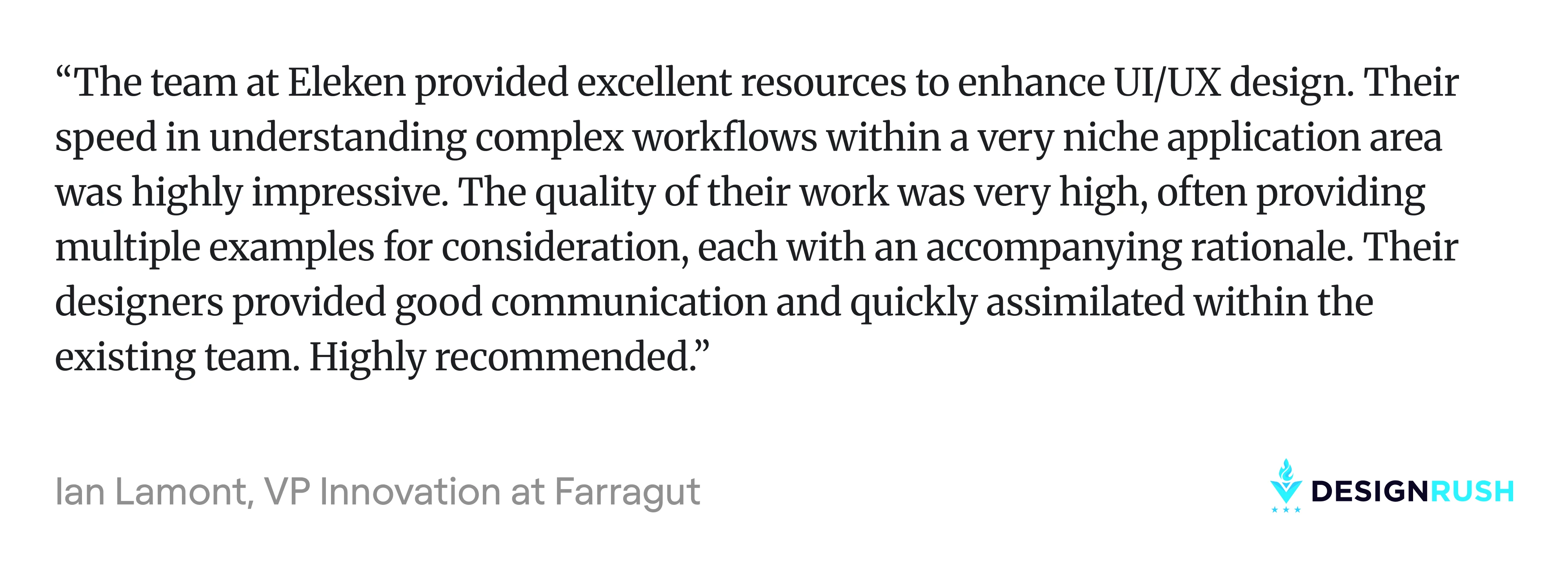
That expertise is reflected in client feedback as well. Eleken currently holds a 4.9 rating on Clutch and a 4.8 rating on DesignRush, with reviewers consistently highlighting the team’s ability to quickly understand niche SaaS workflows and deliver high-quality UX solutions. One client noted:
“The team at Eleken provided excellent resources to enhance UI/UX design. Their speed in understanding complex workflows within a very niche application area was highly impressive. The quality of their work was very high, often providing multiple examples for consideration, each with an accompanying rationale.”
Key strengths: Deep B2B SaaS UX expertise, strong at complex user flows and data-heavy interfaces, AI integration that enhances thinking rather than replacing it.
Best for: SaaS startups and scaleups, AI-powered products, teams dealing with compounding UX complexity.
Not the best fit for: Pure marketing creative work, large-scale brand campaign production.
And if you want to know how to integrate AI into SaaS, consider watching this video:
2. The Bureau of Small Projects: best for AI-powered strategic branding and high-touch digital experiences
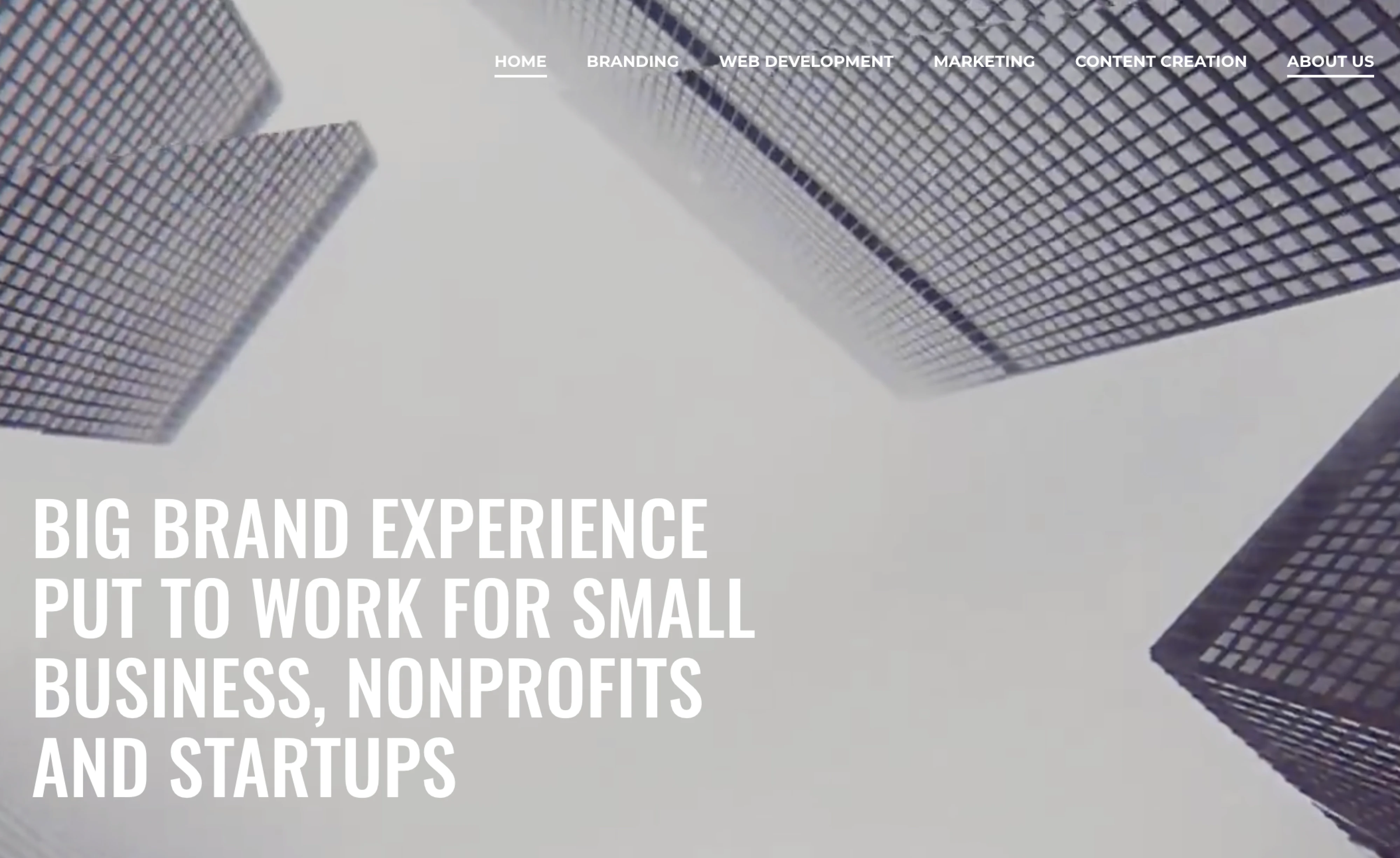
Founded in 2014, The Bureau of Small Projects focuses on helping startups, nonprofits, and small-to-midsize businesses compete with the level of strategic thinking typically associated with larger agencies. Their positioning is less about high-volume product UX execution and more about combining branding, web design, storytelling, and marketing into a cohesive digital presence.
What makes the AI design company notable is the range of organizations they’ve worked with, including Stanford University, The Planetary Society, Blackrock Neurotech, and healthcare and research-focused companies operating in technically complex industries. Their experience suggests strength in translating difficult or highly specialized topics into accessible, user-friendly communication and design.
The Bureau of Small Projects also emphasizes a simplified and collaborative process designed for smaller teams that may not have the time or budget for long enterprise-style engagements. That positioning likely appeals to startups and mission-driven organizations looking for strategic guidance without the overhead of a massive agency structure.
The agency currently holds a 4.8 rating on DesignRush and a 5.0 rating on Clutch. Client reviews consistently highlight responsiveness, strategic involvement, and reliability during demanding projects.
One reviewer summarized the experience simply: “We could not have asked for a better partner on this very challenging project.”

With a team of under 49 employees and an average hourly rate of around $150/hr (based on data from DesignRush), the agency positions itself in the premium boutique category, offering more hands-on collaboration and senior-level involvement than many larger production-focused firms.
Key strengths: Strategic branding and messaging, polished web experiences, strong communication, expertise in complex or mission-driven industries.
Best for: Startups, nonprofits, healthcare, or research-focused organizations, teams needing both branding and digital strategy support.
Not the best fit for: Fast-moving SaaS teams needing deep product UX systems, complex dashboard design, or large-scale product design operations.
3. Parallel: best AI-native product design studio
Parallel is an AI-native design agency, meaning AI isn't bolted onto their process as an afterthought. It's built into how they think about design from the start.
They specialize in adaptive UX, AI-driven personalization, and designing interfaces that respond to user behavior dynamically. For companies building AI-first products where the interface itself needs to evolve based on context or user patterns, Parallel has real expertise that's hard to find elsewhere. They're doing genuinely forward-thinking work on what AI UX looks like when the interface is itself powered by AI.
Parallel also appears particularly strong at simplifying technically dense experiences into usable interfaces. One client noted: “They managed to integrate a lot of information into a simple and intuitive dashboard.”
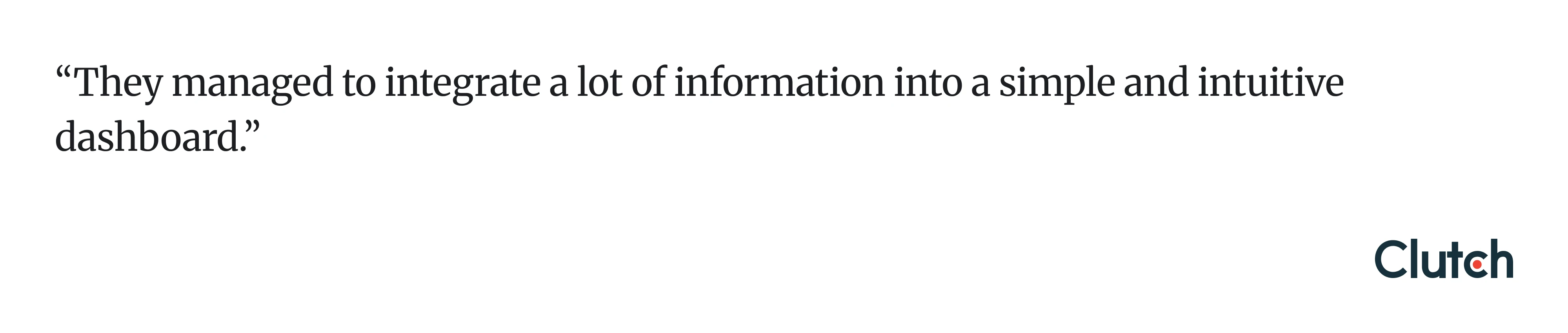
While the generative AI design agency is not currently listed on DesignRush, it maintains a 5.0 rating on Clutch, where reviews consistently emphasize product thinking, innovation, and the ability to handle highly complex UX challenges.
The considerations to weigh honestly: complexity and cost. Parallel works best with teams that already have strong product direction and need a partner who can push AI-native design further. Bringing them in to solve foundational UX problems isn't really what they're optimized for.
Key strengths: AI-native workflows, adaptive UX, design systems built around AI-driven personalization.
Best for: AI-first product teams, companies building intuitive interfaces that adapt or personalize in real time.
Not the best fit for: Early-stage startups, teams that need pragmatic UX fixes on a clear timeline.
4. Adam Fard Studio: best for data-driven UX
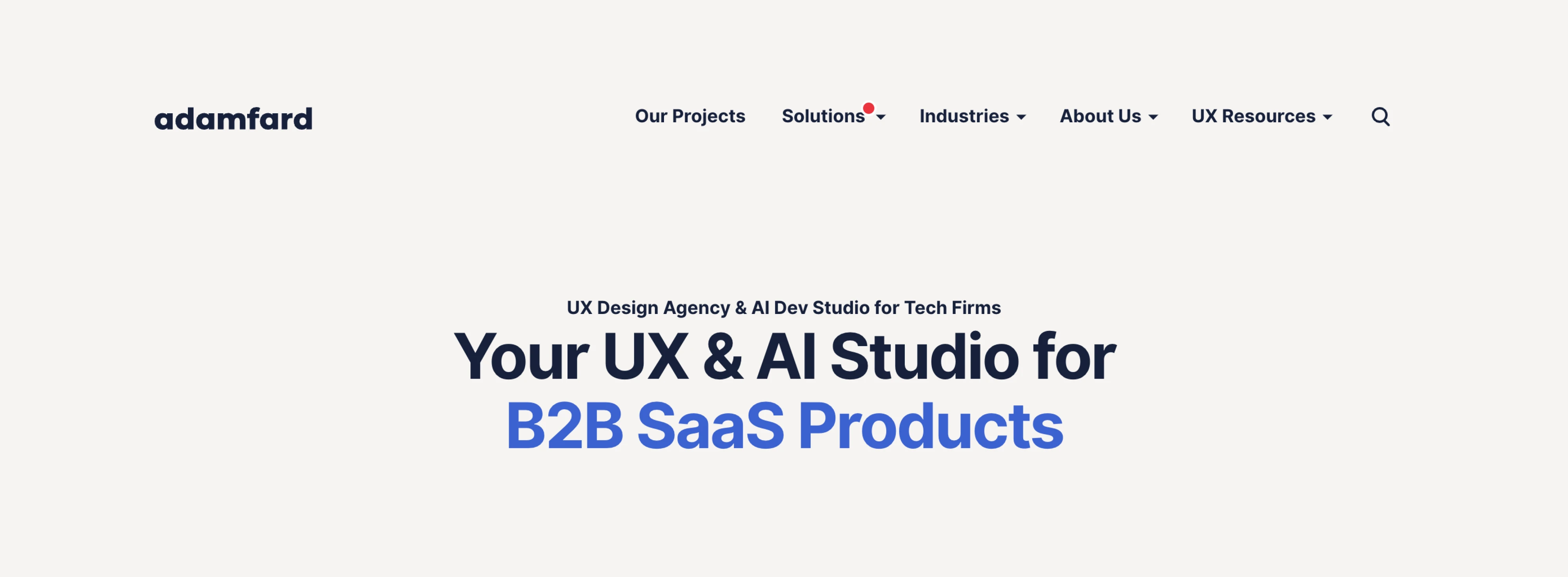
Adam Fard Studio brings a rigorous, analytics-driven approach to UX design. They combine user research with behavioral data to make design decisions, not just aesthetic ones. If you're the kind of product leader who asks "how do we know this is the right call?" before approving a design direction, Adam Fard Studio will speak your language.
Their work in SaaS and fintech is particularly strong. Both domains demand design decisions that hold up to scrutiny from investors, compliance, and users who can't afford to be confused at a critical moment. Their ability to tie UX AI decisions back to data makes them a natural fit for environments where gut feel isn't enough.
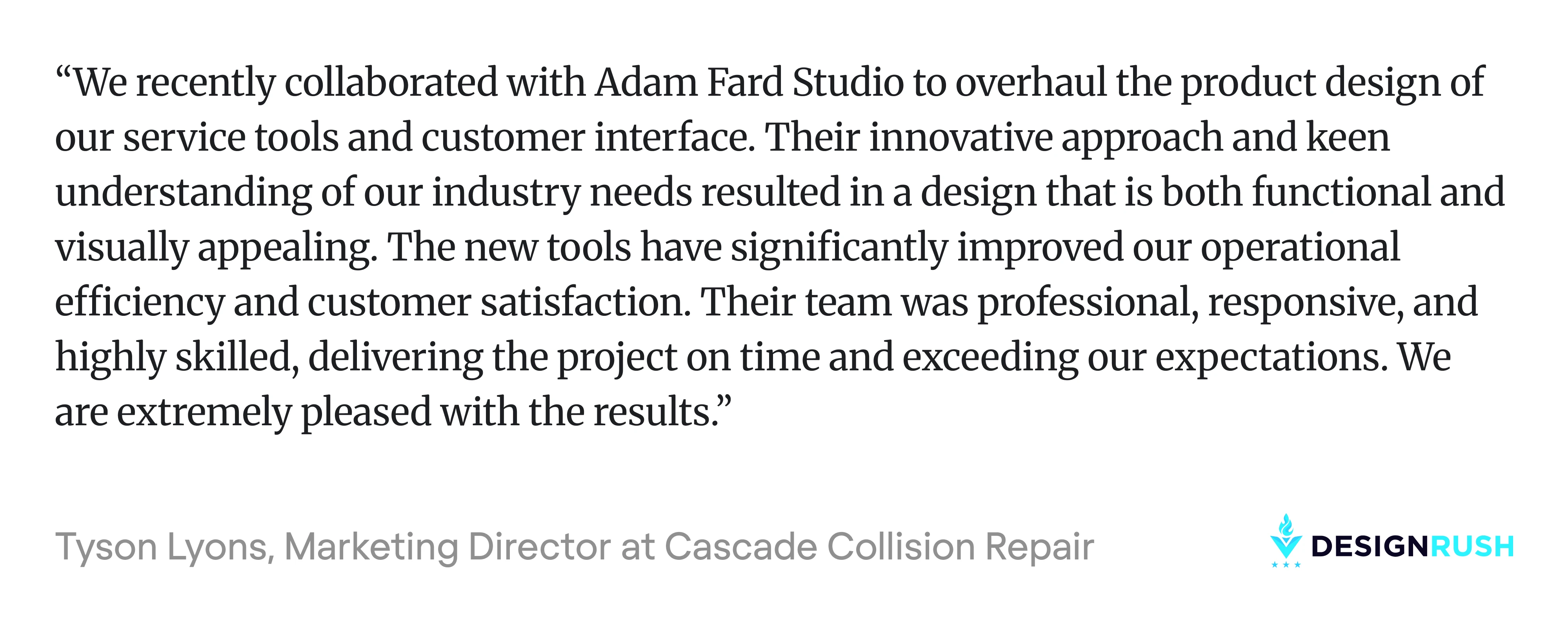
This AI design studio currently holds a 5.0 rating on Clutch and a 4.8 rating on DesignRush. Client feedback frequently highlights the team’s strategic thinking, responsiveness, and ability to improve both usability and operational efficiency.
One client shared: “...Their innovative approach and keen understanding of our industry needs resulted in a design that is both functional and visually appealing. The new tools have significantly improved our operational efficiency and customer satisfaction... ”
Key strengths: Evidence-backed UX, strong research and testing methodology, SaaS and fintech experience.
Best for: Teams that need data-justified design decisions, fintech products, and products in regulated industries.
Not the best fit for: Teams looking for fast creative experimentation or brand-forward design work.
5. Cieden: best for B2B UX/UI design
Cieden has quietly built one of the more solid portfolios in enterprise and B2B UX. They're good at complex dashboards, admin interfaces, and multi-stakeholder enterprise products, the kind of work where the primary challenge is making something that enterprise users can navigate without a training session.
They don't position themselves as the most innovative agency in the room. That's a feature for certain clients. If your product has complicated information architecture, a mix of technical and non-technical users, or an interface that needs to handle a lot of data without overwhelming people, Cieden knows how to approach that problem systematically.
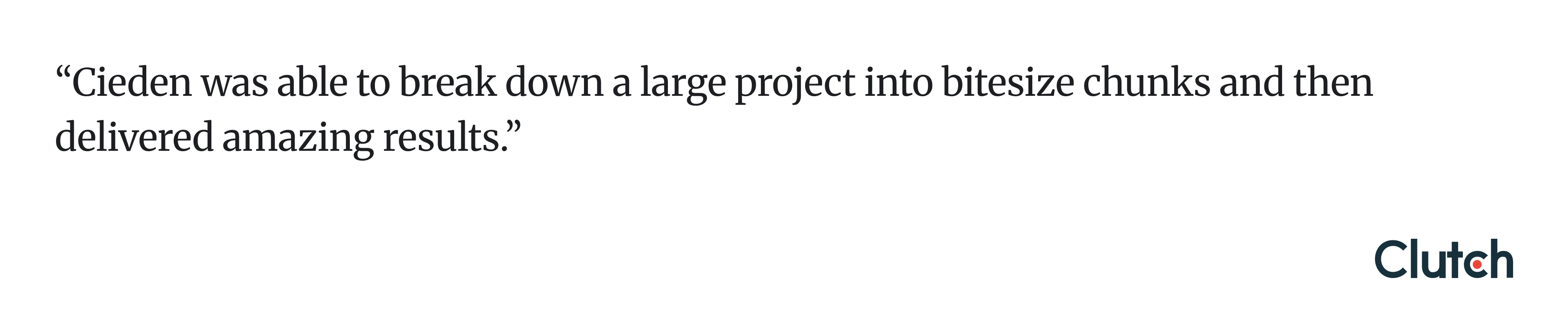
The agency currently holds a 4.9 rating on Clutch. While Cieden is listed on DesignRush, it does not currently display a public rating there. Client feedback consistently highlights the team’s ability to manage complexity and structure large design initiatives effectively.
One reviewer noted: “Cieden was able to break down a large project into bite-size chunks and then delivered amazing results.”
Key strengths: Enterprise UX, dashboard and admin interface design, handling B2B information complexity.
Best for: Enterprise software teams, B2B SaaS with complex multi-role systems, and organizations standardizing design development at scale.
Not the best fit for: Consumer products, early-stage work that requires heavy discovery and ideation.
6. Lazarev: best for innovative AI interfaces
Lazarev leans into creative experimentation. They push visual and interaction design further, which is valuable when you're building something novel and want the interface to feel like it.
Their strength is in making AI products feel approachable and exciting rather than clinical and opaque. There's a real UX challenge in AI products around first impressions and perceived intelligence. Users form opinions about an AI system very quickly based on how it looks and responds before they've even tested its AI's capabilities. Lazarev thinks carefully about that problem.
For design startups where brand identity and differentiation and interaction design quality are competitive advantages, Lazarev is worth a serious look.
Lazarev currently holds a 5.0 rating on Clutch and a 4.3 rating on DesignRush. Client feedback frequently highlights the quality of the collaboration process and the agency’s execution standards.
One reviewer noted: “The workflow and process is one of the best I have worked with, including my experience with much larger companies.”
Key strengths: Creative direction, visual and interaction creative innovation, making AI products feel human and trustworthy.
Best for: Consumer AI products, brands where design is a primary differentiator, and teams launching into crowded markets.
Not the best fit for: Enterprise products prioritizing operational clarity over visual innovation.
7. Goji Labs: best for human-centered digital products
Goji Labs puts user research and accessibility at the center of their process. They build digital products with a strong focus on human needs. That philosophy sounds standard.
They're a strong fit for teams working in high-stakes domains: healthcare, education, civic technology, where getting the UX right isn't primarily a business metric question. It's a question of whether the right people can use the product at all. Their research-first approach, combined with genuine accessibility expertise, makes them well-suited for products with diverse or underserved user bases.
Goji Labs also appears effective at combining multiple disciplines within product development, helping teams balance strategy, UX, and technical execution.
One Clutch reviewer noted: “Goji Labs covers the scope and brings different skill sets to present good solutions.”

The agency currently holds a 5.0 rating on both Clutch and DesignRush, with client feedback consistently highlighting thoughtful collaboration, adaptability, and a strong understanding of user-centered design processes.
Key strengths: User research depth, accessibility expertise, genuine human-centered design process.
Best for: Mission-driven products, healthcare, education, products serving diverse or non-technical user populations.
Not the best fit for: Teams that need fast turnaround with minimal discovery.
That's the list. And now you've probably noticed that these agencies aren't really comparable to each other. They serve different needs, at different price points, with different philosophies about what design AI integration should look like. Knowing how to evaluate them and how to evaluate what you need will help you avoid an expensive mistake.
What makes an AI design agency good
Before you start making calls, it's worth establishing what good looks like. Across industry discussions, including Reddit threads from designers, founders, and SaaS teams, these patterns come up repeatedly:
- Product thinking, not just visuals.
Good design agencies design flows by asking why users are confused before they start moving pixels. They care about what happens between screens: the moments of hesitation, the paths users take when they're lost, the points where most people give up. If an agency's portfolio is full of beautiful interfaces with no explanation of the problem they were solving, that's information.
This idea comes up often in Reddit discussions around AI design tools. Many designers point out that while AI can generate attractive interfaces quickly, the real value still comes from solving messy UX and product problems before screens exist.
As one redditor shared: “... A lot of the current AI design tools feel very “generate me a pretty UI” but don’t really help with the messy product thinking that happens before screens exist… “
- UX outcomes, not outputs.
Outputs are deliverables: Figma files, prototypes, and component libraries. Outcomes are what change in user behavior: improved onboarding completion, reduced support tickets, higher retention, and faster time-to-value. The best AI design agencies track the latter and can talk about it with specificity. Average agencies default to talking about delivery speed and file organization. Both matter, but one of them actually moves your product forward.
One Reddit discussion summarized it well: “... The core of UX (understanding the user aka identifying fundamental workflows) is how good & useful AI products are made…“
- AI integration depth.
There's a meaningful difference between an agency that uses AI tools and one that has genuinely integrated AI into its design workflow. The former mostly saves time on production tasks. The latter improves the quality of decisions: better research synthesis, more rapid iteration on concepts, and smarter identification of UX patterns at scale. When you're evaluating an agency, ask specifically how AI affects their research, iteration, and testing process. Vague answers about "using the latest tools" are a yellow flag.
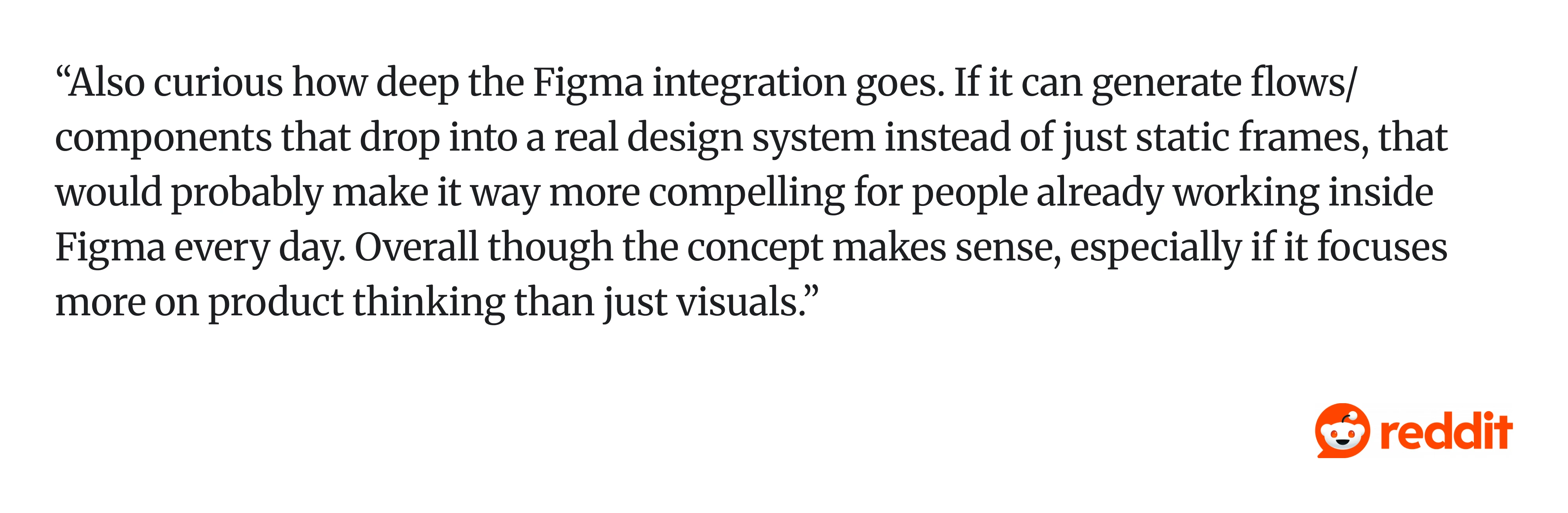
A Redditor discussing AI design workflows noted: “...If it can generate flows/components that drop into a real design system instead of just static frames, that would make it way more compelling…”
- Domain expertise.
A generalist agency can do competent work on a marketing site. A SaaS dashboard with five user roles, real-time data, and a mix of technical and non-technical users is a fundamentally different problem.
Domain experience shortens ramp-up time, reduces costly assumptions, and means design decisions are grounded in actual patterns from similar products. This is important for AI-powered products, which have unique UX challenges around trust, transparency, and error handling that generalist designers don't encounter often.
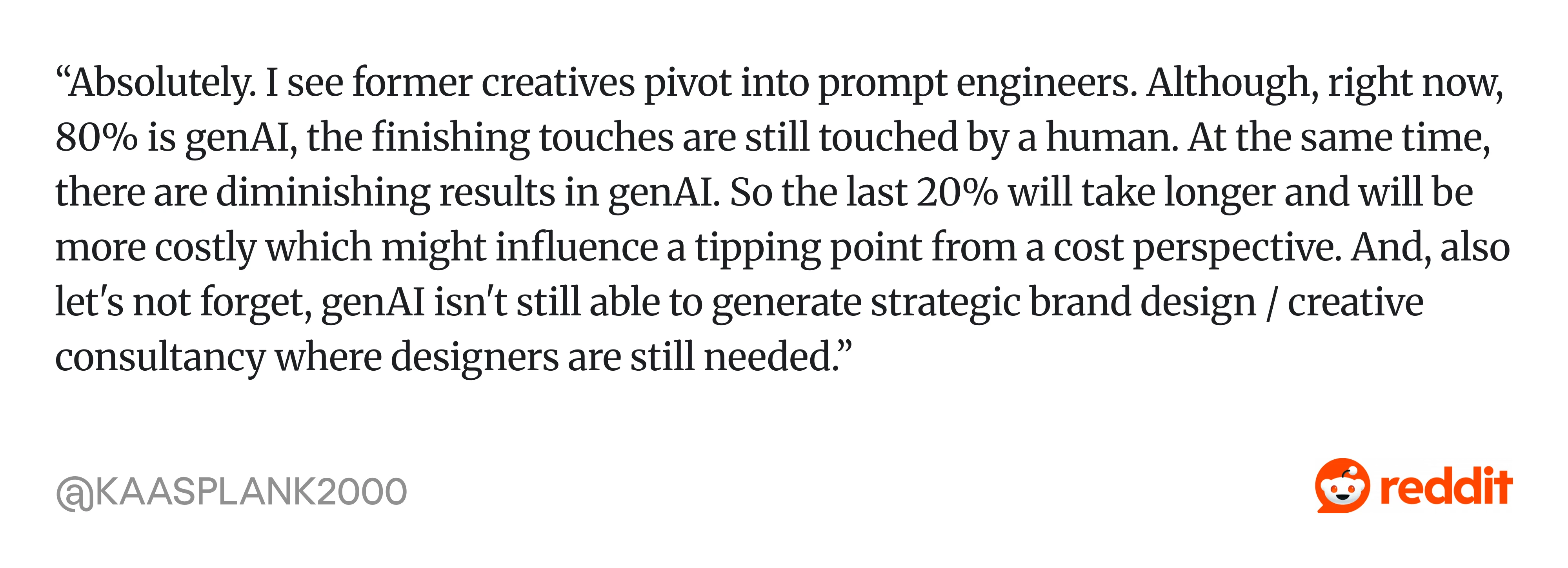
As one Reddit discussion pointed out, AI still struggles with “strategic brand design / creative consultancy where designers are still needed.”
- A genuinely human-centered approach.
The goal of using AI in a design process is to serve human needs better, not to automate the parts of design that actually require human judgment. The best agencies use AI to enhance their thinking. They don't use it to skip the thinking. The difference shows up clearly in their work.
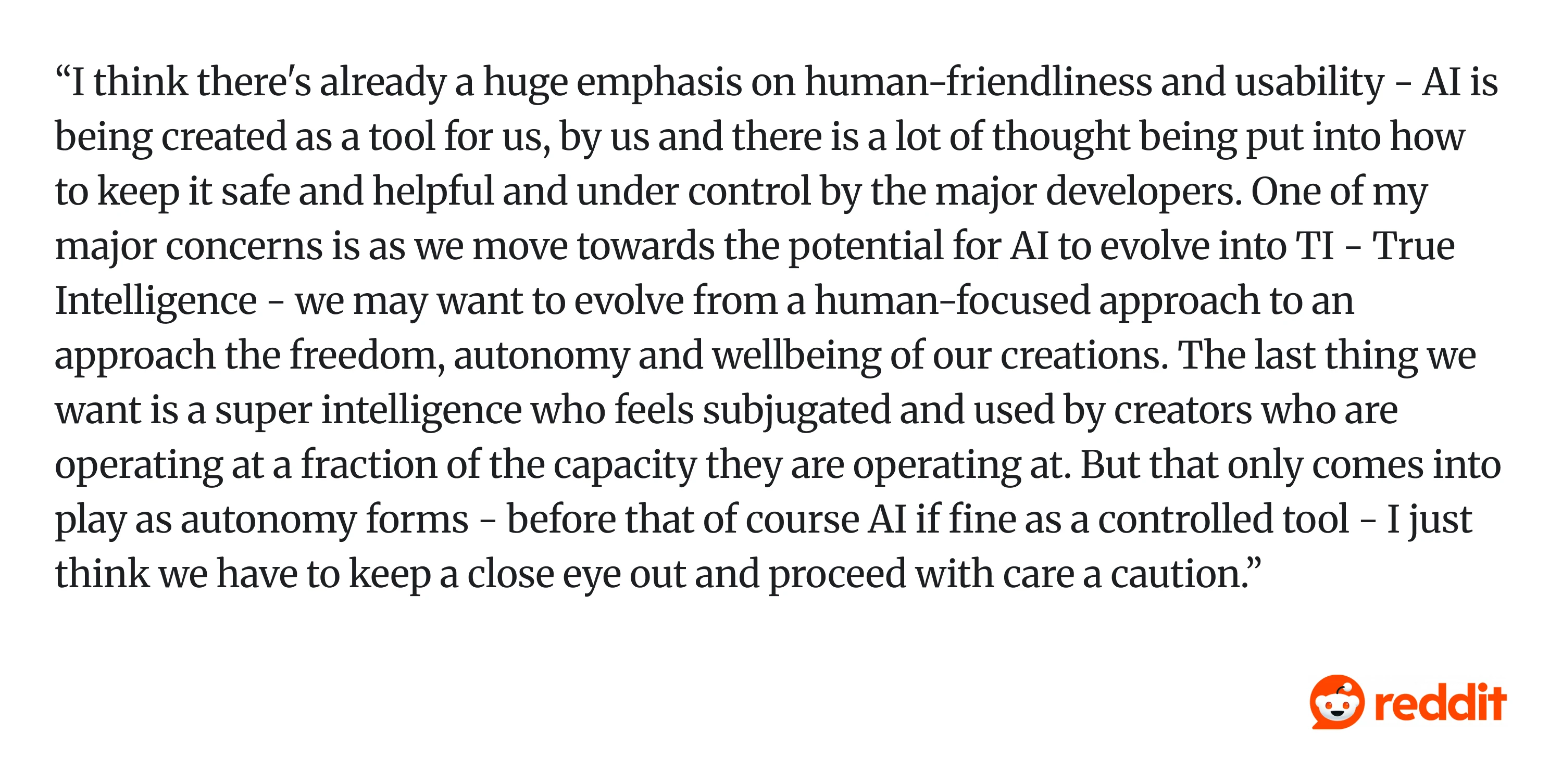
That balance also comes up often in Reddit conversations around AI products and usability: “AI is being created as a tool for us... there is a lot of thought being put into how to keep it safe and helpful... ”
Ask any agency you're evaluating: "Where in your process does AI play the biggest role?" A good answer describes specific moments: synthesis of user research, rapid generation of layout alternatives, and identifying usability patterns across testing sessions. A concerning answer is something generic about using the "latest AI tools" across the whole process. Enthusiasm about tools without specificity about judgment is worth probing further.
How to choose the right AI design agency
Knowing who's good is the first step. Figuring out who's right for your specific situation is the harder one. Here's a practical framework.
Step 1: Define your product type
Are you building a SaaS platform? An AI-native product? An MVP you need to validate quickly? A marketing campaign? These are different problems requiring different human expertise. The agency that's perfect for a consumer AI product is often completely wrong for a B2B enterprise dashboard. Start here, before you look at any portfolios.
For example:
- Enterprise SaaS products usually need strong information architecture, permissions systems, and scalable UX patterns.
- AI-native products need careful work around trust, transparency, onboarding, and unpredictable outputs.
- Early-stage startups often need fast validation and rapid iteration more than polished design systems.
A quick way to evaluate fit: look for agencies with case studies similar to your product complexity. If an agency mainly showcases landing pages and branding work, that doesn’t necessarily translate into strong SaaS or AI UX expertise.
Here is a simple comparison table that works well here.
Step 2: Be honest about your priority
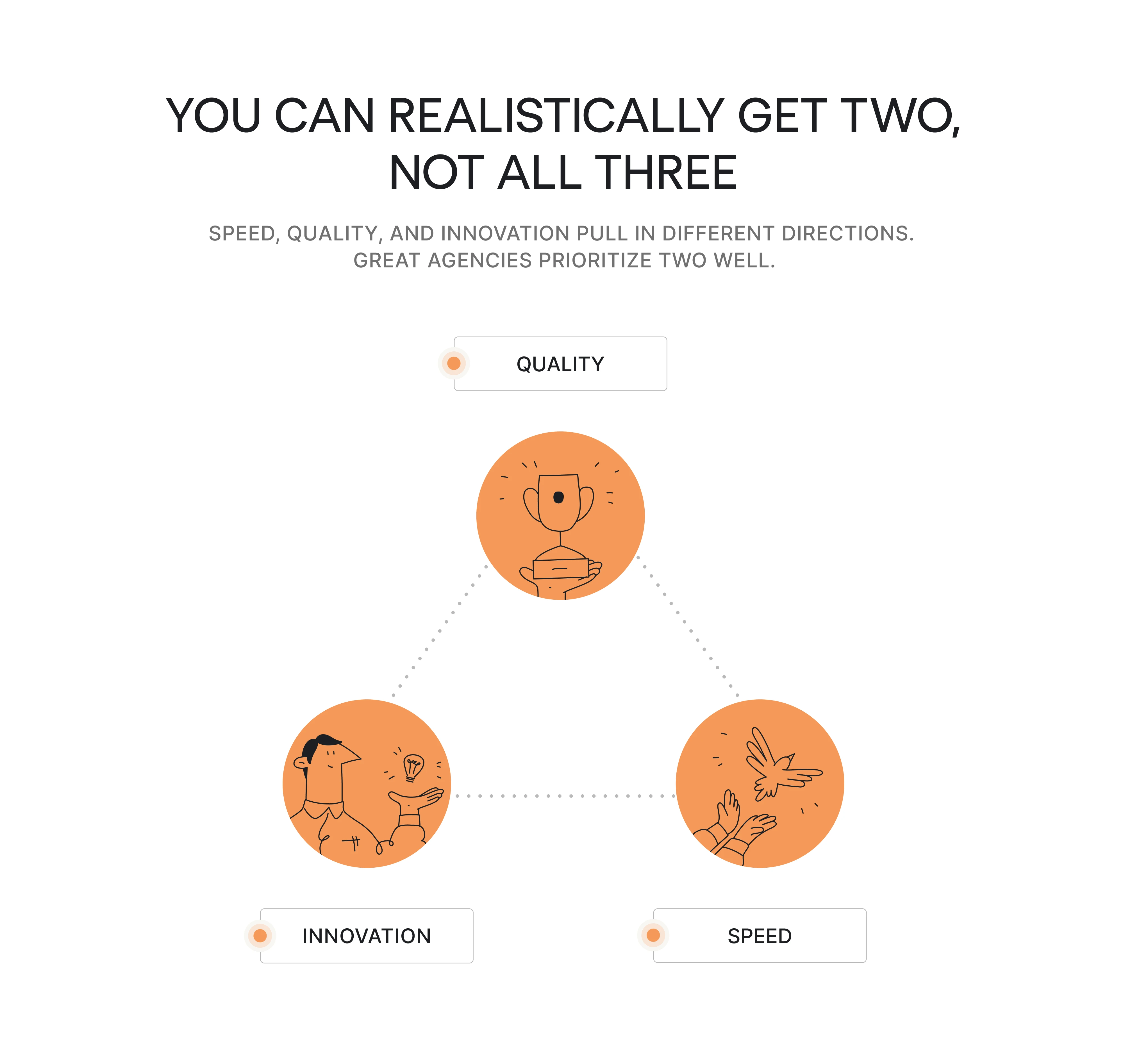
Speed, quality, and innovation. You can realistically get two of these, not all three. Being honest with yourself about which tradeoffs you can live with before you enter a sales process will save you a lot of pain later. An agency that's optimized for speed will make different decisions than one optimized for UX depth. Neither is wrong. The mismatch is wrong.
A useful test during agency conversations: ask how they balance research, iteration speed, and design exploration in real projects. Strong agencies can explain the tradeoffs clearly instead of promising everything simultaneously. Also, clear ownership rights regarding data and software are crucial before finalizing agreements with agencies.
Step 3: Match agency type to your use case
This is where most buyers go wrong. They treat all design agencies as interchangeable and pick based on pricing and portfolio aesthetics. Mature agencies have robust data ethics, security, and governance practices related to AI. In reality, there are five distinct types of AI design agencies, and they serve fundamentally different needs:
Eleken falls into the fourth category: UX-focused AI design partners. If you're building a complex SaaS product and UX quality is the core priority, that's the type you need. Hiring an AI-first creative platform for that job is like hiring an excellent sprinter to run a marathon. They're fast; they're just not running the same race.
Step 4: Evaluate AI projects properly
A good evaluation goes well beyond the sales deck. Agencies should demonstrate measurable business outcomes from their AI implementations. Here's what to look for:
- Case studies with real context. Not just "we redesigned the dashboard." What was the user problem? What decisions did they make, and why? What changed in measurable terms after?
- UX metrics and outcomes. Did usability improve? Did onboarding drop-off go down? Did support volume change? Can they point to numbers, or do they only describe deliverables?
- Process clarity. Can they explain their design process clearly, including specifically where AI fits and where human judgment takes over?
- Relevant domain experience. Have they built something meaningfully similar to your product before? "We've done SaaS before" covers a huge range. Push for specifics.
The bottom line
AI is no longer the differentiator it was two years ago. AI-generated designs can be produced in hours instead of weeks. Most great design agencies use it now, in some form. What separates the great ones from the forgettable ones is the quality of their thinking: the ability to understand your users, frame the right problems, and build experiences that hold up in the real world.
Speed is a commodity, but judgment isn't. And the gap between the two is exactly where products succeed or fail with real users.
The right AI UI/UX design agency won't just make your product faster to build. It will make it easier to use, and that's the outcome that matters for retention, AI adoption, and everything downstream.
If you're building a SaaS product and need a team that combines deep UX thinking with AI-enhanced design workflows, Eleken specializes in exactly that, turning complex product challenges into intuitive, scalable experiences. Talk to our team and get a UX-first perspective on your product.